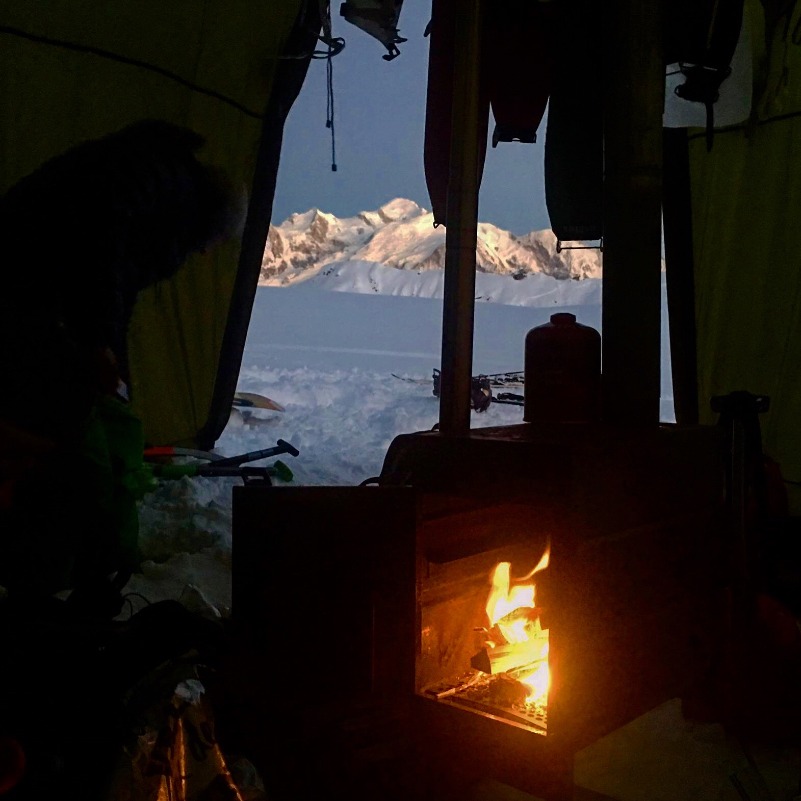
Powder Alert #9 by MeteoMorris (WePowder.com) is the reason for our Roadtrip to the Montafon.
A trip by the book: lots of powder snow and fun with friends.
Check the movie. Or read the trip report below.
The movie.
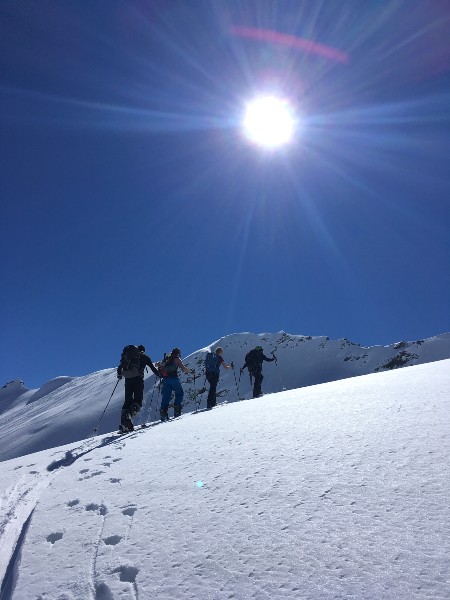
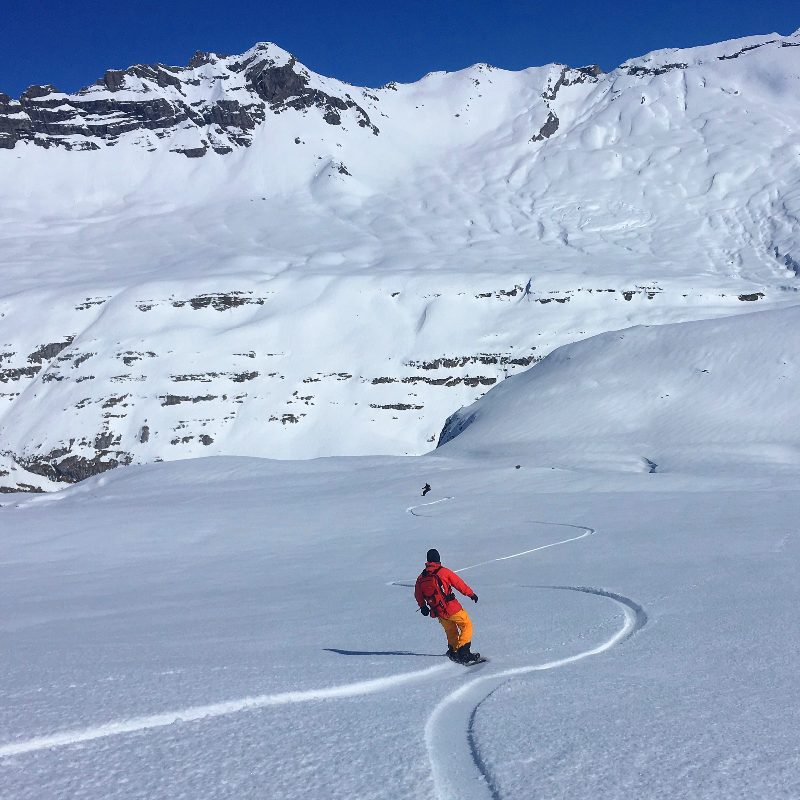
On the first day, we’ll take the first gondola up from Gaschurn at 8.15am. We find fantastic conditions with clear blue sky, windlessness and fresh puff on top of the mountain.
The great thing about Montafon is that you’ll be able to make good tracks without having to hunt and hike for powder.
Halfway through the day, we move to Grasjoch to explore the fun park.
For the Friday we have signed up for Nova Exklusiv. This means that we arrive at the Versettlabahn at 7.10.
With limited company we can fully enjoy ourselves on the freshly prepared slopes. We love to cut through the tight ridges while the sun is working its way up.
Then we feast on the breakfast that accompanies the arrangement at the Nova Stoba.
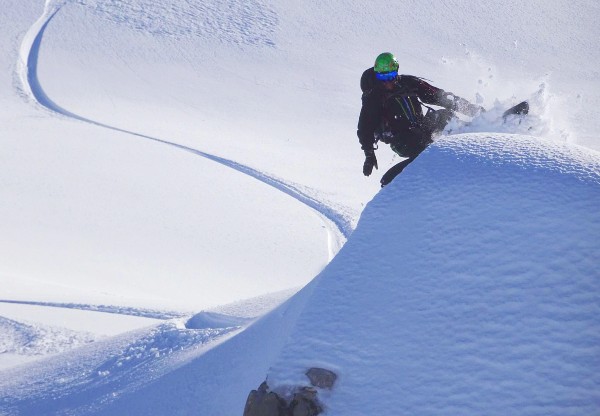
Day 3 was dominated by shooting shots for the film. Above the Spatla Bahn we spotted an area that is easily accessible with a short hike.
We clearly agree where the drone will hang, how we choose our line, where we want to end our line and we do a check with our avalanche beepers.
This morning became an absolute highlight of the trip.
In the afternoon our cameraman Merijn takes his camera gear to the snow park of Montafon at Grasjoch. Here we record both airtime and a smooth 180 switch on the box.
After three days of maximum fun with Bluebird and excellent snow conditions, we look back with five very satisfied friends.
On Sunday the group splits into 3 friends which sets course for the Netherlands early in the morning. And Two of them taking the first chair in Gargellen. This turns out to be a very tasty dessert.
Anyway, we are pleasantly surprised by the almost endless potential to score powder here. This potential is unlocked by, among other things, going up with skins and in this way give shape to ‘earn your turns’. We limit ourselves to the powder snow that we can still score without hiking.
At 11.30 a.m., the two of us also step on the gas pedal on our way home.
3RD ANNUAL INTERNATIONAL SURF THERAPY ORGANIZATION CONFERENCE ALIGNS WITH AND HOSTS THE WORLD’S 1ST SURF THERAPY SYMPOSIUM
EL Segundo, Manhattan Beach California, November 8 – 10: The International Surf Therapy Organization (ISTO) hosted the WORLD’s 1st Surf Therapy Symposium. ISTO is a nonprofit out to prove that surf therapy promotes mental and physical wellbeing, increases social support, and develops surfing skills for a holistically empowering experience for participants. By partnering together like-minded organizations from around the world to achieve this goal, ISTO is embodying the motto, “go far, go together. ISTO stands on its 3-pillars of sharing best practices, advocacy for the sector, and reaching outside the surf culture for further exposure and understanding.
The best practices of ISTO state that:
To provide best practice, we must consider a holistic approach to healthcare, including the outdoor environment. Nature-based therapies offer added benefits to those carried out in traditional settings.
Surf therapy, like all therapy, should be strengths-based and recovery-focused, centered around the ‘whole person.
Surf therapy must include a rigorous approach to safety provision, governance, evidence, and inclusion in practice.
Since the inception of ISTO in 2017, thanks to a grant awarded to Waves for Change, surf therapy practitioners, scholars, professors, and researchers have come together to determine best practices and present emerging research in the surf therapy space. But, for the first two years, this was limited to select invitees. After ISTO’s 2nd conference in 2018, hosted in South Africa, ISTO doubled in size and CEO, Kris Primacio, was appointed. Primacio took the lead in producing the 2019 outward-facing symposium dedicated to surf therapy. The 2019 Symposium allowed ISTO to emerge on a much grander scale.
The 3rd Annual International Surf Therapy Organization (ISTO) Conference took place throughout the South Bay of Los Angeles over 5- days in November 2019. During the first 2-days, 60-surf therapy practitioners attended an intensive workshop at Beach House Hotel in Hermosa Beach, representing 30-surf therapy organizations and research institutions from 25- different countries around the globe. Over the next 3-days of the ISTO Surf Therapy Symposium, 120-people attended daily at Cross Campus in El Segundo for the world’s first public-facing symposium dedicated to surf therapy.
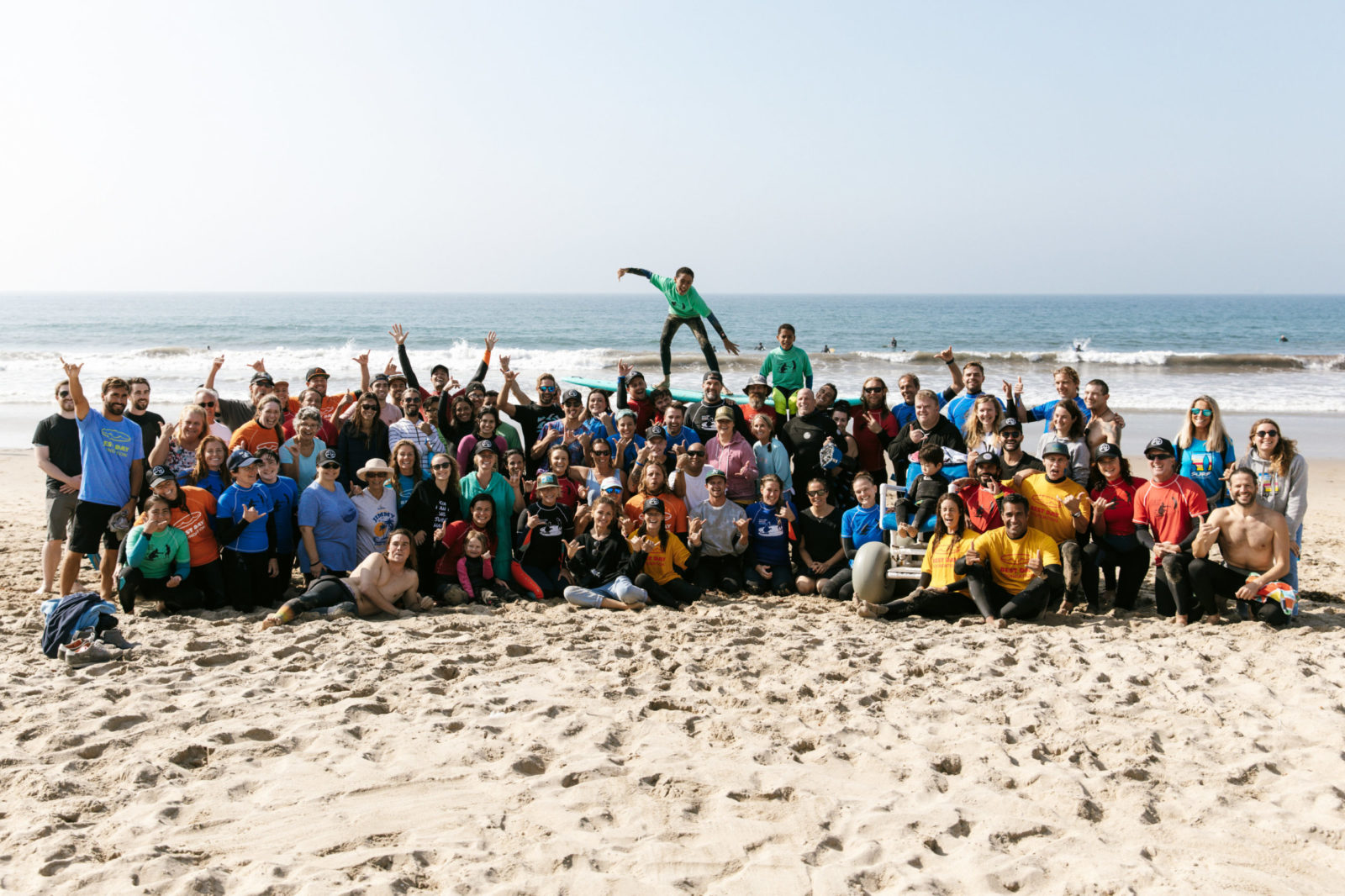
Appropriately, the 2019 Symposium concluded in the ocean at El Porto, Manhattan Beach providing surf therapy to a mixed population of “athletes” including Veterans, cancer survivors, at-risk youth, children on the spectrum, children with mental and physical disabilities and first responders. Over 60- surf therapy practitioners from around the world used their skillsets to serve these athletes. This global coming together was a visible manifestation of the research proving surf therapy’s benefits.
Research shows that surf therapy is an effective treatment for mental health disorders, in reducing the effects of post-traumatic stress disorder and depression, aiding addiction recovery, healing trauma, stroke recovery, breaking gender and cultural barriers, and women’s empowerment. The first published surf therapy article was published in 2011. Between 2011 and 2017 another 8-articles were published. Since 2017, the number of academic articles on surf therapy has doubled. ISTO is gathering the research and providing tools to increase our global data and, therefore, our knowledge. Data is the currency, especially in the healthcare profession, so to effect real change, we are helping organizations capture this information.
“ISTO PROVIDES A SENSE OF BELONGING. IT IS A GROUP OF LIKE MINDED PROFESSIONALS THAT IS WILLING TO SUPPORT EACH AND EVERY ORGANISATION WITHIN THE SURF THERAPY COMMUNITY.”
BEN, FOUNDER OF SURFIVOR.
With the collective efforts by ISTO Contributors, by March 2020, we’ll see an additional 11-surf therapy research papers published through the Global Journal of Community Psychology Practice, Special Issue dedicated to surf therapy. Surfing works. Surf therapy programs around the world prioritize marginalized communities, underserved populations and developing regions. Prescribing evidence-based programming requires sound economic and factual arguments. By showing that surf therapy can lower healthcare costs, improve performance, and increase social (and community) adjustments, the sector is building an unshakable case for time in the ocean.
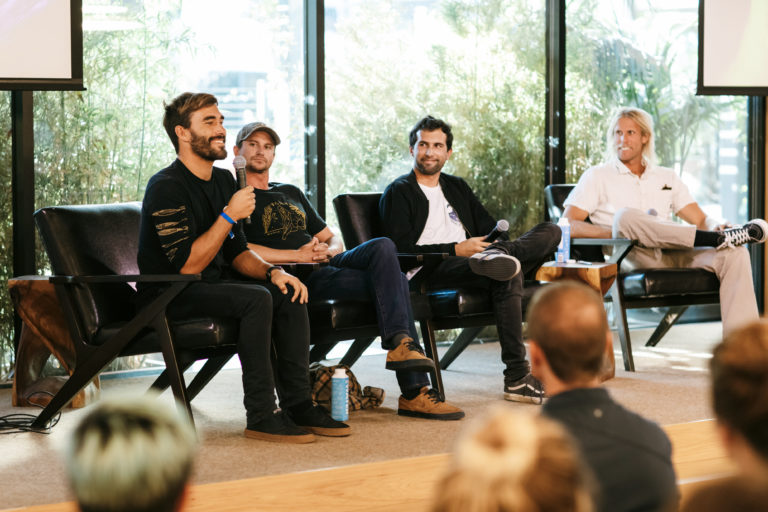
The groundbreaking 2019 ISTO Surf Therapy Symposium was an electrifying collection of leaders who are revolutionizing the surf therapy sector and their experiential approach to mental and physical health. The symposium’s 12-panels were comprised of 40-guest speakers. Speaker’s expertise included nonprofit leaders, professors, licensed therapists, authors, women pioneers in surf therapy, government counterparts, and professional surfers. 66th District Assemblymember Al Muratsuchi and Mayor of El Segundo Drew Boyles spoke during the Change Makers panel. Professional surfers Alex Gray, Aritz Aranburu, Jose Ferreira, and Dane Gudauskas (pictured) shared during The Pros panel. Saturday afternoon closed with keynote speakers Wallace J Nichols, author of Blue Mind and ocean and surf photographer, Aaron Chang (pictured).
As a result of the 2019 ISTO Surf Therapy Symposium, the needle moved toward proof and support of surf therapy. ISTO is uniting the surf therapy sector like never before and will continue its mission relentlessly to create access to evidence-based prescription surf therapy.
ISTO 2019 CONSISTED OF A GATHERING OF RESEARCHERS, ADVOCATES AND PRACTITIONERS WITH CLEAR PASSION TO DEVELOP THE SURF THERAPY SECTOR FOR THE BENEFIT OF ALL. I LEFT THE CONFERENCE FEELING THAT THE GOAL OF SURF THERAPY ON PRESCRIPTION WAS NOT ONLY CLOSER, BUT NOW FEELS INEVITABLE.
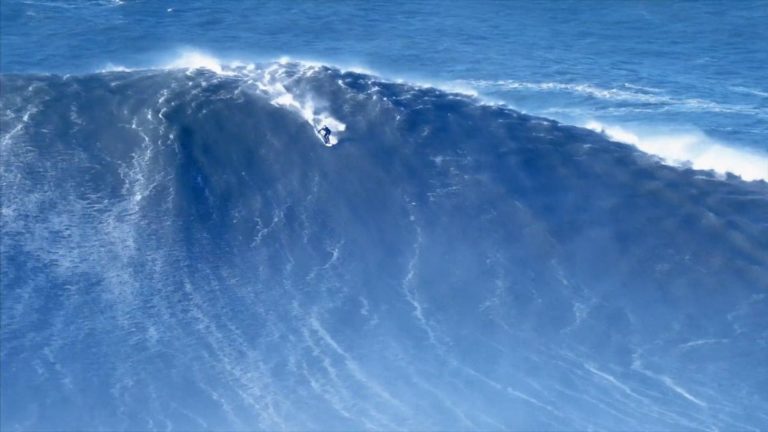
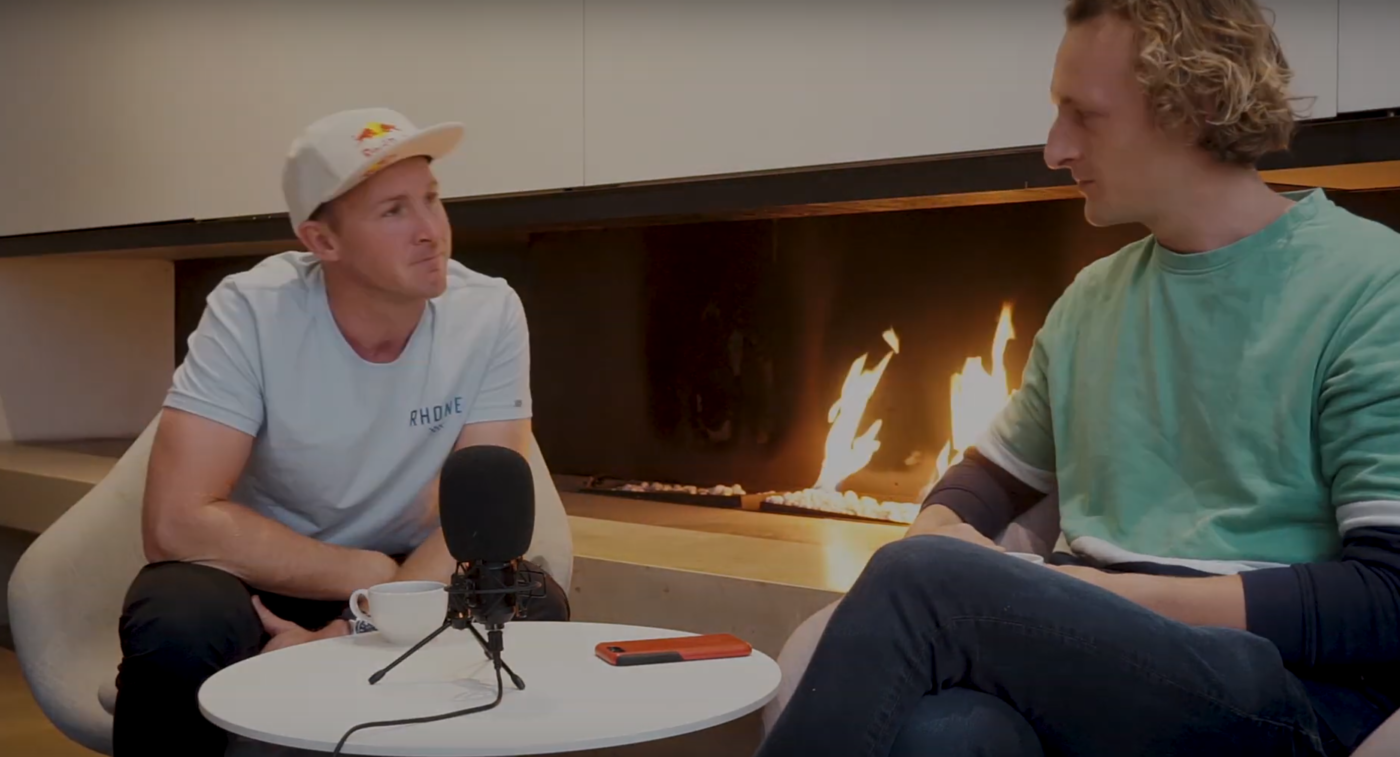
Special guest Andrew Cotton tells us all about his journey to becoming a big wave surfer and how he managed to surf 40ft waves and using fear is his advantage.
Big wave surfers are pragmatic about it and he gives tips on how to prepare yourself and your surroundings for bigger waves.
Andrew answering and discussing:
When was it that Andrew got into big wave surfing?
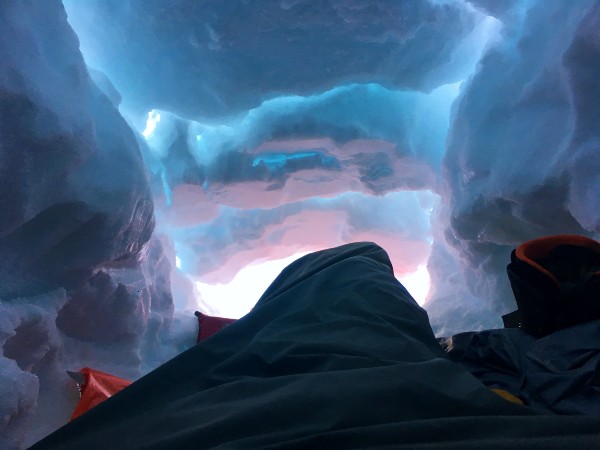
I ask myself when I open the hood of my winter sleeping bag and see Mont Blanc bathing in the early morning sunshine.
“Am I dreaming, or is this real?” I try to get up and bang my head against the icy roof. I realize that I am fully awake now. If this is not a dream, I am definitely in the middle of a dream trip.
Another day of splitboarding is waiting for us in this magical snowy landscape outside, surrounding our basecamp.
It’s early Friday morning, when we arrive at Serge’s ski shop in Flaine. Serge was a big name in French freeride history and is now a ski and snowboard teacher, specialising in freeriding. His family runs a mountain hut in the Andes, far away from civilisation. He has spent many European summers there, following the endless winter and riding his snowboard all year round. This man has loads of experience with winter expeditions and his freeriding and guiding skills are impressive.
After grabbing some last minute gear and repacking bags, we are stoked to get the adventure started. Thirty minutes later we are sitting on the ski lift in Flaine. Team Basecamp is counting 3 skiers and 6 splitboarders.
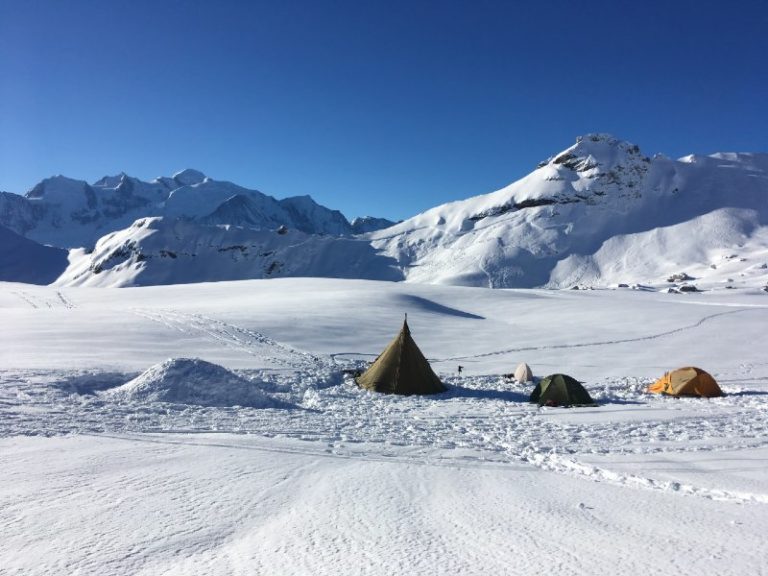
From the top of the Grandes Platieres we look down into the backcountry with the mighty Mont Blanc as our backdrop. After taking the usual pictures, we are ready to strap the bags. The daypack with lunch, water and safety gear goes on the chest and the bigger one on the back. The snow feels pretty good, but riding is challenging with the 20 kilograms we are carrying. Serge has the same weight, but is sliding down a pulka behind him as well. We will find out soon what is hidden under the cover of his sledge; I’m pretty curious! After 400 meters descent, followed by a little (but heavy) skin up we arrive at the spot where we will set up basecamp.
Two days earlier I came to this area and built a huge quinzee, together with a team of snowshoers. A quinzee is a pile of snow that you build up and then dig your way into it. Although we are pretty high, the sun has melted the south side of the quinzee, so a bit of maintenance work is needed. Three pairs of hands make the snow cave ready for the night and being storage during this first day. Now it´s time to skin-up and scope out our first lines.
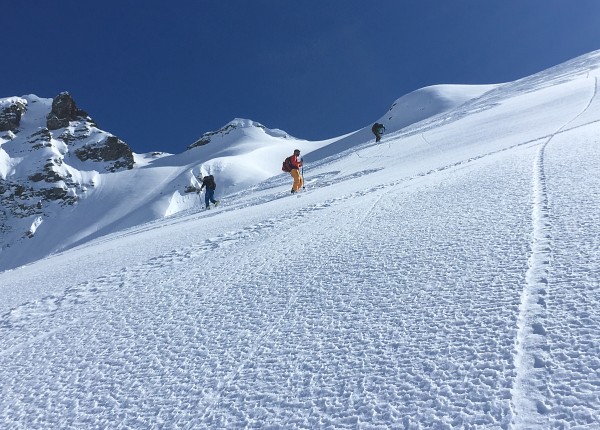
Serge suggests starting with an easy warm-up run to check the level of the group. We hike up for an hour to reach our first summit. We remove the skins, put the bindings in a forward position and send our planks down by gravity. Wow, what a relief it is to ride just with a daypack!
We enjoy a great run down, especially those sections that had not been directly sun-facing. At the bottom of the valley we get our thermos out to heat up our dry-lunches. The weather is amazing, there is no one around and the stoke is already as high as Mont Blanc.
Everyone is keen for another run, so we decide to explore the north-facing side of the valley. When we skin up we see how well the snow has been conserved here. We reach today’s summit at 2500m and after enjoying the stunning views of the Arve valley and Mont Blanc, it´s time for the ride down. Serge asks us to imagine riding the Freeride World Tour and pick our best line to impress the judges at the bottom.
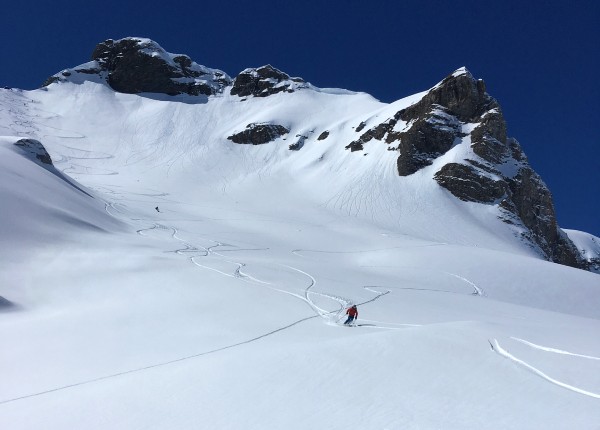
Our judge rides his line first, sending huge sprays into the air and launches himself off a cliff at the end of his run. We all choose an awesome line (with less airtime though) down through the fresh powder.
The tone for the coming days has been set.
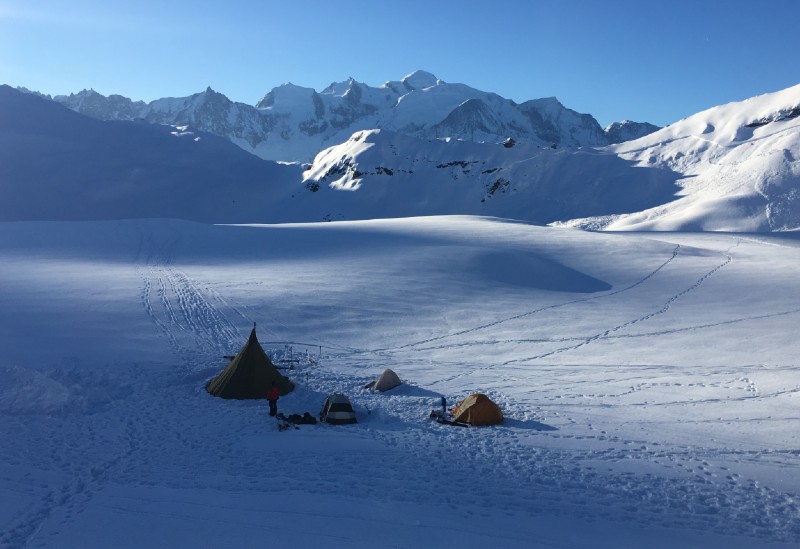
When we come back to Basecamp we have got one hour left before sunset. We finish basecamp and finally find out what Serge has stashed in his sledge: A huge tipi tent, some fire wood and … a metal wood burner!
When the sun sets, the smoke is already coming out of the tipi. Wet skins and smelly socks are hanging above the heating and on top of it there is a big pan with melting cheese. A fondue is so tasty in a setting like this and gets even better with a nice glass of wine. After a great night around the fireplace, we head to our quinzee or tent for a good nights sleep under the stars.
Our three person snow cave felt a bit, how can I say, cosy? But no one was cold, only Steve feels even weaker than the day before. Poor man; he seems to be ill. The sun is casting a pink shade over Mont Blanc and a bit later basecamp is welcoming the morning. It’s great to feel the heat of the sun after a chilly bivoauc night. We take the time to eat breakfast, drink coffee and tea and to prepare the bags. Powderstress does not exist here as we are in the powder already! I make the most of the time to finish the one man snow cave Serge has started.
I am looking forward having my private single room tonight! But first another day of riding is ahead of us. We are all biting a the bit and while sipping a coffee, we talk through today’s options.
Serge prefers to start with the North face again, as the forecasted heat will ruin the fresh snow quickly. after a 30 minutes approach it’s time to lift up the heel support. We aim for a line slightly to the left; steeper and deeper than yesterday’s.
Some of us push their limits already in the climb, as this is steeper than they have ridden before. The transition zone is small and makes things even more exciting. This time, we all go first and Serge is closing the gate. Maybe it’s from a safety perspective, but it might be a show-off perspective as well.
The snow feels even better than yesterday, but you know;
things do feel good when you work hard for it!
The north facing wall is officially tracked out now, which means we have to move on. We are all keen to aim for the highest peak; la Pointe d’Anterne with it’s 2733m. The sun is burning and at this height you start to feel the lack of oxygen. Halfway through the climb we wait for each other to have a lunch with a view. Steve feels so bad, that he decides to wait for us here. One hour later we bootpack the last meters to the summit, where a huge lammergeier (aka bearded vulture) is circling around to find some fresh bones. We strap our bindings up and slide down.
Luckily Steve has not served as lunch for the lammergeier and joins us on the second part. The snow has transformed into spring snow and our timing is just perfect. The terrain is really playful, with loads of hits, lips and small gullies. This is definitely one of the best descents I have ever ridden and we all arrive down smiling from ear to ear!
While half of the group goes back to basecamp, the other half goes for a water expedition. We hope to dig out the source in the hamlet of Sales, but as soon as we arrive we realize that everything is (of course) covered in 2,5m of snow!
Serge has another idea. We skin up further and just after the Chapel, he finds what he is looking for. Between two rocks there is fresh running mountain water! We thought we were alone here, but we are wrong. Foxy the local fox shows up, hoping to find some human food. Sorry mate, we wish we had, but we finished it all already. We fill up all water bottles and camelbags and get back to basecamp when it’s nearly dark. We enjoy another awesome meal and decide to finish the wine that is left.
The night in my snow cave is good, but the moment of waking up even better: The sun is just lightning up Mont Blanc and the sunrise is just magical!
Today is the last day. We break up camp, pack the bags and two hours later we start skinning back up. Although we finished all the food and drinks, the bags are still very heavy. Serge and Lammert struggle even harder to get the pulka back up the mountain. We leave the gear at the summit of the ski area to finish with a last (backcountry) ride down carrying only the daypacks. The sun is strong and the temperature high, so the snow gets more and more sticky. Back at the summit we order an amazing meal at the restaurant and reflect on 3 wonderful days in the backcountry.
It feels weird the be surrounded by all these wintersporters using skilifts, manmade slopes and restaurant meals. We were close, but really felt away from civilisation during these 2,5 days. It feels a bit like a cold shower getting back into this reality. At the same time I wonder myself what reality really is. Isn’t it all just perception?
Sitting in the plane back, moments of the past week flash by.
Completely empty line-ups. Crackling, but also crystal clear water. Countless bays. Shadow of the mountains. The big wave surfer on his own at Pantin. The snooze moments between sessions. The smell of eucalyptus trees. The dirtroads to remote surf spots.
A surf trip to Galicia
A disclaimer: in this article we will share surf spots in Galicia. But not the exact geo locations. So a combination of sharing is caring and respect the locals. Galicia
Galicia is not easy to characterize. It is somewhat similar to Brittany perhaps. But because of the palm trees, the mountains, the Spanish language, it’s not. Neither is Portugal. Too many mountains and bays. Nicaragua? No. Too cold water and too much rain. But just as remote surf spots. And those lovely waves.
Galicia is its own charactere. Where nature determines. And where waves in all shapes and sizes can be found.
We spent a week in this Spanish province. And every day we scored good waves.
When, where and how you can read below. But also check the surftrip video at the end of the article.
On Tuesday we took the early morning flight to Porto. At 10 o’clock in the morning we were in the rental car.
Boards on the roof of the car and on our way to Moledo. A tip from the travelbook: Surf & Stay.
Moledo is an hour driving from Porto. Before low tide you have to get in. As we noticed after we came out. Unfortunately. From low tide the bay fills with a lot of water. And that gives a lot of current. More important, than you’ll miss the pointbreak, which starts running before low tide. At least, that was our experience.
So much for surfing in Portugal.
North Galicia
Then we drove on to the northwest of Galicia. Almost completely in the corner of Spain. Such a wonderful winding road we know from the advertisements along the ocean and the mountains, along Vigo and Santiago de Compostela among others.
Near the village of Covas (10 minutes from Ferrol) we stayed in a masterful cottage (via booking.com).
Garden, ocean view and plenty of space. And close to 4 surf spots which have their own characteristcs depending on the wind and the direction of the waves.
In the evening we surfed the spot closest to the cottage. We won’t mention the name of the spot.
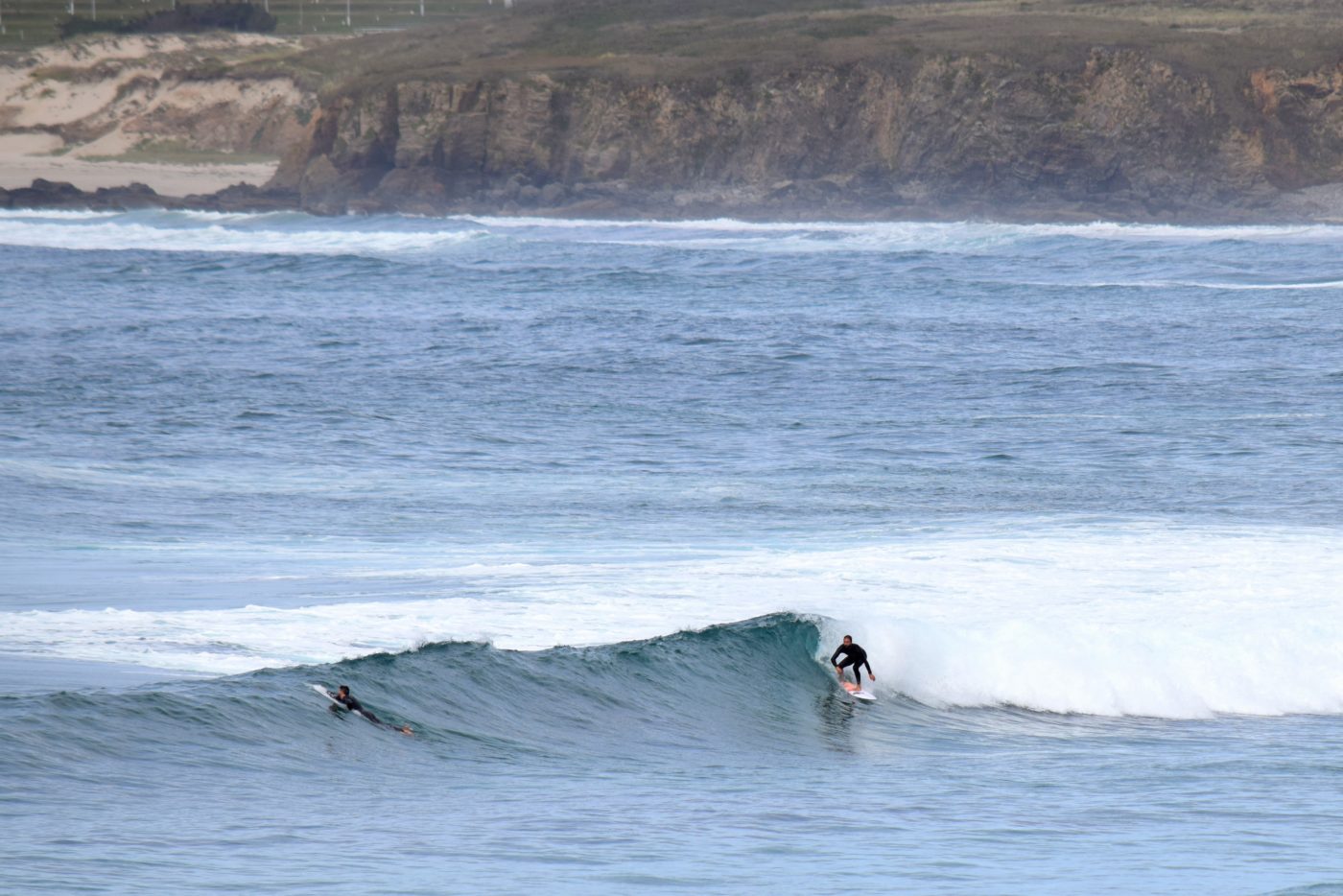
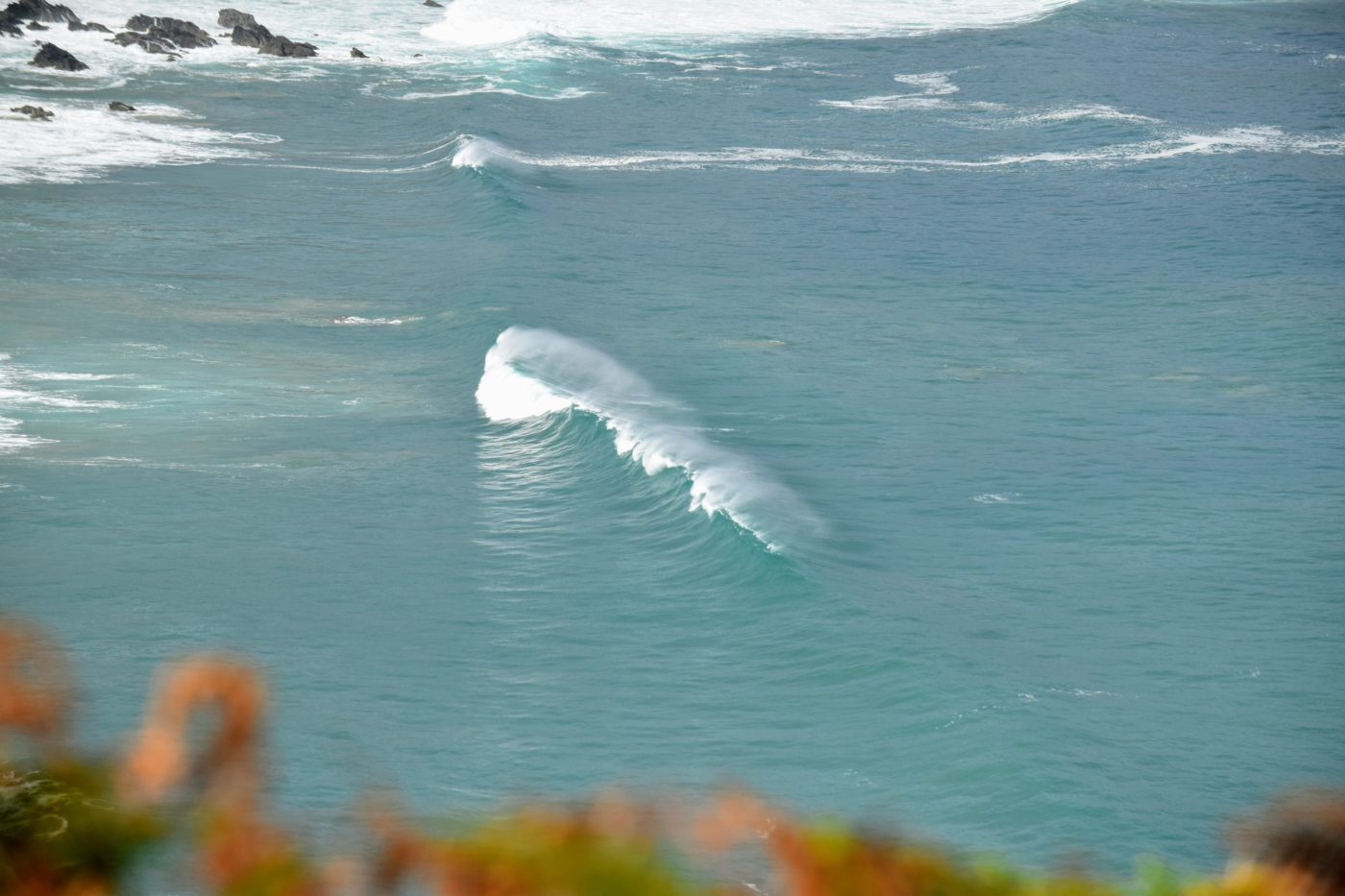
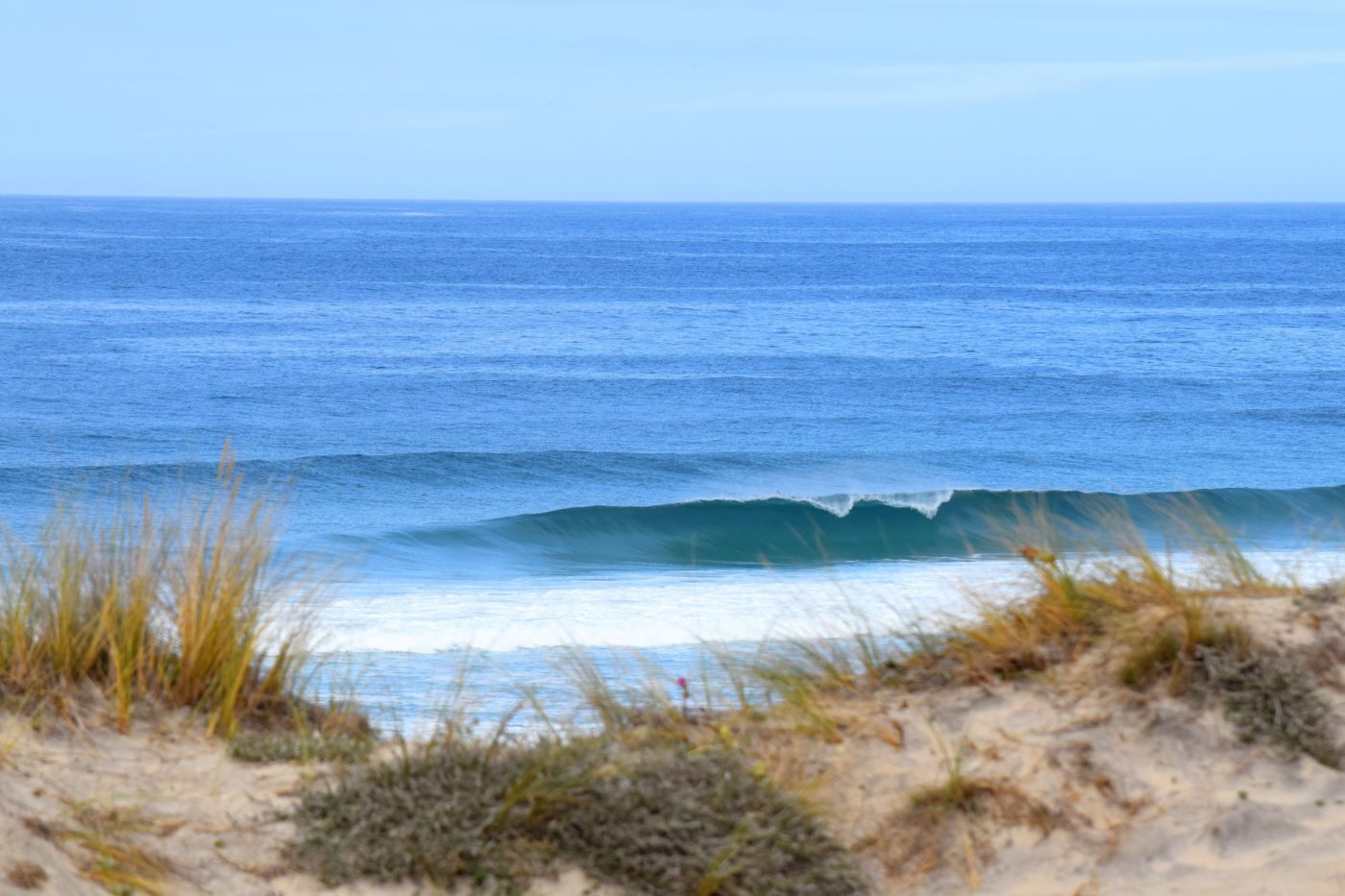
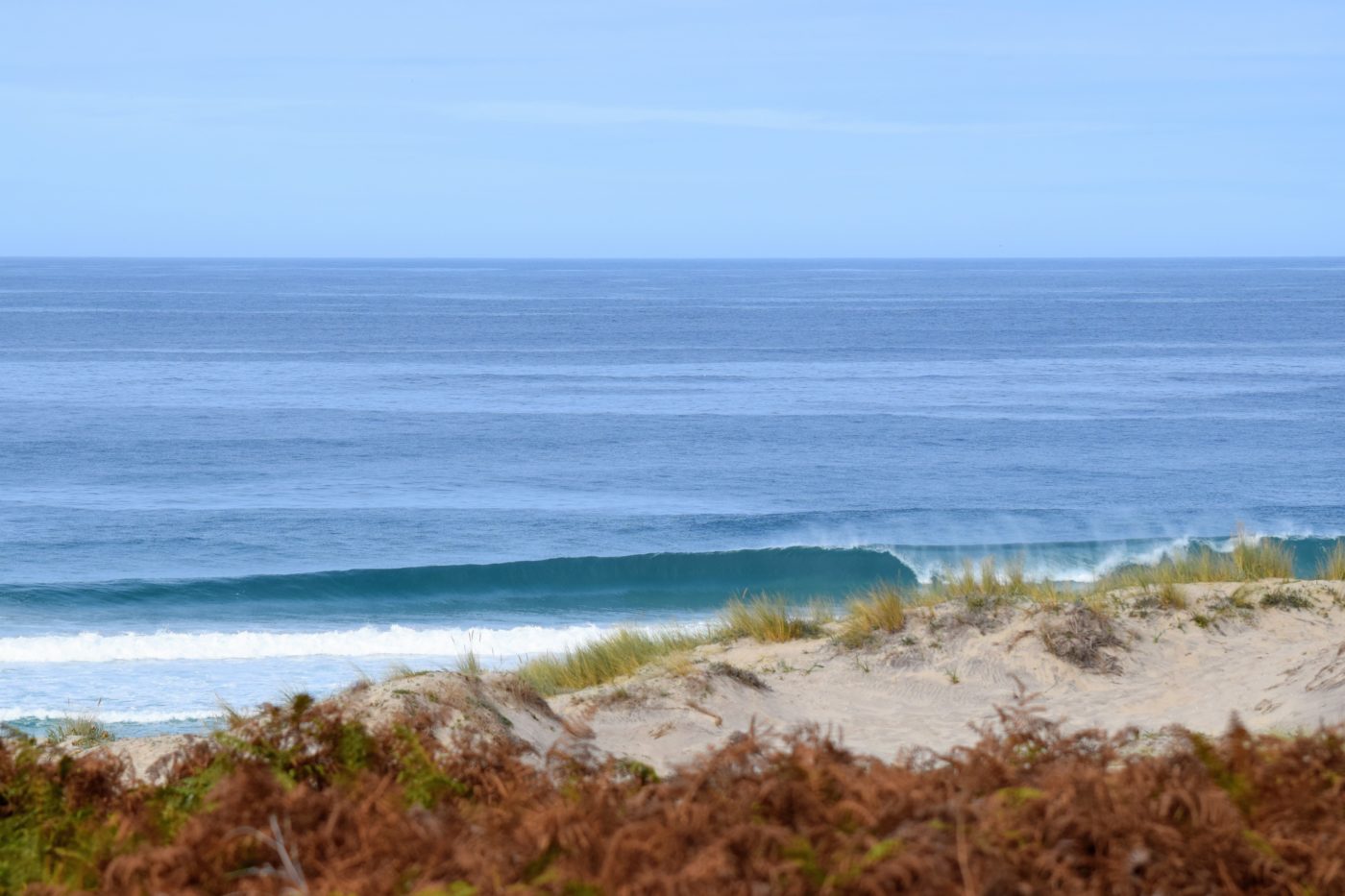
The spot lies in the shelter of swell from the west. And wind from that angle. At high tide you get thick high sliders (conditions we had: 2.2 meters, 13 seconds from WNW). And a shorebreak that can be heavy. The water is crisp and clear. The surroundings are pure. Here you are outside. And away from everything. In the ocean.
After the high-fives, being dried up and launching the heated pizzas in our hungry stomachs, our eyes closed.
Wednesday morning we drove to the beach next to the spot the night before. Here we were from midnight to low tide. At a West-Northwest swell. There was hardly any wind (less than 10 km per hour).
Especially in the first phase of the session it was great.
It is a beautiful bay. At low tide there is a lot of seaweed in which your fins can get entangled.
How can the line-ups be so empty?
There were only three of us in it. Just like the day before. We found that quite special in these kinds of ultimate conditions. During the week it turned out that an empty line-up is quite normal in this part of Galicia.
Because it was a bit chilly this morning I was able to try out my new SRFACE wetsuit. Where a 4/3 is sufficient in this period in Galicia, I was still wearing a 5/4. An excellent suit. And tightly finished. Soon more about this wetsuit in the form of a review.
Doninos surf spot
In the afternoon we drove to a bay nearby. Small waves and therefore even the doubt to go in. But still we surfed nice waves as soon as we got in. Very mellow. Easy to catch. But you had to keep your focus to keep your speed up.
But then the tide came in. And again the waves became massive.
Waiting for a 23 second swell
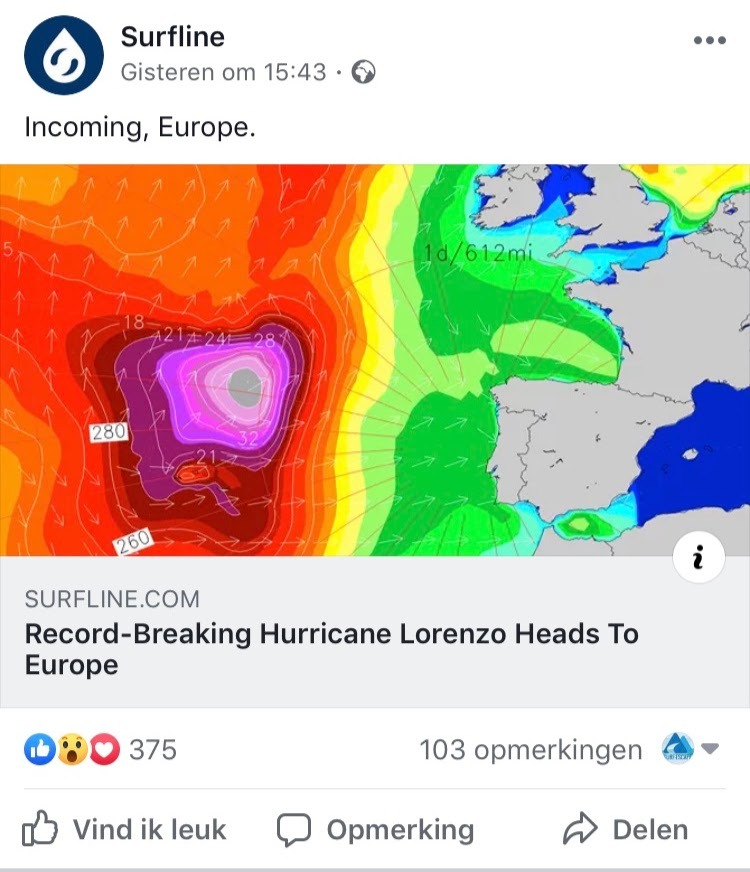
Day 3: The day on which the big swell would come in with a considerable period of time. Remains of Hurricane Lorenzo.
Again we surfed the spot of Tuesday evening in the morning.
After the session we also met Jop Hermans. He’s an awesome surf photographer. Check these:
After that we had to wait. And wait. Because 23 seconds and 3 meters was forecasted.
Eventually we went in at Playa Esmelle. It was rainy and dark weather. But yes, there were those bins. Pfff. Ducking as if your life depends on it. And yet scoring delicious rides.
Day 4: The search
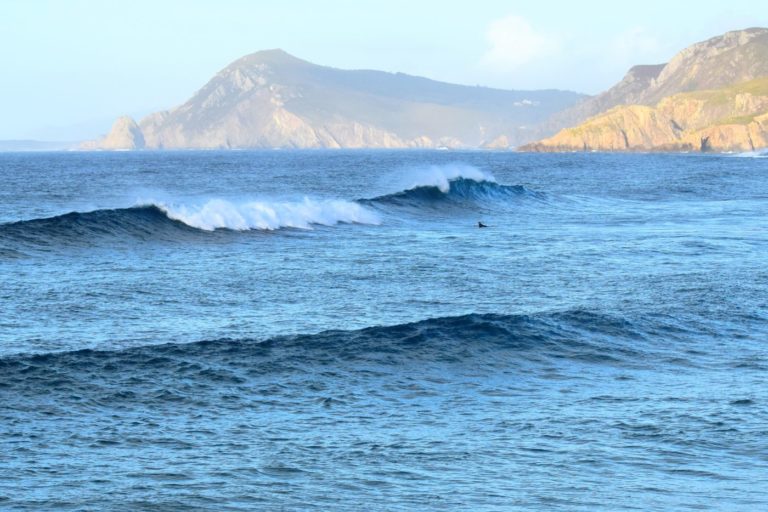
The search is on. The swell reached its maximum today with 3 meters plus and 15 seconds. We checked Pantin. A well-known surf spot. There was only one surfer between the giant waves. But he conquered them with his gun.
What a hero.
Felt like that one scene from Point Break. You know. “Vaya con dios Bodhi”.
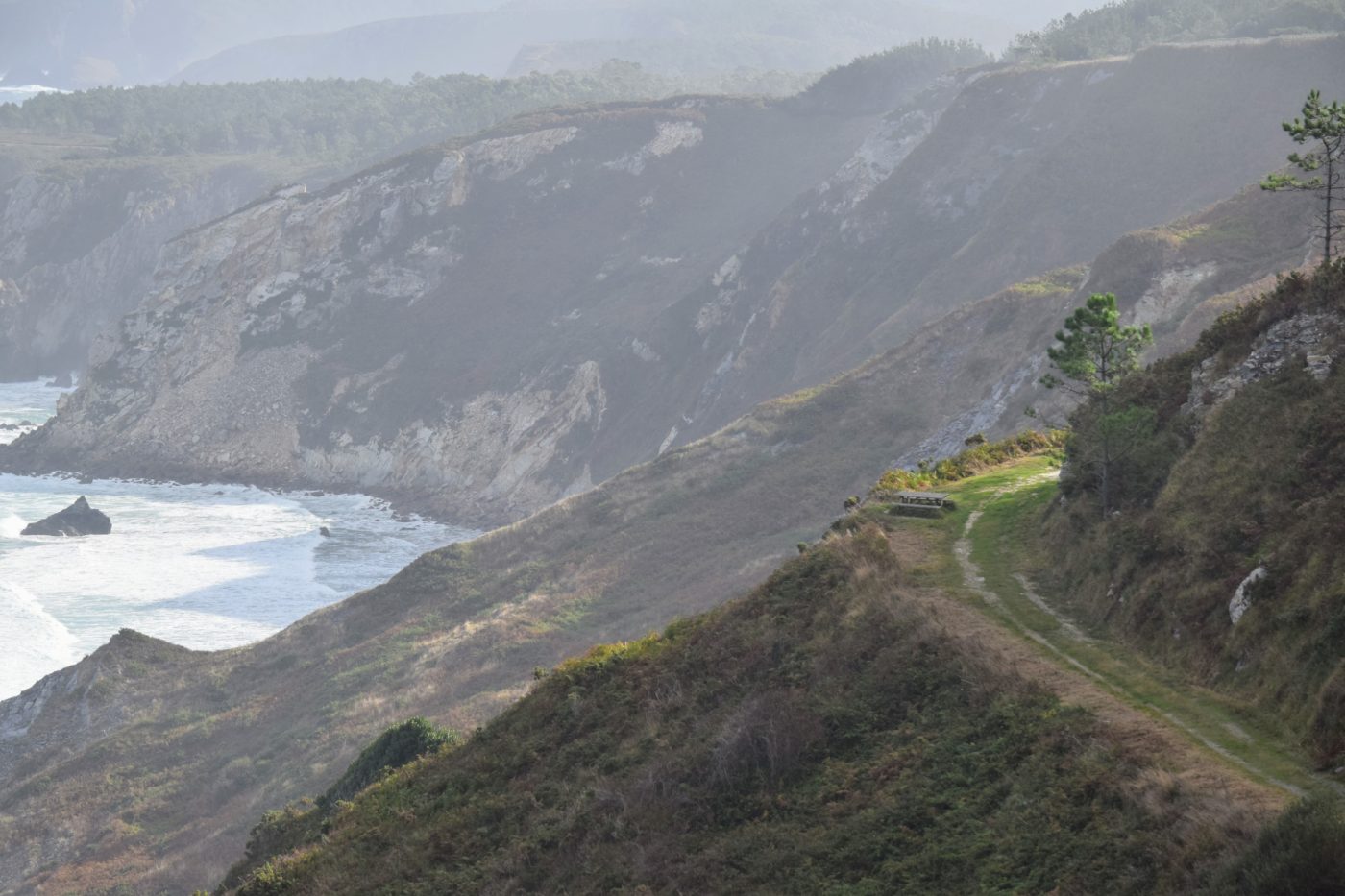
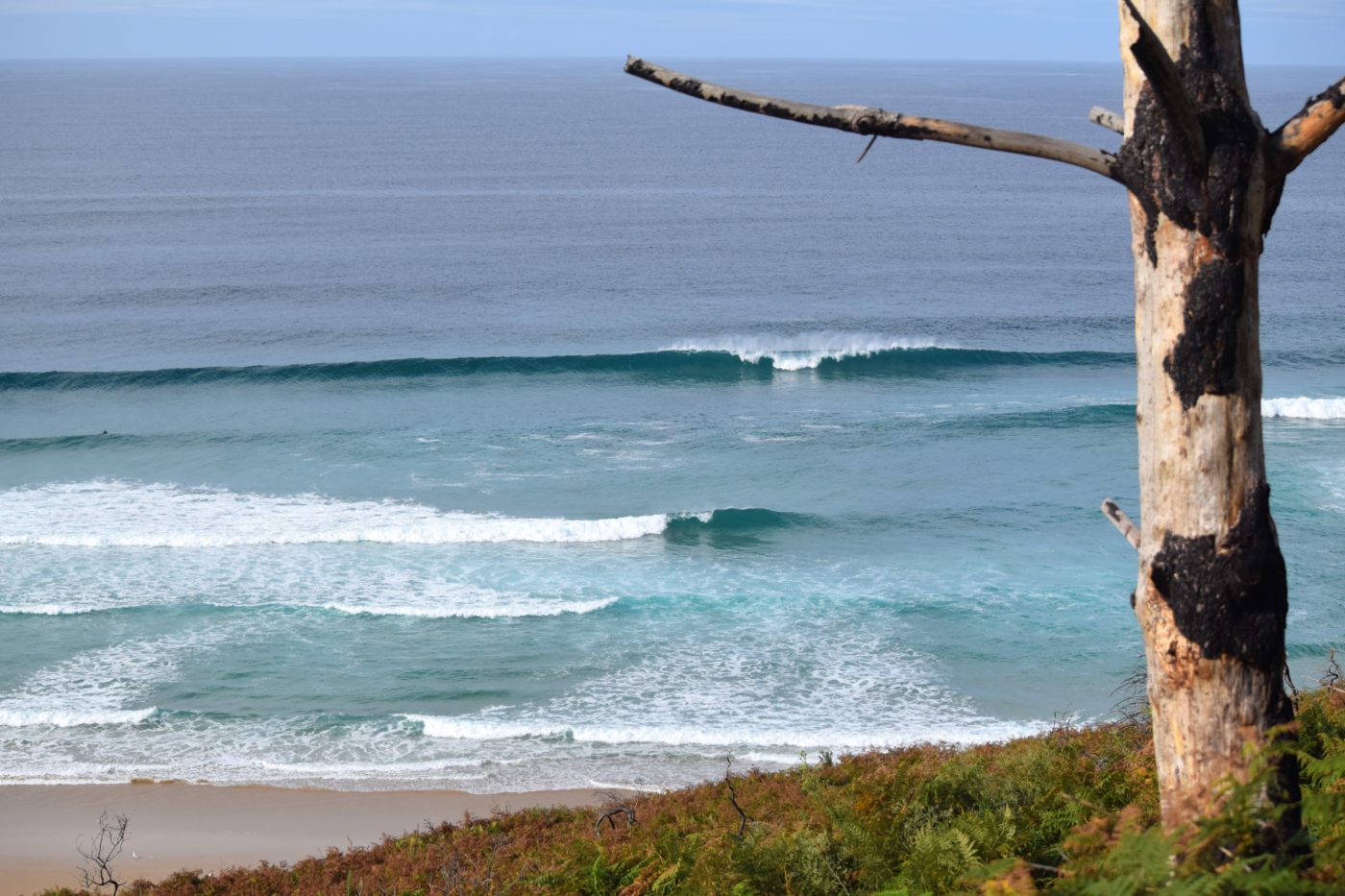
We drove to playa Eiron. With first a detour through the forest. And a fantastic view.
The idea was to surf another spot that we found on Google Maps. But there were no ropes down to go down from the rocks. And we didn’t have a boat either.
Playa Eiron
This is a quiet bay with lots of shelter with this kind of swells. After this surfing session we had a delicious lunch.
Then we checked Minos A spot that when everything is maxed out, is going to run and even delivers a wave of more than 1km. But there was (almost) nothing. Too bad of the trip. But that is also part of it.
We went back to Doninos. What appear to ben Playa de San Xurxo (Doninos is a bay away and is west orientated, and therefore onshore this week). There were big waves but with a mellow take off.
So it’s nice to notice that after a few days you start to understand a bit of the region. Provided the swell is consistent.
Day 5: How good can you start your day?
Playa Esmelle! Here we are again. Good weather. Mellow waves. How good can you start your day?
Here it was relatively busy. 20 surfers? Something like that. It is also a Saturday. The waves were delicious. In the back of the sets. Or in the front with the smaller waves.
Time for Siesta. And I took some pictures myself. When it turned out that the spot was on fire.
Quickly back to the house.
Wake up guys!
It won’t get any cleaner than this.
In the evening we surfed at this spot for over 2 hours. Lovely surfing until it became too dark. But you don’t really want to get out. The adrenaline is steaming out of all your pores.
Another magical evening.
Day 6: Thick mellow waves at A Lanzada
We had to catch a flight today. Going home. But not without a good surfing session somewhere between Covas and Porto.
The forecast indicated that the best thing to do was to find some shelter in Galicia.
It was A Lazanda.
A place that Veerle once described nicely in Travel & Surf. After one and a half hour drive we arrived. It looked mellow. And we dived right into it.
That was not easy.
Also not for the surf lessons.
Waves of more than 2 meters came through. Luckily the sets were completely clean. After 2 hours of provoking, rinsing and surfing it was finished.
Just seeing some locals ripping and then have lunch on the other side of the bay (where good longboard lines came in). With the summer weather, the lines that came in, the delicious food this was very relaxed. Even a little Indo feeling.
After lunch we made a round of the peninsula to see if the bays on the north side of the peninsula still had waves. Not really, but we ended up in a great beautiful nature.
So we automatically came into the chill mode. We ended the day on the rocks near A Lanzada. Longboarders took most of the waves. It was beautiful. Very beautiful.
For 6 days it was on. Galicia is a beastly surfing paradise. Within a nature powerhouse. It takes some more effort to get to the surf spots. But that’s where the thickest reward comes in.
So you decided that you love surfing. Enough to want your very own surfboard, or maybe even a few. With so many options nowadays, things can get confusing. Let this guide help you pick the right board so that you stay stoked.
Persistence and picking the right surfboard is key
Surfing is hard. Once you have taken a few lessons, you realize that that huge barrel you imagined yourself standing inside of, is going to take more time to accomplish than you might have imagined. Being persistent and picking the right board to suit your ability, can be key to getting the most out of surfing.
If you’re a beginner – Go soft
Soft surfboards are the perfect beginner board. They let you get away with a lot of mistakes that you make as a beginner, without causing injuries to yourself or others. Until you have learned to fully control your board, keep it soft for your own safety, as well as the other surfers in the water. Some people prefer to stay on the soft board because they are a safe, easy and cheap way to just catch a couple of waves without taking things too seriously. There’s nothing wrong with that, but if you want to get the most out of surfing, your equipment needs to progress with your ability.
”Your next board choice is an important one. It can make the difference between lots of fun, or total frustration”
Choose wisely
After a whole summer on the softboard you’re feeling in control. You’re beginning to ride waves and the softy feels well…… sluggish. It may be time to move on to something more interesting. Your next board choice is an important one. It can make the difference between lots of fun, or total frustration. It’s important to be realistic about your current abilities and your surfing goals.
Longboards and Mini-mal’s
Longboards are fun! Especially in small, weaker waves. Beginner surfers do best in these kinds of waves because they allow you to make mistakes without consequences. This accelerates the learning curve and keeps it fun. A longboard is the ideal board for the transition from soft, to hard boards and a good board to keep around for the smaller days, even if you move on to something shorter. If a longboard feels hard to control, try out a mini-mal’s (mini-longboard). They are just as stable and floaty as a longboard but a little easier to manage. A true longboard starts at 9’0 feet. Mini-mal’s are typically between 7’0 and 9’0 feet in length.
Performance hybrid shapes
If longboarding isn’t for you, the performance hybrid shape may be what you’re looking for. Picking a performance hybrid shape is easy. It should be only slightly longer than you are tall, and be at least 20 inches wide, and a minimum of 2 ½ inches thick. It gives most of the benefits of a shortboard such as maneuverability and agility, but with only slightly less wave catching ability than a longboard. For many surfers, especially those who started surfing later in life, this is the ideal everyday board. You aren’t going to win a surfing championship on it but that’s not your cup of tea anyway. Another cool thing about these boards is that you can ride a smaller version of the same board once your surfing progresses.
Twin fin fish and retro mid-lengths
A twin fin fish, or maybe a retro mid length single fin is also a good option for those looking to keep it groovy. If you keep your longboard you already have a nice little quiver to surf anywhere. Personally, I enjoy the more performance-oriented surfboard designs, but I do enjoy riding a single fin or twinnie from time to time. It’s a totally different feeling of glide, and it’s fun to go out and just cruise.
Not having fun? Try changing it up
Whatever your choice is, just remember, if you’ve put in the time, and you’re not having fun, it may be time to change it up. Try that pill shaped mini hybrid, or go retro with a twin fin fish, or get cruisy with a mid-length single fin. The more boards you try, the more you know what you’re looking for.
Support your local shaper
Getting a custom-made surfboard from your local shaper may be the best way to get a board that suits your abilities and the local conditions. Getting a custom-built surfboard is as old as surfing itself. Building a relationship with your local shaper is the fastest way to get to your ideal board – and at the same time supporting your local economy and keeping this traditional art form alive. Research local shapers in your area and turn that dream board that’s in your mind into a reality.
Our oceans are having a hard time. It’s there for that organisations like Surfrider Foundation, Save the Waves and National Geographic are drawing attention to get the oceans clean. And the amount is growing. But what can we do ourselves?
Strangely enough, surfing has everything to do with nature, but the surfing industry has never really been “green”.
Fortunately, there are now both global and local initiatives, that are turning this around and with which you can directly help to save the ocean.
8 eco friendly products for surfers
There are very good eco friendly products for surfers available. Below you will find 8 of them. Do you have any additions? Share it below in a comment.
Packing for your surf trip: no bubble wrap
Do you use bubble wrap to pack your surfboard? We did untill recently. But from now on we use cardboard. Protects your surfboard perfectly during your trip.
Eco boards
Which surfboard do you buy? A board that comes from the factories in Thailand. Or where the board brand or the shaper is involved with nature. Think of Firewire, for example. In their mission statement: Impact the environment as little as possible.
For example, they use bio-resin. Going for zero-waste in 2020. And re-use of the foam in the boards. Their factory is tested annually to check whether they can use the “Ecoboard” certificate. They currently have the highest qualification.
An interesting formula is from the brand Notox. They know how to make great boards out of cork.
Plastic fins from Bali
Some beaches in Bali turned into plastic waste fields. Better to stop plastic, how? Check out these 12 alternatives. But how cool is the initiative to process this plastic from the Balinese beaches into surf fins. There are now also eco-friendly alternatives available, see this one from Five Oceans.
Of course, your leash can also be durable, without compromising on quality. Check this link to find a party that recycles PET bottles into the materials for the leash.
Surf poncho
In countries aross the world there are several ecological initiatives. Even in The Netherlands, whith a small surf scene we got to know Ressies Redesign. They combine their love for surfing and design with respect for our planet, by making surf ponchos from leftover material and overstock cotton. And they are also super cool. More about Ressies.
Vegetative wetsuits
Since its foundation, Patagonia has been known for its respect for nature. And they have successfully made a wetsuit by replacing non-reusable neoprene with a vegetative polymer, Yulex. A natural rubber from heva trees, which reduces CO2 emissions by 80 percent.
In France, a three friends have set up Picture Organic. The name says it all. They make great clothes. But also wetsuits. Since 2017 they have a 100% natural wetsuit in the collection after 2 years of testing
Check out the wetsuits here for men and here for women.
Organic Surf Wax
Fortunately there is also eco friendly surf wax. The ingredients are all natural. And even the packaging is. Read everything about it in this article.
Surf bag of hemp
And last but not least, you knew that you can also buy surf bags made of plant fibre (eco hemp a type of hemp). No chemicals are used. You can order them via Wave Tribe.
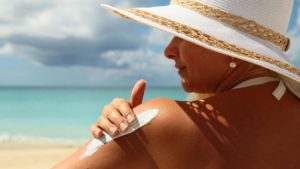
Did you know that regular sun cream is harmful to the environment? The chemicals contained in sun cream destroy plankton and are toxic to fish. In addition, the coral is dying in various parts of the world. Fortunately, there is more and more sustainable sun cream available nowadays. This way you can lie on your board in the waves and feel a lot better.
Moving to a cleaner sea
Good sun block of course is very important to protect your skin from the sun. Fortunately, more and more brands introduce sun cream that contains natural products and do no harm. Using a sustainable sunscreen as a surfer is at least a first step towards a cleaner sea.
Every year, more than 14,000 tons of sun cream ends up in the oceans. In addition to non-degradable substances, sunscreen also contains microplastics. And we all know that plastic is a major problem. The other culprits are two chemical substances in sunscreen: octinoxate or oxybenzone.
Natural and plastic-free sun cream
Lovea
This sun cream is water resistant and certified by Ecocert. The cream remains a little on the skin and acts as an invisible shield. Lovea contains no chemicals and is also vegan. In addition to being organic, it is free of the ‘forbidden’ ingredients.
“Protect yourself and at the same time our ocean by using sustainable sunscreen”.
Naïf
Naïf skincare is made of natural ingredients and is suitable for all skin types, and especially for small children. Naïf products contain no mineral oils, chemical preservatives or hard chemicals. Instead, natural ingredients such as flaxseed oil, avocado oil and lycosol (tomato extract) form the basis. They have set the goal of being zero waste by 2021 by using 100% recycled packaging and refill packs. They are developing a clear raw materials plan.
Lavera
Lavera is certified with NaTrue, an international quality mark for natural cosmetics with very strict guidelines. This means that Lavera meets the highest standards for natural and organic products and ingredients. Lavera’s products are therefore completely free of harmful substances. Nice fact: The products are made in Hanover and the production is based on green electricity!
Lush
Sustainable and animal-friendly production and sale of cosmetic products, including sun cream, is characteristic of Lush. They have a number of types of sun cream: powdered, a lotion and a sunblock. The Sesame Suntan Lotion smells like sesame but protects the skin well. Unfortunately still contains some harmful substances.
Sun Safe
This is a natural sun cream from Dutch soil, made by the Dutch brand The Ohm Collection. This brand offers natural care products that are good for people and the environment. Sun Safe lotion does not contain any chemical ingredients such as alcohol and perfume and does not leave a white haze. The packaging can also be recycled. There is a Sun Safe sun cream with a sun protection factor of 15 (SPF15) and a cream with a sun protection factor of 30 (SPF30).
After a 13hour drive(!) we arrived at a huge cliff. We took the road downhill and we wove through small towns surrounding the cliff. When we finally got down we drove by a harbor. The harbor was filled with boats and a small road let us around it entering the town called Siouville-Hague. The first thing you see is the beach. Between the houses on the boulevard you could see the enormous sandy beach stretching out for as far as the eye can see.
We checked in on the campsite just behind the boulevard. A road and 2 blocks of houses are between us and the waves. You could hear the waves pumping when we stepped out of our camper. Excited as we were we waxed our board and walked to the beach. The walk was even shorter than the wax job! The waves were amazing. On the app’s there was a 1 to 3ft forecast but in reality it was closer to 3 to 5ft. We surfed for 2 hours and went back to the camper to rest a bit. We were exhausted!
As we got back, we unpacked all of our stuff. We found out that if we stood on the roof of our camper, we could see the ocean!
In the evening the wind came on a bit. The swell got bigger and left us with over-head barrels! We surfed until dark.
Surf Siouville
The beach is very wide. In the middle there is a separation for swimming and bodyboards. The local surf school has a section next to that and then you have the main break. On weekdays there are not so many people in the water. Locals are mostly during morning and evening sessions. There are a lot of kooks but they’re the ones having the most fun and are respectful to the advanced surfers. Bodyboarders however do not! Watch out for them. Especially because they have no clue what they are doing. My guess would be that the most bodyboarders are also tourists and none of them had seen an ocean before.
For kids is perfect! On the left side you have an enormous cliff that you can pass around on low tide. Endless walks on rocks, searching for seashells and crabs. Also on the low tide you have a lot of rock pools where kids can play safely. When it’s high tide most rocks are under water so it’s wise to check on low tide where the rocks are. That’s also handy for surfers because mid to high tide is the best time to hit the water.
After your beautiful day at the beach you have a cold free shower waiting for you! That kind of unique for France in this region. A little town square where you can find a barber and a cafe where the serve you a great meal. On the playground behind the cafe they sometimes have a market! Local food trucks and souvenirs can be bought.
After browsing through Google Maps (campsite near the beach), reviews (at least 4 out of 5 stars) we saw a small campsite in Southern Brittany. Between La Torche and Penhors, near the village of Tréguennec.
dawnpatrol at plage de Kermabec
La Torche and Penhors are also two great surf spots by the way, but more about that later.
Camping Kerlaz is a surf campsite in Brittany. A relatively small campsite with a maximum of 70 pitches. Some chickens. A table football table, play caravan and bouncy castle for smaller children, a swimming pool and a surf school.
Surfschool
A local has a shed and a van at the entrance. Olivier is the owner and surf teacher. A cheerful and sympathetic Frenchman. At Olivier’s place you can rent boards and of course take surf lessons.
surfschool at campsite
Small charm campsite
The campsite has been run by a French couple for a few years now. In all relaxation. Before that the owner worked in the financial sector. But now they both radiate pleasure and relaxation. Also in high season.
Relax in the swimming pool after a surf session
They take the eggs from the henhouse and take the time to make pancake batter with the children.
Once a week you can eat pancakes. Once a week you can eat moules-frites. One day locals come and sell delicacies. There is a local (pretty good) band along at one evening in the week. All in a cosy and small-scale way.
Small and nice too.
Environmentally conscious camping
The owners do everything themselves. And think clearly of our planet. You are subtly but clearly reminded of the fact that you should not leave the lights on, not use too much water. And the toilet paper is only supplemented on Mondays with the request to also use paper in moderation.
The surf spot
Then more good news, maybe the best news. At 3 minutes drive (less than 3km) you will find Plage de Kermabec. Recognizable by the bunkers in the lineup. Here, at average conditions, a mellow wave breaks at the bunkers (mid to high tide) and a nice wave at the left side of the beach entrance.
Early morning swell
It’s not busy here. Even on a sunny, warm, windless day with 1 metre of waves, you’ll find yourself here with just a handful of people at the peak.
Sunny surf days in Brittany
An ideal place to sit for at least a week. To chill, surf, dive into the pool, eat crepes and check the forecast for the next day.
By the way, you feel extra welcome as a surfer because they also have a bath that is only meant to rinse off your wetsuit.
Rinsing your wetsuit
What else is there to do
Is that surf forecast a bit disappointing? Then there is plenty to do in the area. A few tips:
Quimper. In less than half an hour you’ll reach this cheerful little medieval town. Nice shops, squares and a world famous macaron shop. The church in the middle of the city is also very old and big, which makes it worth a look.
La Torche. La Torche is the surf spot of Brittany. Not that it is a big place, but you will find here a few surf shops and shapers. And it’s always a lot busier here. Nice to once a day on the beach to be. Or a SUP to rent and along the rocks to suppen.
Pointe du Raz. The westernmost part of the region. A point in the ocean. Here you feel at the end of the world. Rough coast. Thick rocks. Fantastic views over the ocean and the lighthouse that stands a little further on a rock. Worthwhile to do a de-tour.
Visit the market in the village of Pont L’Abbe. A clear authentic village, where they once a week have a market. A standard market as we know it in the Netherlands, but also a real typical French market. Much more fun of course.
Local market Brittany
Penhors
Then we’d come back to Penhors. Penhors is a 15 minute drive from the campsite. It is a playful surf spot, because the waves here usually break crumbly. And you have a small harbour where children can play at low tide in a pool that then arises. Or mussels, crabs and fish can see and catch between the rocks.
The wave at the harbour is a righthander that breaks best from mid tide.
Why this campsite?
On this small charming campsite you are at the right address if you:
Likes empty line ups
Want mellow waves to surf
Fancy a small charming campsite, but with the luxury of a swimming pool, for example
Like to be close to other fun things besides surfing.