Surfing in France (2026)
Updated 15 November 2026 · By Jurjen van den Broek

You can surf in France all year, but September and October are the best months for most surfers: consistent Atlantic swell, water still at 18-21 °C in Les Landes and the Basque Country, and empty beaches once the summer crowds leave. Beginners and families do best in the Vendée or Les Landes; experienced surfers head for the Basque Country and Brittany. From Calais it is roughly 10-11 hours' drive to Hossegor, and from Utrecht 11-13 hours. From June to September a 3/2 mm wetsuit is enough in the south-west; in winter you need a 4/3 or 5/4 mm with boots.
Add Surf Escape as a preferred source on Google and see more of our surf guides in your search results.
 Add Surf Escape as a preferred source on Google
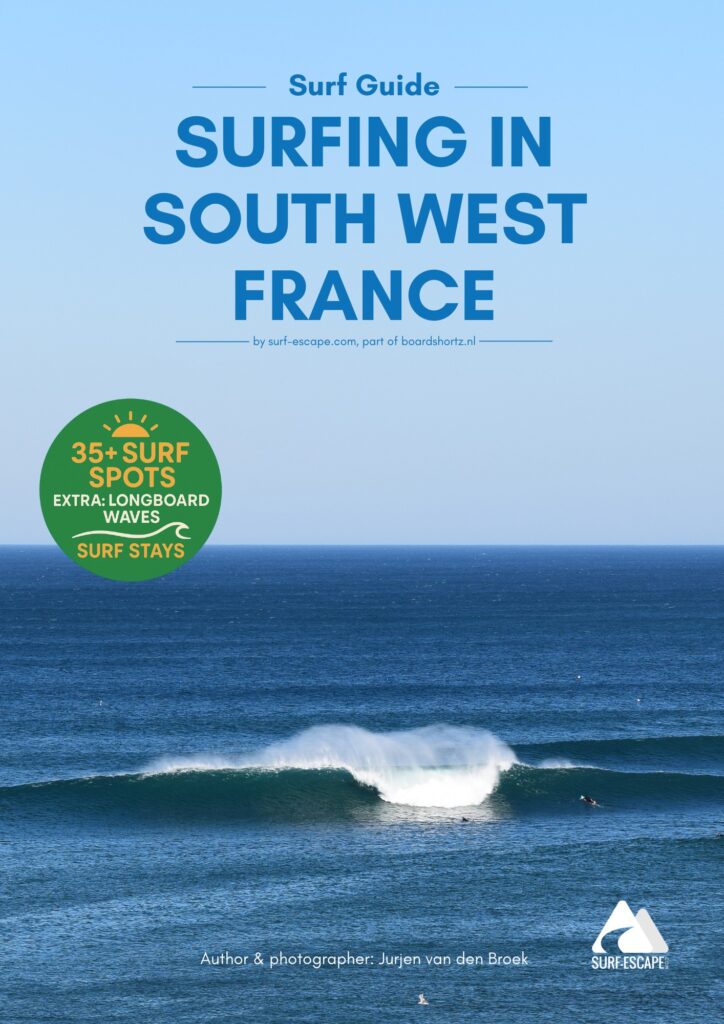
Our own guide from the Vendée to the Basque Country, 70 pages built from our trips. 20% of the proceeds go to ISTO.
- 35+ surf spots by level, with extra attention for longboard spots
- Surf stays, wetsuit advice and weather statistics
- Discount codes, including 5% off surf coaching with Pepijn Tigges
Surfing in France at a glance
| Best months | September and October (all levels); May and June for beginners; November to March for experienced surfers |
|---|---|
| Wave type | Mostly beach breaks (Vendée, Gironde, Les Landes); reefs and points in the Basque Country, Brittany and Normandy |
| Swell and wind | Swell from the west to north-west; offshore is east to south-east, often early morning |
| Water temperature | South-west about 12 °C (March) to 20-22 °C (August); Brittany and Normandy 2-4 °C colder |
| Wetsuit | Summer 3/2 mm, spring and autumn 4/3 mm, winter 5/4 mm with boots, gloves and in Brittany a hood |
| Getting there | Drive via Calais, take the ferry to Brittany or northern Spain, or fly to Bordeaux or Biarritz |
| Crowds | July and August are busy, with swimming zones where surfing is not allowed; quiet from mid-September |
| Tides | Big tidal range, especially in Brittany and Normandy: many spots only work for a few hours per tide |
Where is the best surfing in France?
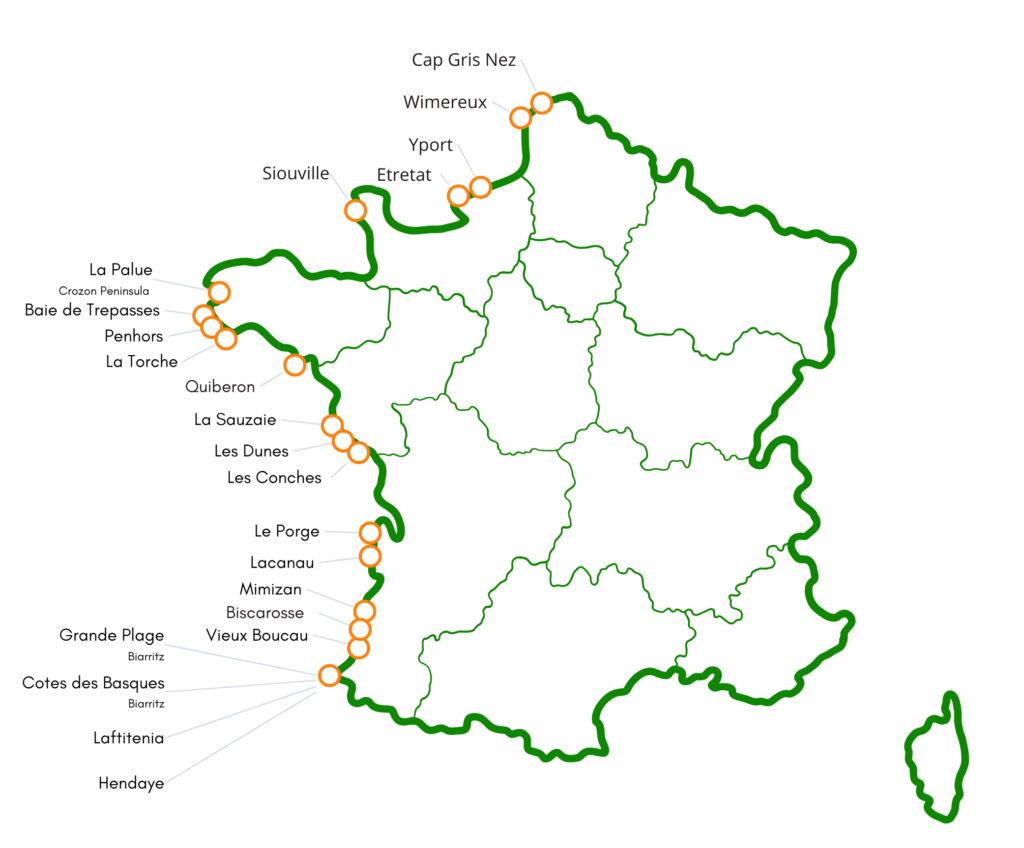
The French coast from the Channel to the Spanish border splits into five surf regions. Where you should go depends on your level, how far you want to travel and whether you bring kids. Our full list of spots by type and level is on the French surf spots page.

Normandy and the Opal Coast
2-3 hours from Calais
Close to the ferry ports and often empty, but it only works with a strong south-westerly or a westerly swell pushing into the Channel. Wimereux is a weekend option, Étretat and Yport have quality lefts over stone. We once scored great waves at Yport. More in our Normandy surf guide.
Brittany
a short drive from Roscoff or St Malo
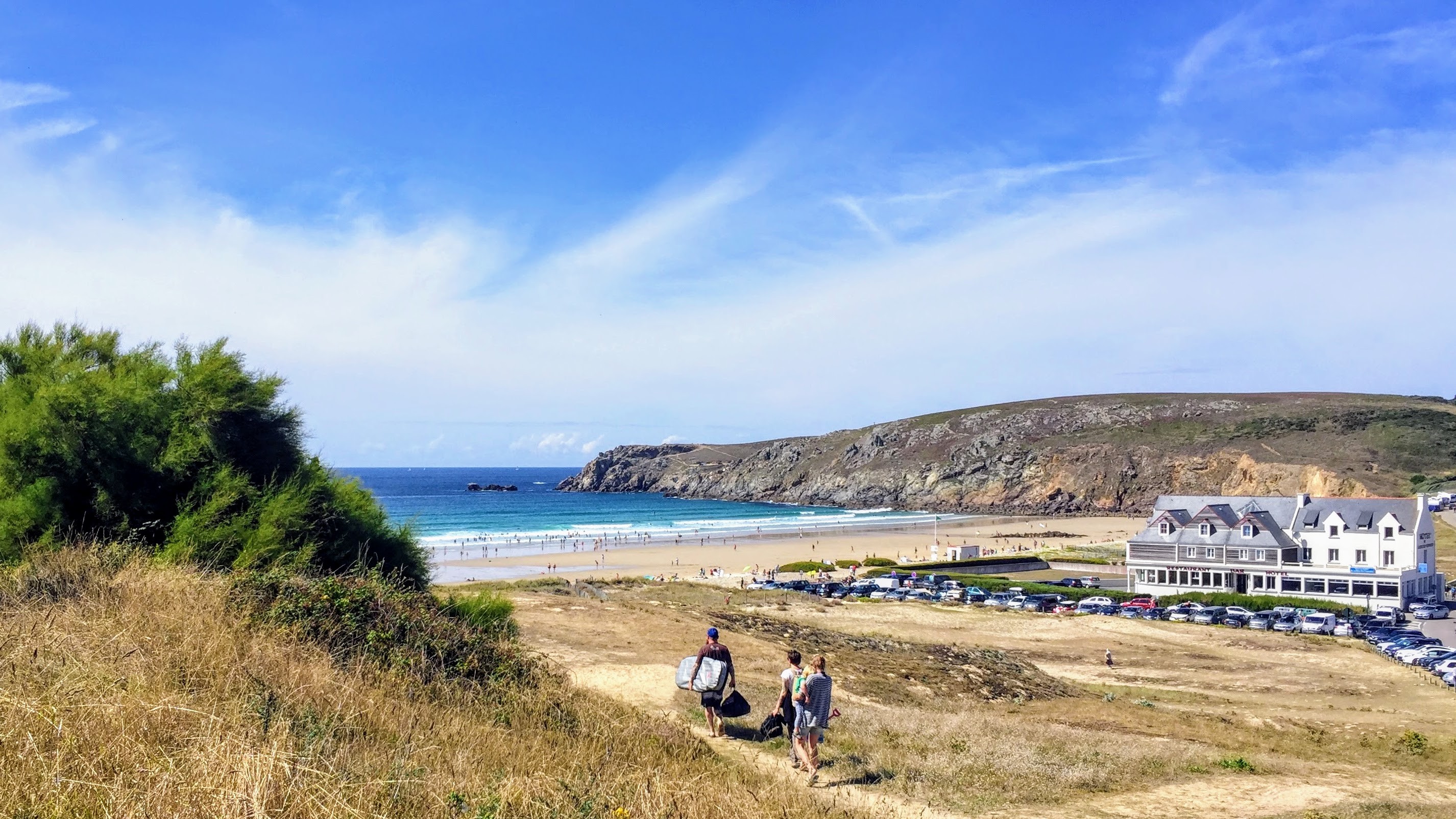
Crystal-clear water and bays facing every direction, so there is almost always somewhere working. La Torche is the best known, Baie des Trépassés picks up almost any swell. It is cold, though: even in August you surf in a 4/3. We mostly chased the reef breaks here. See surfing in Brittany.

Vendée
central Atlantic coast
Underrated and less crowded than the south-west. Les Dunes is mellow and good for longboarders and beginners, La Sauzaie is a reef for experienced surfers. Everything in our Vendée surf guide.

Gironde and Les Landes
south-west, 1-2 hours from Bordeaux
Over 200 km of almost unbroken sand (the Côte d'Argent) with banks that shift every year. Lacanau is a real surf town, Le Porge (great for camping within walking distance of the beach), Messanges (one of our best mornings ever) and Biscarrosse are quieter, and Hossegor is powerful and busy.

Basque Country
next to Biarritz airport
This is where European surfing started in 1956. Reefs, points and town beaches around Biarritz, Anglet and Bidart. Guéthary gets big in winter and Lafitenia is a long right where we have had some brilliant rides. A good base for a trip into northern Spain too.
All French surf spots
By region, wave type and level, with when each spot works best.
See the overview →
Why France is our favourite
We have been coming to France for decades, on family holidays and on surf trips with friends. It is our favourite surf destination for a reason, although northern Spain comes close. A few moments that stuck: great surf at Yport, a fantastic morning at Messanges, brilliant rides at Lafitenia and lovely days at a campsite in Le Porge, a short walk from the beach. In the Vendée and Brittany we mostly went looking for the reef breaks.


Which surf region in France suits your level?
| Region | Best for | Wave type | Best months |
|---|---|---|---|
| Normandy | intermediate, advanced | reef, stone, beach | October-March |
| Brittany | all levels (bay by bay) | beach, reef | April-June, September-October |
| Vendée | beginner, intermediate, longboard | beach break, reef | May-October |
| Gironde and Les Landes | all levels, families | beach break | May-October |
| Basque Country | intermediate to expert | beach, reef, point | September-November |
When is the best time to surf in France?
Short answer: September and October. The Atlantic storm season is starting, winds are often still light and the sea has warmed up all summer. Month by month:
| Months | Waves | Water (south-west) | Wetsuit | Who for |
|---|---|---|---|---|
| January-February | big and powerful, often 2-4 m, storms | 12-13 °C | 5/4 mm, boots, gloves | advanced |
| March-April | still solid swell, changeable wind | 12-14 °C | 5/4 or 4/3 mm, boots | intermediate, advanced |
| May-June | smaller and calmer, glassy mornings | 15-19 °C | 4/3 or 3/2 mm | beginner, intermediate |
| July-August | often small, sometimes flat; afternoon sea breeze | 19-22 °C | 3/2 mm or shorty | beginners, families |
| September-October | consistent 1-2 m swell, often offshore mornings | 18-21 °C | 3/2 mm, 4/3 by late October | everyone |
| November-December | big, short days, lots of rain | 14-16 °C | 4/3 or 5/4 mm, boots | intermediate, advanced |
Water temperatures are rounded averages for Hossegor; Brittany and Normandy are 2-4 °C colder. On 10 November 2026 the water at Hossegor averaged 15.5 °C.
Live dataFrench spots5-day forecastCheck the surf forecast for FranceWave height, period, wind and water temperature from Normandy to the Basque Country.See forecast →For the next few days, check our surf forecast, and if the charts confuse you, read how to read Windguru.
What wetsuit do you need to surf in France?
You need a wetsuit all year, even in Hossegor in August, if only for the early session. The rule of thumb: the further north and the later in the year, the thicker.
- June to September, south-west: 3/2 mm. In August a shorty or 2 mm will do.
- Spring and autumn, or summer in Brittany: 4/3 mm.
- November to April: 5/4 mm with boots and gloves, plus a hood in Brittany and Normandy.
More detail in our wetsuit guide for France and, for the cold months, winter wetsuits explained.
Where to learn to surf in France
France is one of the easiest countries in Europe to learn: long sandy beaches, plenty of surf schools and waves that break on sandbanks rather than rock. In summer pick the Vendée or the villages of Les Landes such as Moliets, Vieux-Boucau and Mimizan, and avoid the powerful beaches of Hossegor and Seignosse when the swell is over 1.5 m. Our beginner surf spots in France list the beaches we would start at.
How do you get to the surf in France from the UK, Germany or the Benelux?
Most surfers drive, and it makes sense: you bring your own boards and have a car to chase whichever spot is working. Rough driving times without traffic:
| From | To Brittany | To Les Landes (Hossegor) | Notes |
|---|---|---|---|
| London (via Dover-Calais) | about 7-8 hours from Calais | about 10-11 hours from Calais | or ferry Portsmouth/Plymouth to St Malo, Caen or Roscoff for Brittany |
| UK by ferry to Spain | - | about 2 hours from Bilbao, 3 hours from Santander | Portsmouth-Santander runs all year (31-33 h); Portsmouth-Bilbao April-November (32-36 h) |
| Cologne / Düsseldorf | about 9-10 hours | about 13 hours | overnight stop around Tours or Poitiers |
| Amsterdam / Utrecht | 8-9 hours | 11-13 hours | Normandy in 2.5-4 hours |
| Brussels / Antwerp | about 7-8 hours | about 10-11 hours | Wimereux in under 2 hours |
Estimates without traffic or breaks. Summer Saturdays around Bordeaux easily add 1-2 hours.
Flying works too: Biarritz and Bordeaux are the closest airports. Check the board fee before you book, and hire a car; public transport along the coast is limited.
Where to stay for a surf trip in France
Camping is the classic option: in summer the coastal campsites are full of surfers, recognisable by the board next to the tent. Our selection of surf campsites in France sorts them by region. Prefer a bed? Board 'n Breakfast in Labenne [LINK NEEDED: English partner page Board 'n Breakfast] is a surf B&B near Hossegor. Book July and August well in advance.
Tip: the Surf-Escape Guide to South West France lists the surf stays we recommend in each region.
Good to know before you surf in France
- Swimming zones in summer. On lifeguarded beaches in July and August you cannot surf between the swimming flags; the surf zone is marked separately.
- Baïnes in Gironde and Les Landes. Strong rip currents form between the sandbanks, especially around low tide. The Nouvelle-Aquitaine prefecture issues an "alerte baïnes" when the risk is high; in 2026 it did so as late as 1-2 October. Keep kids between the flags.
- Tides. Many spots only work at a certain stage of the tide, and in Brittany and Normandy the range is several metres.
- Portuguese man o' war. In late summer they sometimes wash up along the Atlantic coast. Don't touch them, even on the beach.
- Locals. On the well-known Basque and Breton reefs, wait your turn and start on a quieter peak.
Still deciding between countries? Portugal has more reefs and better winter swell but is a lot further to drive. Compare with surfing in Portugal or Mundaka in northern Spain.
Frequently asked questions about surfing in France
Where is the best surfing in France?
For most surfers, Les Landes and the Basque Country: that is where you find the most consistent waves, from beach breaks at Lacanau and Hossegor to reefs around Biarritz. Beginners and families do well in the Vendée and the quieter villages of Les Landes. Brittany is beautiful if you don't mind cold water.
What is the best month to surf in France?
September and October. There is consistent swell, the water in the south-west is still 18-21 °C and the summer crowds are gone. Beginners can also go in May and June.
Is France good for beginner surfers?
Yes. Long sandy beaches, many surf schools and gentle waves in the Vendée and Les Landes make France one of the best places in Europe to learn. Pick a beach with a surf school for your first lessons and stay away from Hossegor when it is big.
What wetsuit do I need for surfing in France?
In summer in the south-west a 3/2 mm, in spring and autumn a 4/3 mm, and from November to April a 5/4 mm with boots and gloves. In Brittany and Normandy go one thickness up all year.
How long is the drive from the UK to the surf in France?
From Calais it is roughly 7-8 hours to Brittany and 10-11 hours to Hossegor without traffic. Alternatively take the ferry from Portsmouth or Plymouth to Brittany, or from Portsmouth to Bilbao or Santander, which puts you 2-3 hours from the Basque Country.
Can you surf in France in winter?
Yes, and the waves are at their best, but they are also big and cold: water around 12-14 °C, short days and lots of rain. Winter is for experienced surfers in a 5/4 mm with boots and gloves.
Sources
- Surf-Forecast.com, Hossegor La Sud water temperature and wetsuit guide (issued 10 November 2026). surf-forecast.com
- Ferryscanner, "Ferry to Spain from the UK: routes, crossing times and tips" (17 February 2026). ferryscanner.com
- Brittany Ferries Newsroom, "More Brits swerve the plane and sail to Spain in '26" (23 July 2025). brittanyferriesnewsroom.com
- Préfecture de la région Nouvelle-Aquitaine, press release "Alerte baïnes 1er et 2 octobre" (30 September 2026). prefectures-regions.gouv.fr