Home Blog Page 2

Surfing Near Lisbon in Autumn & Winter: Where to Find Shelter, Quality Swell and Consistent Waves

Surfing Near Lisbon in Autumn & Winter: Where to Find Shelter, Quality Swell and Consistent Waves

Autumn and winter transform the Lisbon coastline into one of Europe’s most reliable surf zones. The water cools only slightly in Portugal, Atlantic swells arrive like clockwork, and the beaches empty out. Creating the perfect window for intermediate surfers who want clean shoulders, more punch in the waves and space to progress.

But: the wind can be strong, the swell can get big, and choosing sheltered surf spots becomes essential. This guide helps you find the right places when the weather turns wild.

Why Lisbon Works So Well in Autumn & Winter

  • Consistent Atlantic swell — high-quality waves nearly every day.

  • Mild temperatures — often sunny, rarely freezing; water ~15–17°C.

  • Plenty of sheltered corners — crucial during north wind or heavy swell.

  • Fast access from the city — 20–40 minutes from Lisbon to most spots.

For many surfers, this is the best season to visit. You avoid the summer crowds and unlock the real power and beauty of the Portuguese coastline.

The Best Surf Spots Near Lisbon (Autumn & Winter Edition)

1. Carcavelos — great when the wind behaves

Carcavelos is usually the first spot people check in winter. It’s a powerful beachbreak, and when the north wind drops or turns offshore, the waves can be excellent.

Autumn/Winter conditions

  • Works well with clean north or northeast winds.

  • Can get too big during heavy swells — then look for sheltered alternatives.

  • Fun shoulders for confident intermediates when the banks line up.

Shelter factor:
Low. It’s exposed, so on stormy days it closes out quickly.

2. Costa da Caparica — long coastline with hidden sheltered banks

Caparica stretches for kilometres, which means you can often find a bank that handles the swell better — especially in autumn and early winter.

Why it’s good this season

  • Multiple sandbanks and jetties create pockets of shelter.

  • On big days, head further south towards Praia da Rainha or Praia da Sereia for more protection.

  • Early mornings often offer the best conditions before the wind picks up.

Shelter factor:
Medium. Jetties and the southern stretch help block some wind and organize the swell.

3. Guincho — powerful winter surf (only good when very calm)

Guincho is stunning but extremely exposed. In winter, the combination of swell and north wind often makes it unsurfable.

When it works

  • On rare calm, offshore winter mornings (NE–E winds).

  • For advanced surfers who like punchy beachbreaks.

Shelter factor:
Very low. Guincho is one of the windiest beaches in Portugal — avoid it on stormy days.

4. Cascais & the Estoril coastline — your go-to shelter in winter

When the swell is too big for Carcavelos and Caparica, locals head here. The rocky coves and small beaches around Estoril can handle larger swell and block strong winds.

Good winter spots include:

  • Praia da Poça

  • Tamariz (rare but fun on small takeoff zones)

  • Azarujinha — one of the most sheltered options when everywhere else is blown out.

Shelter factor:
High. These small bays offer protection from both swell and wind.

5. Ericeira (40 min from Lisbon) — winter paradise with protected reefs

Ericeira is technically outside Lisbon, but too important not to include. In winter, its reefs and points provide consistency and shelter that the beachbreaks near Lisbon sometimes lack.

Best sheltered spots for intermediates:

  • Foz do Lizandro — handles winter swell surprisingly well.

  • São Julião — good when the wind is offshore.

For advanced surfers:

  • Ribeira d’Ilhas — long, predictable walls.

  • Coxos — world-class, only for experts.

Shelter factor:
High to very high, depending on the reef and wind direction.

When to Surf Lisbon in Autumn & Winter

September – October

  • Warm water

  • Consistent, manageable swells

  • Great for progression

November – March

  • Stronger swells

  • Frequent offshore mornings

  • Best overall quality for confident intermediates

  • Wetsuit: 4/3, occasionally 5/4 in January–February

  • Practical Tips for Stormy Days

    • Go early — most spots are cleanest around sunrise.

    • Use coastal geography — bays and coves are your friend.

    • Avoid Guincho in winter storms — it gets chaotic fast.

    • Check tide carefully — many spots in Lisbon are tide-sensitive.

    • Wind apps matter — offshore wind can turn a heavy swell into magic.

Why the Algarve in winter?

Sometimes adventure is closer than you think. Just a few hours on a plane and you’re standing barefoot in warm sand, under a sun that feels more like spring than winter. The air is soft, the ocean smells salty, and mellow waves start to peel across the bay.

Welcome to the Algarve. Where winter means space, light, and friendly surf.

Why the Algarve in winter?

The Algarve has something special: two coastlines that perfectly balance each other.
On the west side, you’ll feel the raw pulse of Atlantic groundswell. On the south side, calm bays catch smaller, smoother waves. Together they offer one of Europe’s most reliable surf combinations — even when the rest of the continent turns cold and grey.

The vibe

Winter here feels unhurried. You park by the dunes, walk to the beach, and see a handful of surfers waiting for the next set. After your session, grab a bica in the sun or a plate of fresh fish on a terrace where the sand still clings to your feet. Life slows down, perfect for families, longboarders, or anyone escaping the noise.

Where to surf

Sagres makes the ideal base. Within twenty minutes, you can shift between two worlds:

  • South Coast (Lagos–Sagres): Sheltered beaches with long, mellow lines. Ideal for longboards and families when the west gets too big or windy.
  • West Coast (Costa Vicentina): Wide, wild beaches with more power and punch. On smaller days you’ll find playful, flowing rides that sharpen your technique.

Local classics to check: Mareta and Beliche on the south coast; Amado, Cordoama and Castelejo on the west.
Play with wind and tide, and you’ll almost always find a clean window somewhere.

Explore more on the Algarve surf guide.

Boards & wetsuits

In winter, most locals wear a 4/3 mm. On warmer days, 3/2 is fine.
Water stays around 16 °C, air often hits 18-20 °C+.
A longboard or midlength (6’8–7’6) suits the south coast best; for the west, go for something with a bit less volume.

Need help choosing your wetsuit? Check the wetsuit guide.

Tips for families & longboarders

  • Go for sandy, spacious beaches: Try Bordeira, Beliche or the coves around Sagres.
  • Book a local surf guide: They’ll read conditions fast and get you to the right spot. A real time-saver with kids.
  • Keep it easy: One surf session per day is plenty. Add a cliff walk at Ponta da Piedade, an ice cream in Lagos, or a lazy swim at your stay.

Practical info

  • Fly to: Faro (direct flights from most European cities).
  • Getting around: A rental car is essential — without it, you’ll miss half the coast.
  • Best time: November – March for steady swell, mild weather (but it can get stormy) and quiet beaches.
  • When to surf: Mornings are usually cleanest. Always keep a plan B or C for different wind or swell angles.

Why you’ll love it

The Algarve isn’t about chasing big waves — it’s about finding flow. Long rides, empty line-ups and that feeling of having outsmarted winter. You’ll head home sun-kissed, salt-haired, and already planning to come back next year.

Frequently asked questions

Is the Algarve good for beginners in winter?

Yes. By switching between the south and west coasts, you can always find smaller, manageable surf.
A day of lessons or local guiding helps with timing, safety, and choosing the right spot.

What if the west coast gets too big?

Head south toward Lagos–Sagres. The coast there is more sheltered from wind and delivers long, mellow lines.

Which wetsuit should I bring?

Usually a 4/3 mm. On warmer days, 3/2 is enough.
If the wind picks up, boots are handy.
Check the Boardshortz wetsuit guide for more details.


The Eisbach Wave in Munich has vanished. What happened, and when will it return?

Last updated: November 6, 2025

TL;DR

  • The iconic Eisbach wave at Munich’s Haus der Kunst disappeared after the annual “Bachauskehr” canal cleaning. Since then, no standing wave has re-formed.
  • Cause still unknown: experts suspect a mix of altered water flow, riverbed changes, or hydraulic imbalance — but there’s no official statement yet.
  • Measures underway: city engineers are testing increased water flow from the Isar River into the Eisbach; further adjustments are expected.
  • Outlook: if the right hydraulic balance returns, the wave could come back within days — but no guarantee yet. Surfers are currently using a smaller secondary wave nearby.

1) What Happened?

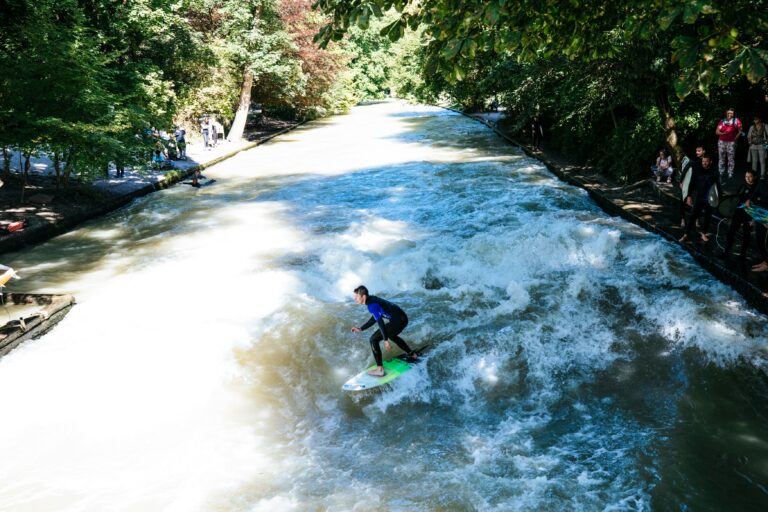
After the routine cleaning and inspection of Munich’s Isar side channels and the Eisbach canal in late October, the city’s famous standing wave failed to return. Where there’s usually a strong, surfable wall of water, there’s now only turbulent whitewater. The Eisbach is currently unsurfable.

2) Probable Cause (What We Know and Don’t Know)

What we know: the disappearance followed the yearly “Bachauskehr,” when sediment, algae, and gravel are removed from the canal. The water level and discharge rate (flow volume per second) are key to creating the standing wave.

What’s unclear: small changes to the riverbed shape, flow distribution, or outflow structures might have altered the balance. The city says the cause is still under investigation.

In short: the hydraulic setup — the combination of depth, speed, and slope — seems to be just outside its “sweet spot,” so the wave can’t stabilize.

3) What the City Is Doing to Bring the Wave Back

  • Increasing water flow: the city is testing higher discharge (flow rate) from the Isar River into the Eisbach, hoping to reactivate the wave. Early tests haven’t yet produced the desired results; further adjustments are in progress.
  • Close coordination with surfers: engineers and the local surf association are working in real time, adjusting water levels based on live flow data.
  • Possible next step: if higher flow isn’t enough, there’s talk of fine-tuning the riverbed by restoring gravel formations — though this hasn’t been officially confirmed.

Realistic outlook: if the ideal combination of water level and riverbed contour returns, the Eisbach could be back very soon. But until the exact cause is known, uncertainty remains.

4) Impact on Surfers (Short-Term)

  • Plan B in Munich: locals are temporarily riding a smaller secondary wave in the same park — less powerful and more crowded.
  • Safety measures still apply: new lighting and surf time rules (introduced after a fatal accident earlier this year) remain in effect and are unrelated to the wave issue.
  • Visiting soon? Check local updates from the City of Munich or the surf association before traveling. If you’re coming specifically for Eisbach, wait for confirmation that it’s surfable again.

5) Timeline of Events

  • Oct 17–31: annual “Bachauskehr” cleaning of Isar arms and canals, including the Eisbach; water level lowered and area closed.
  • Nov 1–3: water flow restored, but the wave doesn’t return. City announces an investigation and site checks.
  • Nov 4–6: international media report on the missing wave; city increases Isar inflow. First reactivation attempts show little effect; fine-tuning continues.

6) FAQ

When will the Eisbach wave return?

No one can say for sure. If higher flow or minor bed corrections restore the hydraulics, it could happen quickly — but there’s no fixed date yet.

Was anything damaged during cleaning?

No structural damage has been reported. The wave simply isn’t forming under the current water flow and riverbed profile. Investigations are ongoing.

Can you river surf elsewhere in Munich?

Yes. There’s a smaller secondary wave in the same park and a few alternative spots in the city, though conditions and rules vary. Or go to O2 surftown of course.

Is this related to new safety rules?

No. Updated lighting and restricted surf times were implemented earlier this year for safety reasons and are unrelated to the current issue.

7) Sources & Further Reading

  • Official updates: City of Munich (Baureferat) and local surf association.
  • Local media: Süddeutsche Zeitung, Münchner Merkur.
  • International coverage: AP, The Guardian, The Independent.

Editorial note: this situation is developing quickly. We’ll update this article as soon as official confirmations are available.


What Is Wave Period. And Why It Really Matters for Surfers

What Is Wave Period. And Why It Really Matters for Surfers

In this article:

  • What is wave period?
  • Short vs long period: the difference in the real world
  • Why long period = more power and more reach
  • Examples from Portugal and Brittany
  • What this means for you as a surfer

What is wave period?

The wave period is the time (in seconds) between two consecutive wave crests passing a fixed point. The longer the period, the more energy a wave carries. It’s one of the most important elements of a surf forecast, yet often overlooked by beginners.

Short vs Long: What’s the Difference?

Short period (5–7s): local wind swells – short, choppy, and weak
Long period (10–20s): ocean groundswells – clean, powerful, and organized


Longer Period = Greater Reach

Longer-period swells travel faster and maintain more energy. They can bend (refract) around headlands, islands, or harbors, hitting spots that short-period waves can’t reach. This opens up protected corners and hidden gems. Especially important on coasts with variable wind or swell exposure.

Real-World examples

Portugal (Algarve)

✅ A 2m NW swell with a 14s period will wrap around Cape St. Vincent in the Algarve and produce clean waves at
Zavial and Praia da Luz
❌ That same swell with just 9–10s period won’t make it through – the south coast will likely remain flat.
Lesson: in southern Portugal, swell period makes or breaks your session.

Brittany (France)

Brittany is incredibly diverse, with beaches and reefs facing multiple directions.
✅ With a strong SW swell at 14s+: check the northern-facing points around Brest and Cap Sizun
✅ With a powerful NW swell and long period: head to southern Finistère, where spots south of La Torche come alive
Brittany’s unique shape means swell period helps unlock dozens of options depending on direction and exposure.

Why It Matters for Forecasting

Wave height alone doesn’t tell the full story. Combine height + period to estimate total swell energy (usually expressed in kilojoules). The longer the period, the more powerful (and potentially rideable) the waves.

Recommended forecast tools:
Surfline – shows individual swell lines and energy levels
Windguru – includes kilojoule values per swell

➕ Want to learn how to read Windguru like a pro?
Check this guide.

Summary

  • Wave period = time between wave peaks, measured in seconds
  • Long-period swells carry more energy and travel further
  • They can wrap around corners and reach protected surf spots
  • Portugal’s south coast and Brittany’s variable coastline are perfect examples
  • Always check both wave height and period for the full picture
Surf-Escape Tip:
See a swell with 14 seconds or more in the forecast? Don’t just check your usual beach. Look around corners —
spots that are usually flat might suddenly be firing.

TL;DR

  • Short period (5–7s): choppy, low-energy wind swell
  • Long period (10–20s): clean, powerful groundswells
  • Longer periods = waves can bend around land and hit sheltered spots
  • In the Algarve, swell only reaches surf spots like Zavial at 13–14s+
  • In Brittany, longer-period swells unlock a wider range of surfable locations
  • Check both wave height and period when planning your session

Sheltered Surf Spots in South Finistère (Brittany) with strong west swells and winds

The question was basically: we’ve booked a house near La Torche, but with strong wind and a solid swell (3m+, 14 sec) coming from the west, where should we go?

Luckily, Brittany has a huge range of options.

Here are some answers.

Quick Surf Guide – South Finistère Sheltered Spots

  • Type: Bays, rivermouths and harbour corners
  • Best for: Large W/SW swell + strong onshore wind
  • Best tide: Mid to high tide
  • Top month: October – 38% clean surf days (La Palue reference)
  • Summer: Small and mellow, perfect for beginners
  • Autumn/Winter: Alternatives when La Torche is blown out

Why sheltered spots matter

La Torche and Tronoën are famous for their powerful beachbreaks, pulling in swell from the open Atlantic. On good days it’s world-class – but when big W/SW swells hit with strong onshore wind, it quickly turns unsurfable. That’s when you head south, into the bays and harbours of South Finistère, where cliffs, headlands and piers provide shelter and cleaner conditions.

Treustel (Île-Tudy / Baie de Bénodet)

Treustel sits inside the Baie de Bénodet and filters out most of the ocean’s power. It’s a go-to option when La Torche is out of control.

  • Type: Beachbreak in a bay
  • Best with: S/SSW groundswell + N/NW winds
  • Tide: Mid to high tide
  • Level: Ideal for longboarders and intermediates

Le Letty (Mer Blanche / Beg-Meil)

A rivermouth lagoon with mellow vibes. When the open coast is stormy, Le Letty often still delivers soft, peeling waves.

  • Type: Rivermouth/lagoon with sandbanks
  • Tide: Surfable around mid to high tide only
  • Best boards: Longboard, fish, or funshape

Lesconil & Le Goudoul

The harbour of Lesconil and the nearby Goudoul beach often serve up fun, glassy waves when everything else is messy. Protected by piers and rocks, these spots are a safe bet for smaller clean sessions.

  • Level: Beginner to intermediate
  • Vibe: Great for a playful session with fish, foamie or longboard

Cap Coz / Baie de Concarneau

Cap Coz is tucked deep inside Concarneau bay, offering maximum protection from wind and swell. Usually flat – but when big SSW groundswells push through, it can surprise you with longboardable rides.

  • Best for: Families, longboarders, beginners
  • Works: Only when the open coast is huge

Morgat (Crozon – plan B+)

If you’re up for a 1.5 hour drive, the Crozon peninsula offers several south- to southeast-facing coves (Portzic, Postolonnec) that stay clean even in strong W/SW winds. These are premium escapes when South Finistère is maxed out.

Tips for timing, safety & board choice

  • Tide: Most sheltered spots work best from mid to high tide
  • Boards: Bring volume – think fish, midlength or longboard
  • Safety: Watch currents near harbours and rivermouths
  • Strategy: Early check at La Torche → if blown out, move to Treustel or Lesconil → if still messy, go deeper into the bays (Le Letty or Cap Coz) → desperate? Drive to Morgat

Related reads

Sign up for our newsletter – free surf guide

FAQ – Sheltered Surf in South Finistère

1. Is Treustel always smaller than La Torche?
Yes – usually. Only when the swell is very small can it be flat here.

2. Which spot is safest for beginners?
Le Letty and Lesconil are the most beginner-friendly options in heavy swell.

3. Does Cap Coz work often?
No, it’s usually flat. It only lights up on solid groundswells.

4. How big does it need to be for Morgat?
At least 2.5–3m at La Torche before Morgat really starts working.

5. Is parking easy?
Yes, but in summer Le Letty and Lesconil can get busy with limited spots.

Surfing with Northwest Wind in Portugal. The option from North to South.

Surfing with Northwest Wind in Portugal. From Viana to Zavial

Why is northwest wind so decisive?

With a strong northwest wind (NW), many west-facing beaches in Portugal get blown out. Waves break messy and choppy. Far from ideal.

Still, in Portugal, thanks to its unique coastline, you can almost always find a sheltered surf spot where conditions are good. Think of piers, south-facing bays, or early morning sessions with glassy waves.

Need a surfboard, check the surf rental options in Portugal

Northern Portugal. Surf spots around and above Porto

Northern Portugal is often skipped by travelers, but that’s a shame. There are several spots here that remain surfable even with NW wind:

  • Praia do Cabedelo (Viana do Castelo): Sheltered by a long pier. Works with NW wind. Wide beach break with long walls.
  • Salgueira Beach (Póvoa de Varzim): Big sandy area with mellow peaks. Great for longboarders and beginners.
  • Aguçadoura: Powerful, consistent beach break. Works with light NW wind. A local favorite.
  • Espinho & Esmoriz: Espinho = punchy beach break, Esmoriz = multiple peaks. Surfable with weak NW wind, especially in the morning.

Near Porto, you also have Matosinhos – the go-to spot in Northern Portugal where surfing is still good in northwest winds. The harbor wall blocks most of the NW wind. Since Matosinhos is partly sheltered, you’ll need enough swell power: at least 1.2 – 1.5 meters from W or NW.

Central Portugal: Peniche & Baleal

Peniche is one of the most windproof surf zones in Europe. Whatever the wind direction, you’ll almost always find a wave here:

  • Molhe Leste: Perfect with NW wind. Protected by a pier, clean fast waves. Best with mid to high tide. Needs solid swell from N or NW, but with W or SW swell it breaks more easily.
  • Cantinho da Baía: South-facing bay. NW wind is sideshore to offshore here. Great for progression and longboarding.
  • Lagide: Left-hand reef break. NW wind isn’t ideal, but with light wind it’s surfable – especially for mellow, longer rides.

Between Peniche and Lisbon

Ericeira: World Surfing Reserve with options in NW wind

Ericeira is a World Surfing Reserve for a reason: more than 10 surf spots within 8 km of coastline, from mellow beach breaks to heavy reef barrels. But… many of them face west, taking the full hit of NW wind.

There are exceptions though:

  • São Lourenço: Northernmost spot of Ericeira, in a bay. NW wind is usually cross-shore or slightly offshore. Works well with W/NW swell from 1.5 m+. Long, powerful rights – top for intermediates.
  • Foz do Lizandro: Wide, accessible beach break. Surfable with weak NW wind, especially in the morning. Multiple peaks, suitable for all levels.
  • Praia do Sul (Praia da Baleia): More sheltered from NW wind thanks to rocks and the hotel wall. Smaller, cleaner waves with the right swell angle. Often underrated.
  • Ribeira d’Ilhas: Sensitive to NW wind, but with light breeze early in the day it can still work. A beautiful right-hand point break, best for advanced surfers. With N wind it’s less affected.

Tip: In strong NW winds, combine Ericeira with a trip south (Caparica) or inland Alentejo. But if it’s just a light breeze: São Lourenço and Praia do Sul are your best picks.

Around Lisbon: Costa da Caparica & Cascais

  • Costa da Caparica – CDS & Nova Vaga: Thanks to the jetties, NW wind is broken up. Multiple peaks. Best in the morning and with light swell (>0.8m).
  • São João da Caparica: Quieter spot, a bit more sheltered. Great for intermediates and lessons.
  • Guincho: Only surfable with very light NW wind or super early. Beautiful setting but very wind-exposed.
  • Carcavelos: Just below Lisbon, at the mouth of the Tagus. West- to southwest-facing, with full Atlantic exposure. Works best with W–WSW swell of 1.0 to 2.0 meters.

Alentejo: Portugal’s quiet surf gem

Peace, space, and surprisingly good waves. The Alentejo region is often overlooked, but it hides gems that work with NW wind (though N wind is generally better). Especially with W or SW swell:

  • Praia do Carvalhal (Comporta): Wide, quiet break. Surfable with W/NW swell. Bank-dependent, but usually mellow and long.
  • São Torpes (near Sines): Half reef, half sand. Sheltered by the harbor pier. Barrels with NW swell. Works year-round.
  • Praia dos Aivados: Long, empty beach. Nice peaks, good with NW swell and offshore with south wind.
  • Malhão Beach: Open beach break, works with good sandbanks. Quiet and beautiful.
  • Porto Covo & Vila Nova de Milfontes: Charming coastal towns with several sheltered breaks nearby.

Algarve: south coast as plan B with NW wind

The west coast of the Algarve (around Arrifana, Amado) is wide open to NW wind, but the south coast often saves the day. Provided the swell is strong enough (at least 1.2 – 1.5 m on the west coast), enough waves will wrap around into the south side.

  • Praia do Zavial: South-facing bay. NW wind = offshore. Beautiful right-hand walls. Works only with solid W–SW swell. Also see surfing in Zavial.
  • Praia da Rocha: Big city beach. Often surprisingly surfable in NW wind. Fun for funboards and longboards.
  • Praia do Amado: West coast spot. NW wind = blown out, but early morning glass can be magic.

Frequently Asked Questions about surfing with northwest wind

1. Is NW wind always bad?
Not always. It depends on your surf spot’s orientation. At south-facing beaches or near piers, NW can even be offshore.
2. How do I know where to go?
Use Windguru and check wind direction. South-facing spots + W/SW swell = top combo in NW wind.
3. How much swell is enough for the south coast?
At least 1.2 to 1.5 meters on the west coast. Then enough wraps into sheltered bays like Zavial or Praia da Rocha.
4. What’s the best time of day with NW wind?
Morning. Winds are often lighter and conditions cleaner.
5. Which is the most windproof region?
Peniche & Baleal, followed by Matosinhos near Porto. Then Caparica and the south Algarve, if swell is strong enough.

Related articles

Rent a Surfboard in Portugal

My Experience with Portugal Surf Rentals in Peniche

When you go on a surf trip to Portugal, you want the right board under your feet. For my trip to Peniche, I was looking for a shortboard with around 40 liters of volume – enough paddle power, but still agile on faster sections. My search led me to Portugal Surf Rentals.

From WhatsApp to the water: super smooth service

The whole process was effortless. I reached out via WhatsApp with my preferences – board type, volume, rental period – and got instant feedback on the best options. Marcos, the owner, really knows his stuff and suggested several high-performance boards. These aren’t beat-up rentals, but boards you’d actually want to own.

Delivery anywhere you need it

One of the biggest advantages of renting a surfboard in Portugal with Portugal Surf Rentals is the delivery service. Marcos personally delivered the board straight to my accommodation in Peniche.

But they’ll also bring it to Lisbon, Ericeira, Nazaré, the Algarve, Porto, or even directly to the airport. Along with the board, Marcos shared some valuable local surf tips about conditions and nearby spots.

Why it works for every surfer

  • High-quality boards – no waterlogged softtops, only performance surfboards in excellent condition.

  • Flexible & reliable – delivery at the place and time that suits you.

  • Personal advice – Marcos helps you pick the right board for your level and the local conditions.

Whether you’re spending a week in Ericeira, chasing waves in the Algarve, or doing a full road trip along the Portuguese coast, with Portugal Surf Rentals you never have to deal with airline board fees again.

Looking to rent a surfboard in Portugal without hassle? Portugal Surf Rentals is a no-brainer. Fast communication, quality boards, and delivery straight to your surf spot make it the top choice for any surfer visiting Portugal.

More info: portugalsurfrentals.com

Hurricane Erin Unleashes Historic Summer Swell Across Europe

The Atlantic Ocean has shown its raw power this summer. Hurricane Erin, formed near the Cape Verde Islands, delivered an exceptional swell that first lit up the American surf scene (see also this Reddit post) and then sent the European surf world into ecstasy. More on that below.

From monstrous water walls in Nazaré to long, rolling point breaks in France and England.

Erin created a spectacle usually reserved for late autumn and winter.

In this article, we’ll take you through Erin’s origin, its impact on Europe’s most famous surf spots, and the lessons we must draw from this natural force.

How and where did Hurricane Erin form?

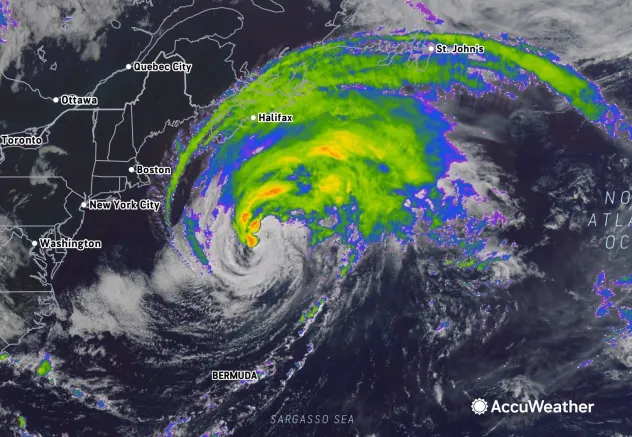
Hurricane Erin developed on August 11, 2025, above the Cape Verde Islands as a tropical disturbance. It rapidly intensified into a Category 5 hurricane: exceptionally powerful and of unprecedented scale.

Although Erin never made direct landfall on the U.S. East Coast, the storm sent massive amounts of energy into the Atlantic Ocean. This energy traveled across the ocean and eventually reached Europe.

Impact on European surf

Nazaré: the undisputed big wave hotspot

In Nazaré, Portugal, the ocean exploded. Nic von Rupp, local and big wave legend, stated that in 20 years he had never seen such a swell in summer. Sets of over 60 feet pounded Praia do Norte, delivering imagery usually reserved for the winter months.

Check this short:

Other big wave spots

  • Mullaghmore Head (Ireland) and Belharra (France) saw powerful waves that lived up to their reputations as big wave spots.
  • In Ireland, waves even crashed over coastal walls, causing flooding in harbors.

▶️ Watch footage of massive waves at Roonagh Pier, Ireland

Point breaks brought to life

Beyond the big wave arenas, beach breaks and long point breaks along the Atlantic coast also benefited. In Southwest France (like Guéthary), Spain (Mundaka), and Northern England, lines came alive that are often flat during summer. Even Mullaghmore in Ireland went off like never before — at least for a summer swell.

This created sick sessions with long rides and classic point break energy.

Watch the recap by Surfline:

Dangers of Erin’s swell

The beauty of Erin’s waves came with serious risks:

  • Rip currents: extremely strong and deceptive, even for experienced surfers.
  • Coastal flooding: Ireland and parts of France saw piers and infrastructure overrun by water.
  • Overconfidence: surfers in the U.S. were arrested after paddling out despite bans — a stark reminder that safety always comes first.

▶️ See how surfers got into trouble during Erin sessions (and even ended up arrested!)

Hurricane Erin delivered Europe a historic swell

Hurricane Erin delivered Europe a historic swell: Nazaré roared, point breaks woke up, and surf communities thrived between awe and risk.

Erin shows us how thin the line is between the magic and the danger of the ocean. For surfers, this means: enjoy — but always respect the power of nature.

Camping Naturéo in Seignosse: surf, comfort & nature combined

While creating our surf guide to South West France, I stumbled upon Camping Naturéo in Seignosse.

I was searching for standout campgrounds in each region—places that truly deserve the “surf camp” label. Naturéo immediately stood out. And after spending a week there myself, I can confirm: it’s a top pick if you want to combine surfing with comfort, atmosphere, and a touch of luxury.

First impression: welcoming and well-kept

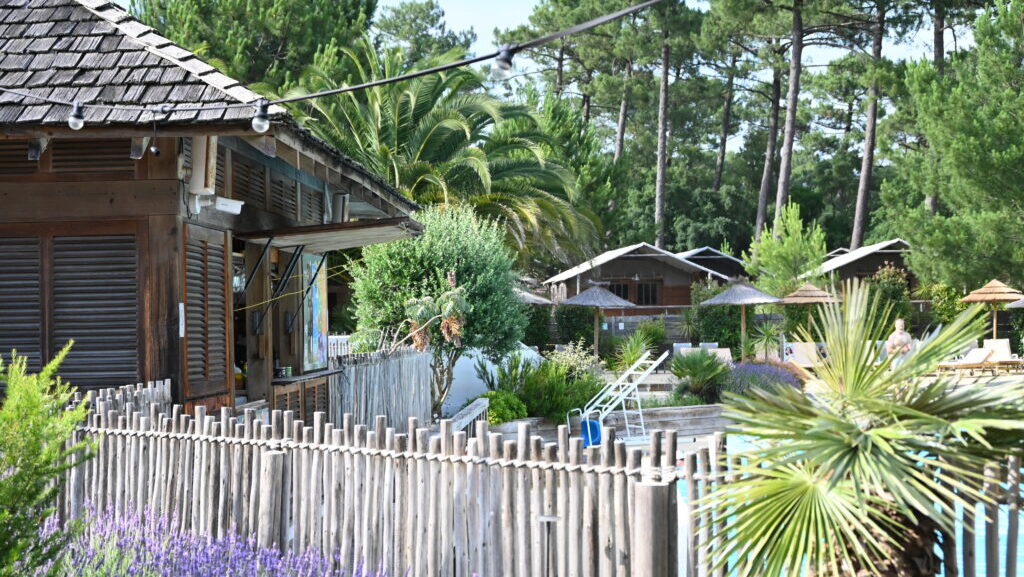
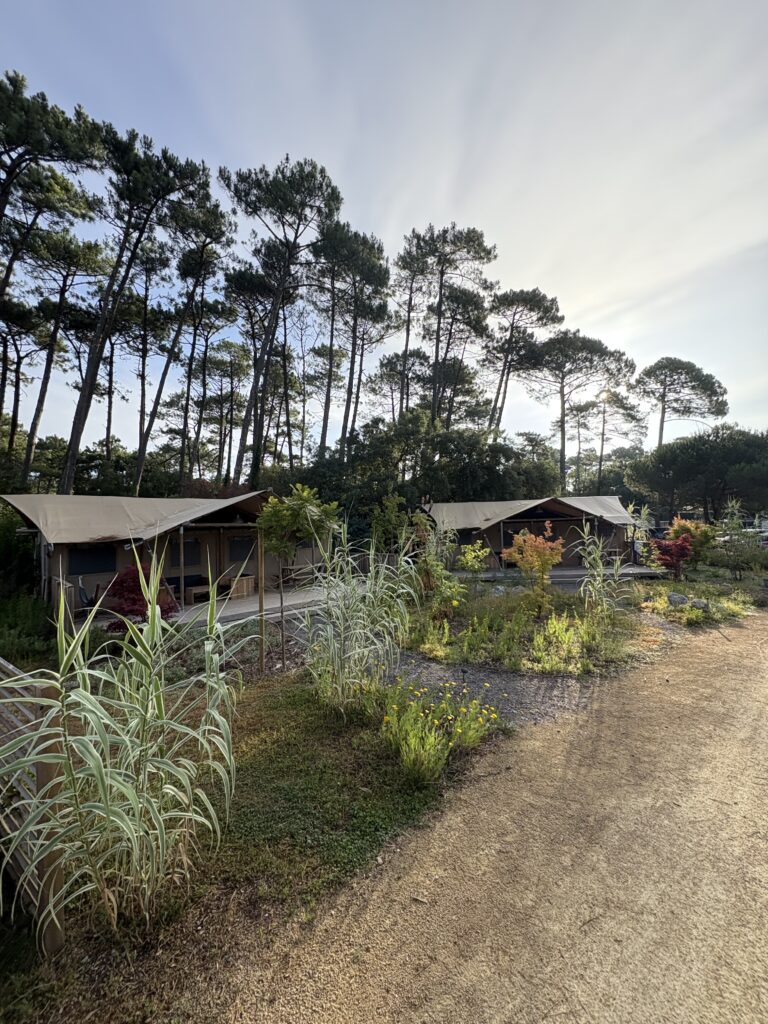
Even before arriving, communication was great—friendly, clear, and helpful. That feeling only grew stronger upon arrival. Everything was spot-on. The lodge tents we stayed in felt brand new: clean, fully equipped, and cozy.

Of course—it’s still a tent, so don’t expect a ballroom-sized bedroom. A three-person setup (bunk and double bed combo) can feel tight with luggage, but for two people it’s fine. For one: just perfect.

Location, location, location

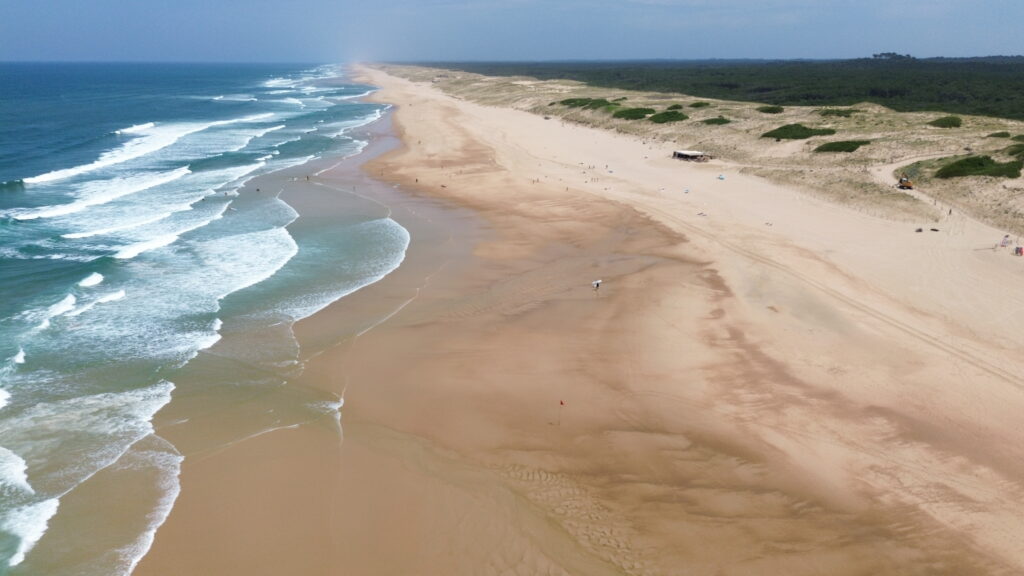
Naturéo is just a 15-minute walk from Les Bourdaines, a surf spot that surprisingly often delivers (check our surf trip report here). Other breaks like Le Penon and Les Estagnots are also nearby (by bike). And yes, you can ride that bike through the woods or even along the beach to hunt for the best waves—or cruise into cozy Hossegor.

Beach biking looks like this:

Seignosse Les Landes

Even day trips to Bidart, Guéthary, or Biarritz are easily doable by car.

To make it even easier: Naturéo offers sporty fatbikes and (electric) bikes for rent. Perfect for exploring the forests of Les Landes or cruising straight to the line-up.

A true surf camp

A major plus: Naturéo has its own Oxbow surf school and surf shop right on site. Book a surf lesson, grab some wax, a hood, or even a wetsuit—it’s all there. Clean, stylish, and exactly what you’d want from a surf-focused campground.

Facilities: everything you need (and more)

Naturéo is officially a 5-star campground, and you can feel it. You’ll find:

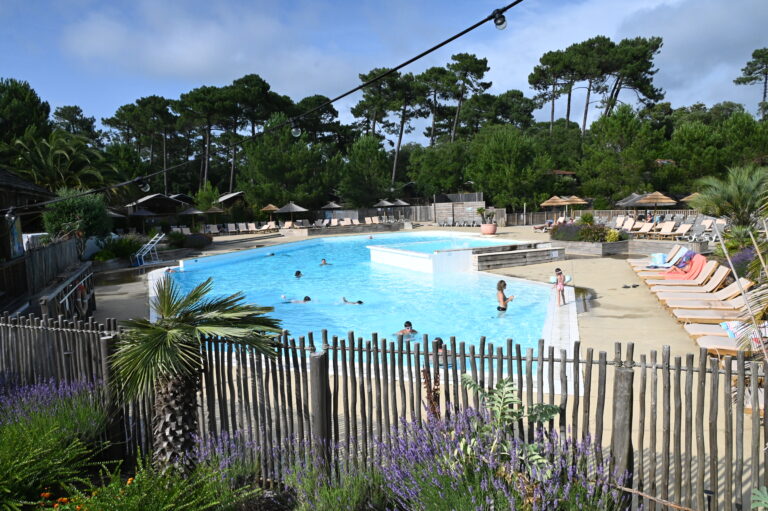
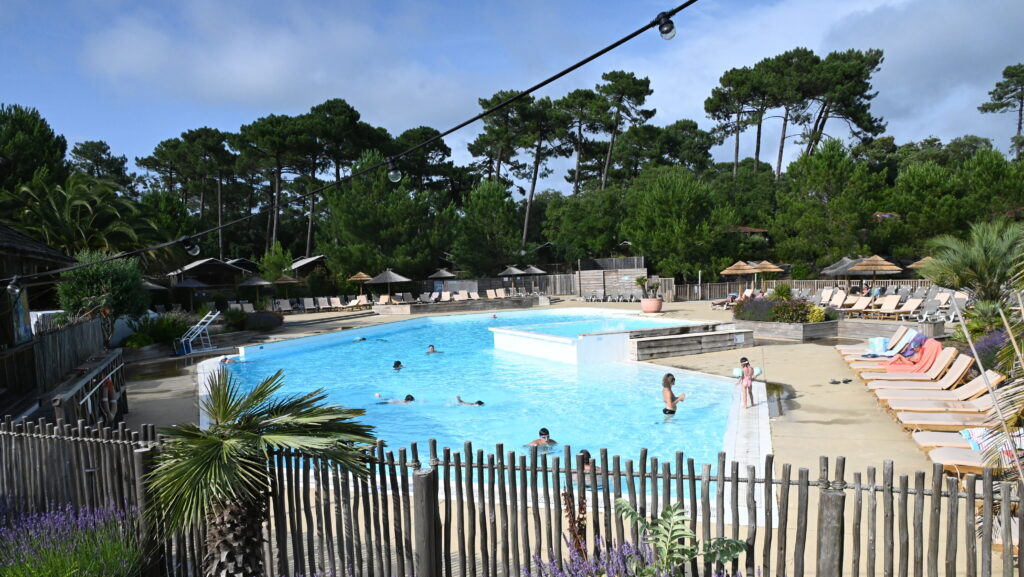
  • A remarkably large swimming pool (much bigger than average campgrounds)

Naturéo pool

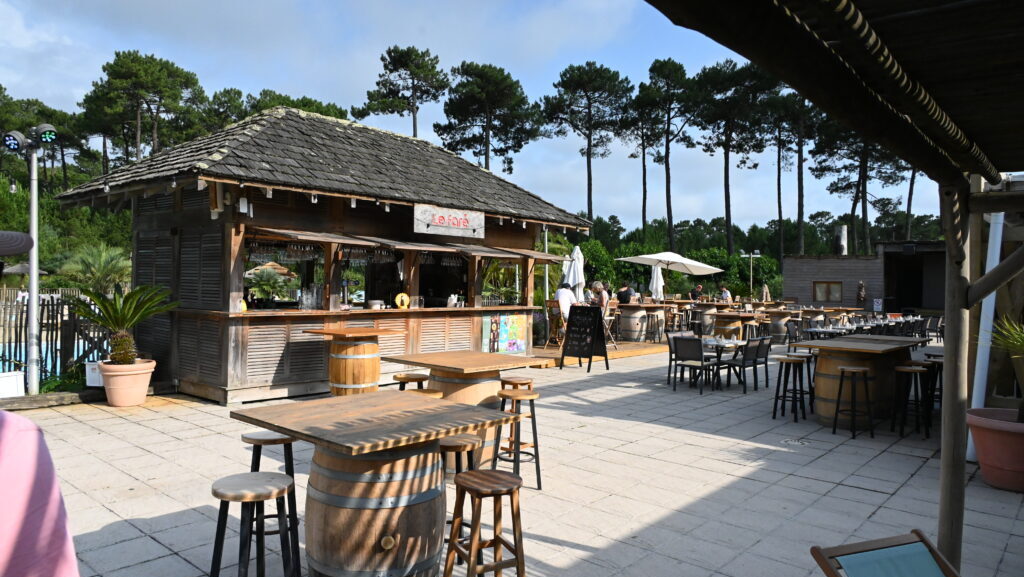
  • Sunny terrace with a bar and restaurant

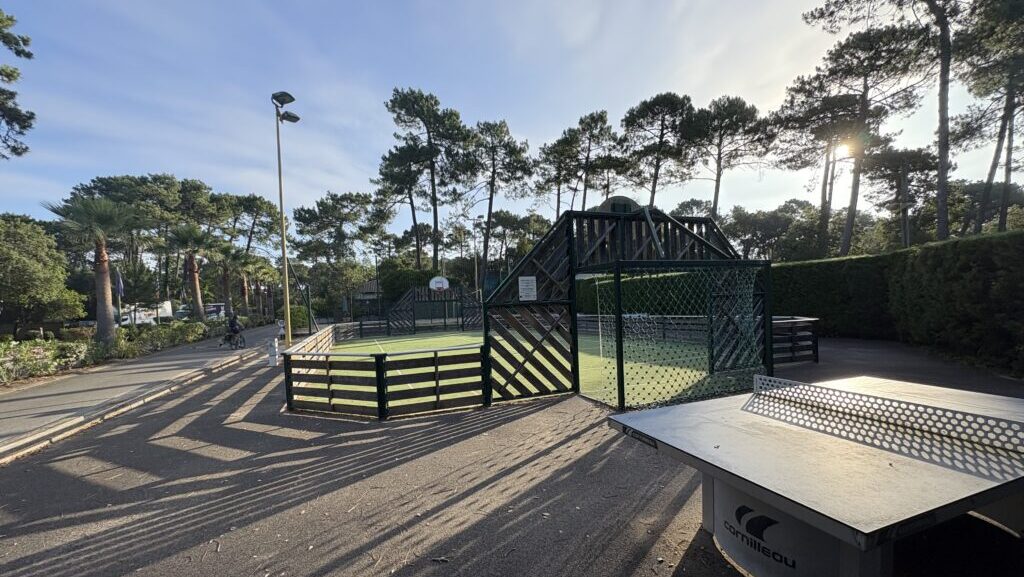
  • Soccer field, basketball hoops, volleyball court, and ping-pong tables

  • Yoga, massage, and wellness options
  • Mini-market and fresh bread delivery
  • A classic ping-pong tournament for those who love a bit of competition

The animation program is available but not in your face—ideal if you prefer to go your own way.

A few things to note

As with any place, there are a few things to keep in mind:

  • Location of your accommodation: Some cabins are placed very close to each other or have less inspiring views. A pity, since the grounds are otherwise beautifully landscaped—so double-check your booking details.
  • Accommodation type matters: The older standard mobile homes (often privately owned) are quite cramped and lack the charm of the newer cabins or lodge tents. So pay close attention to what you’re booking.
  • Pool crowds in high season: It was wonderfully calm in late June, but expect it to be busier in July and August.
  • Parking at the beach entrances can be full—rent a bike and you won’t have to worry.

Best time to go?

We visited in late June: sunny, pleasantly warm, quiet campground, and good waves. September is just as good. The spring break or autumn break are also excellent moments to visit—Naturéo is open nearly year-round (except January).

Want more surf & camping tips for France?
Check the Surf Guide South West France for the best surf spots, campgrounds, wetsuit tips, and what to do when the ocean goes flat.

‍New: The Ultimate Surf Guide to South West France

‍New: The ultimate Surf Guide to South West France

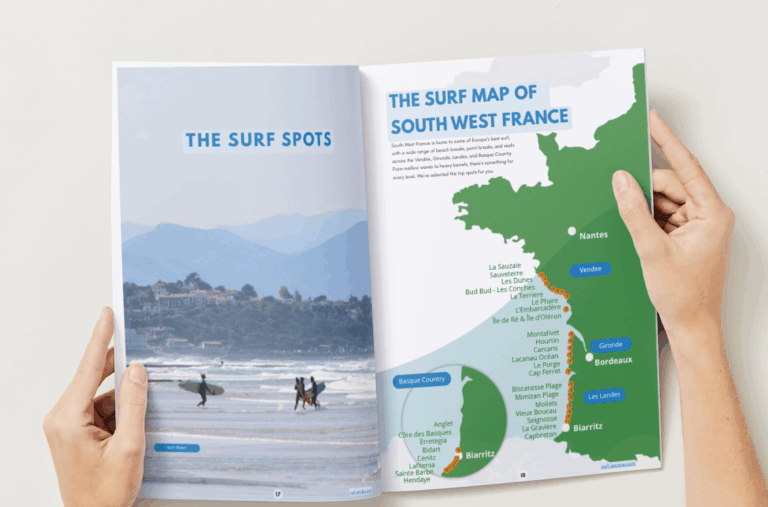
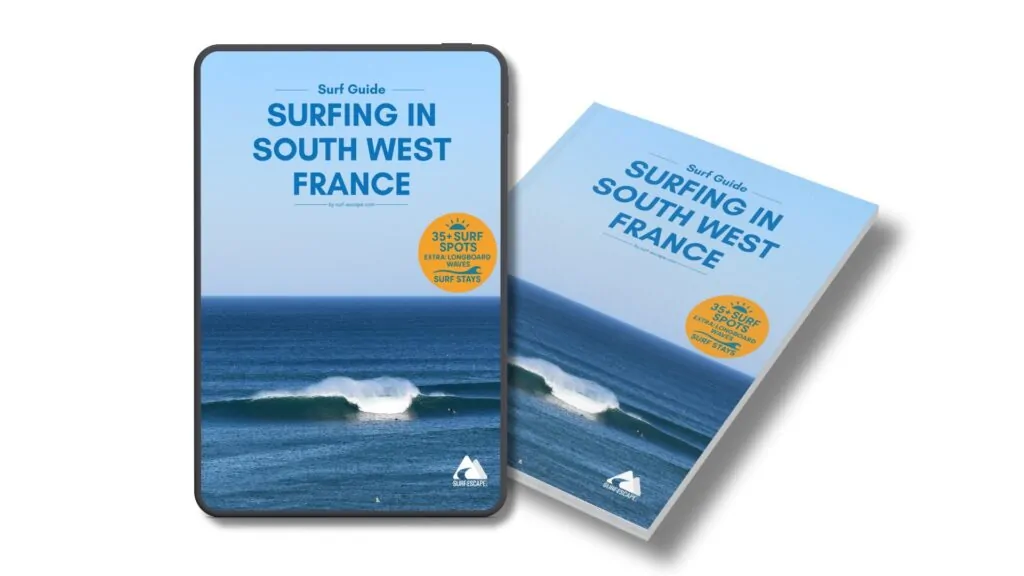
From the mellow beach breaks of the Vendée to the iconic reefs of the Basque Country – the South West France Surf Guide is your essential companion for planning the perfect surf trip.

surf guide header

Packed with 70 pages of surf insights, practical tips and local secrets, this digital guide helps you make the most of every session.
Check it out here

What’s inside the guide?

✔️ 35+ surf spots from the Vendée to Hendaye – including wave types, wind directions, ideal tides & surf level
✔️ Longboard-friendly breaks & mellow waves – great for beginners and families
✔️ Where to stay? Our top picks for surf campings, lodges & glampings
✔️ Flat day ideas – markets, day trips & foodie spots per region
✔️ Wetsuit advice by month – so you always paddle out in comfort
✔️ Bonuses:
– 10% discount on SRFACE wetsuits
– 5% off surf coaching with Pepijn Tigges’ Surf Academy

Surf with purpose

20% of all proceeds go to the International Surf Therapy Organisation (ISTO). ISTO is the leading information hub for the surf therapy sector, facilitating knowledge sharing. Surfing is more than fun. It’s transformative.

Instant delivery, no hassle

After purchase via Gumroad, you’ll land on a friendly confirmation page where you can:

✔️ Download your PDF directly

✔️ Send it to your Kindle if that’s best for you

✔️ Or read it online in your browser

Safe, instant and meaningful.

Get your copy here

⏳ Limited-time offer: now just €8.95 (normally €12.95)

➡️ Order and download now

Have tips or feedback? I’d love to hear from you. This guide started as a tool for my own surf trips and became something to share with fellow wave hunters.

Bon surf!