Home Blog Page 2

What Is Wave Period. And Why It Really Matters for Surfers

What Is Wave Period. And Why It Really Matters for Surfers

In this article:

  • What is wave period?
  • Short vs long period: the difference in the real world
  • Why long period = more power and more reach
  • Examples from Portugal and Brittany
  • What this means for you as a surfer

What is wave period?

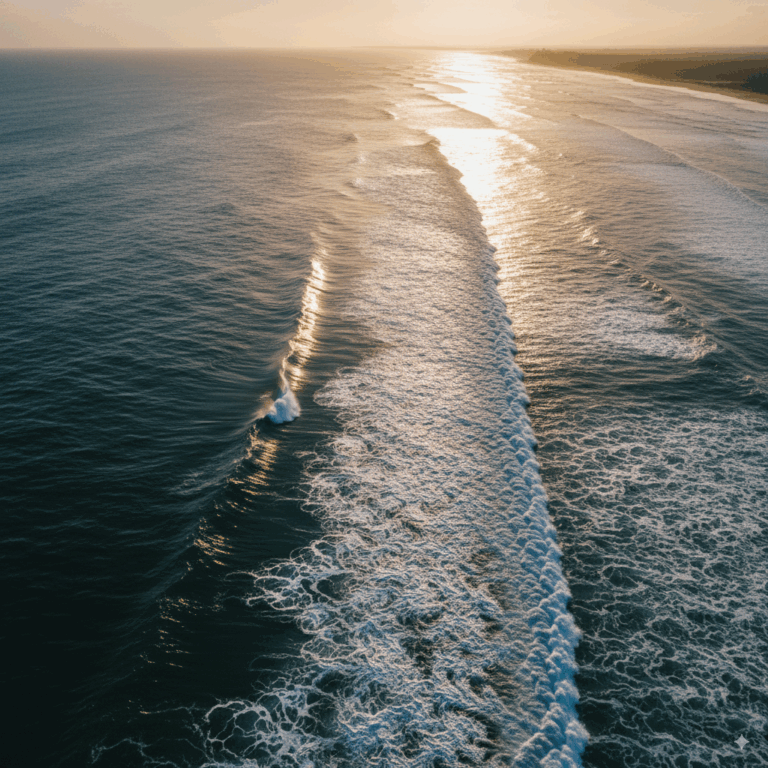
The wave period is the time (in seconds) between two consecutive wave crests passing a fixed point. The longer the period, the more energy a wave carries. It’s one of the most important elements of a surf forecast, yet often overlooked by beginners.

Short vs Long: What’s the Difference?

Short period (5–7s): local wind swells – short, choppy, and weak
Long period (10–20s): ocean groundswells – clean, powerful, and organized


Longer Period = Greater Reach

Longer-period swells travel faster and maintain more energy. They can bend (refract) around headlands, islands, or harbors, hitting spots that short-period waves can’t reach. This opens up protected corners and hidden gems. Especially important on coasts with variable wind or swell exposure.

Real-World examples

Portugal (Algarve)

✅ A 2m NW swell with a 14s period will wrap around Cape St. Vincent in the Algarve and produce clean waves at
Zavial and Praia da Luz
❌ That same swell with just 9–10s period won’t make it through – the south coast will likely remain flat.
Lesson: in southern Portugal, swell period makes or breaks your session.

Brittany (France)

Brittany is incredibly diverse, with beaches and reefs facing multiple directions.
✅ With a strong SW swell at 14s+: check the northern-facing points around Brest and Cap Sizun
✅ With a powerful NW swell and long period: head to southern Finistère, where spots south of La Torche come alive
Brittany’s unique shape means swell period helps unlock dozens of options depending on direction and exposure.

Why It Matters for Forecasting

Wave height alone doesn’t tell the full story. Combine height + period to estimate total swell energy (usually expressed in kilojoules). The longer the period, the more powerful (and potentially rideable) the waves.

Recommended forecast tools:
Surfline – shows individual swell lines and energy levels
Windguru – includes kilojoule values per swell

➕ Want to learn how to read Windguru like a pro?
Check this guide.

Summary

  • Wave period = time between wave peaks, measured in seconds
  • Long-period swells carry more energy and travel further
  • They can wrap around corners and reach protected surf spots
  • Portugal’s south coast and Brittany’s variable coastline are perfect examples
  • Always check both wave height and period for the full picture
Surf-Escape Tip:
See a swell with 14 seconds or more in the forecast? Don’t just check your usual beach. Look around corners —
spots that are usually flat might suddenly be firing.

TL;DR

  • Short period (5–7s): choppy, low-energy wind swell
  • Long period (10–20s): clean, powerful groundswells
  • Longer periods = waves can bend around land and hit sheltered spots
  • In the Algarve, swell only reaches surf spots like Zavial at 13–14s+
  • In Brittany, longer-period swells unlock a wider range of surfable locations
  • Check both wave height and period when planning your session

Sheltered Surf Spots in South Finistère (Brittany) with strong west swells and winds

The question was basically: we’ve booked a house near La Torche, but with strong wind and a solid swell (3m+, 14 sec) coming from the west, where should we go?

Luckily, Brittany has a huge range of options.

Here are some answers.

Quick Surf Guide – South Finistère Sheltered Spots

  • Type: Bays, rivermouths and harbour corners
  • Best for: Large W/SW swell + strong onshore wind
  • Best tide: Mid to high tide
  • Top month: October – 38% clean surf days (La Palue reference)
  • Summer: Small and mellow, perfect for beginners
  • Autumn/Winter: Alternatives when La Torche is blown out

Why sheltered spots matter

La Torche and Tronoën are famous for their powerful beachbreaks, pulling in swell from the open Atlantic. On good days it’s world-class – but when big W/SW swells hit with strong onshore wind, it quickly turns unsurfable. That’s when you head south, into the bays and harbours of South Finistère, where cliffs, headlands and piers provide shelter and cleaner conditions.

Treustel (Île-Tudy / Baie de Bénodet)

Treustel sits inside the Baie de Bénodet and filters out most of the ocean’s power. It’s a go-to option when La Torche is out of control.

  • Type: Beachbreak in a bay
  • Best with: S/SSW groundswell + N/NW winds
  • Tide: Mid to high tide
  • Level: Ideal for longboarders and intermediates

Le Letty (Mer Blanche / Beg-Meil)

A rivermouth lagoon with mellow vibes. When the open coast is stormy, Le Letty often still delivers soft, peeling waves.

  • Type: Rivermouth/lagoon with sandbanks
  • Tide: Surfable around mid to high tide only
  • Best boards: Longboard, fish, or funshape

Lesconil & Le Goudoul

The harbour of Lesconil and the nearby Goudoul beach often serve up fun, glassy waves when everything else is messy. Protected by piers and rocks, these spots are a safe bet for smaller clean sessions.

  • Level: Beginner to intermediate
  • Vibe: Great for a playful session with fish, foamie or longboard

Cap Coz / Baie de Concarneau

Cap Coz is tucked deep inside Concarneau bay, offering maximum protection from wind and swell. Usually flat – but when big SSW groundswells push through, it can surprise you with longboardable rides.

  • Best for: Families, longboarders, beginners
  • Works: Only when the open coast is huge

Morgat (Crozon – plan B+)

If you’re up for a 1.5 hour drive, the Crozon peninsula offers several south- to southeast-facing coves (Portzic, Postolonnec) that stay clean even in strong W/SW winds. These are premium escapes when South Finistère is maxed out.

Tips for timing, safety & board choice

  • Tide: Most sheltered spots work best from mid to high tide
  • Boards: Bring volume – think fish, midlength or longboard
  • Safety: Watch currents near harbours and rivermouths
  • Strategy: Early check at La Torche → if blown out, move to Treustel or Lesconil → if still messy, go deeper into the bays (Le Letty or Cap Coz) → desperate? Drive to Morgat

Related reads

Sign up for our newsletter – free surf guide

FAQ – Sheltered Surf in South Finistère

1. Is Treustel always smaller than La Torche?
Yes – usually. Only when the swell is very small can it be flat here.

2. Which spot is safest for beginners?
Le Letty and Lesconil are the most beginner-friendly options in heavy swell.

3. Does Cap Coz work often?
No, it’s usually flat. It only lights up on solid groundswells.

4. How big does it need to be for Morgat?
At least 2.5–3m at La Torche before Morgat really starts working.

5. Is parking easy?
Yes, but in summer Le Letty and Lesconil can get busy with limited spots.

Surfing with Northwest Wind in Portugal. The option from North to South.

Surfing with Northwest Wind in Portugal. From Viana to Zavial

Why is northwest wind so decisive?

With a strong northwest wind (NW), many west-facing beaches in Portugal get blown out. Waves break messy and choppy. Far from ideal.

Still, in Portugal, thanks to its unique coastline, you can almost always find a sheltered surf spot where conditions are good. Think of piers, south-facing bays, or early morning sessions with glassy waves.

Need a surfboard, check the surf rental options in Portugal

Northern Portugal. Surf spots around and above Porto

Northern Portugal is often skipped by travelers, but that’s a shame. There are several spots here that remain surfable even with NW wind:

  • Praia do Cabedelo (Viana do Castelo): Sheltered by a long pier. Works with NW wind. Wide beach break with long walls.
  • Salgueira Beach (Póvoa de Varzim): Big sandy area with mellow peaks. Great for longboarders and beginners.
  • Aguçadoura: Powerful, consistent beach break. Works with light NW wind. A local favorite.
  • Espinho & Esmoriz: Espinho = punchy beach break, Esmoriz = multiple peaks. Surfable with weak NW wind, especially in the morning.

Near Porto, you also have Matosinhos – the go-to spot in Northern Portugal where surfing is still good in northwest winds. The harbor wall blocks most of the NW wind. Since Matosinhos is partly sheltered, you’ll need enough swell power: at least 1.2 – 1.5 meters from W or NW.

Central Portugal: Peniche & Baleal

Peniche is one of the most windproof surf zones in Europe. Whatever the wind direction, you’ll almost always find a wave here:

  • Molhe Leste: Perfect with NW wind. Protected by a pier, clean fast waves. Best with mid to high tide. Needs solid swell from N or NW, but with W or SW swell it breaks more easily.
  • Cantinho da Baía: South-facing bay. NW wind is sideshore to offshore here. Great for progression and longboarding.
  • Lagide: Left-hand reef break. NW wind isn’t ideal, but with light wind it’s surfable – especially for mellow, longer rides.

Between Peniche and Lisbon

Ericeira: World Surfing Reserve with options in NW wind

Ericeira is a World Surfing Reserve for a reason: more than 10 surf spots within 8 km of coastline, from mellow beach breaks to heavy reef barrels. But… many of them face west, taking the full hit of NW wind.

There are exceptions though:

  • São Lourenço: Northernmost spot of Ericeira, in a bay. NW wind is usually cross-shore or slightly offshore. Works well with W/NW swell from 1.5 m+. Long, powerful rights – top for intermediates.
  • Foz do Lizandro: Wide, accessible beach break. Surfable with weak NW wind, especially in the morning. Multiple peaks, suitable for all levels.
  • Praia do Sul (Praia da Baleia): More sheltered from NW wind thanks to rocks and the hotel wall. Smaller, cleaner waves with the right swell angle. Often underrated.
  • Ribeira d’Ilhas: Sensitive to NW wind, but with light breeze early in the day it can still work. A beautiful right-hand point break, best for advanced surfers. With N wind it’s less affected.

Tip: In strong NW winds, combine Ericeira with a trip south (Caparica) or inland Alentejo. But if it’s just a light breeze: São Lourenço and Praia do Sul are your best picks.

Around Lisbon: Costa da Caparica & Cascais

  • Costa da Caparica – CDS & Nova Vaga: Thanks to the jetties, NW wind is broken up. Multiple peaks. Best in the morning and with light swell (>0.8m).
  • São João da Caparica: Quieter spot, a bit more sheltered. Great for intermediates and lessons.
  • Guincho: Only surfable with very light NW wind or super early. Beautiful setting but very wind-exposed.
  • Carcavelos: Just below Lisbon, at the mouth of the Tagus. West- to southwest-facing, with full Atlantic exposure. Works best with W–WSW swell of 1.0 to 2.0 meters.

Alentejo: Portugal’s quiet surf gem

Peace, space, and surprisingly good waves. The Alentejo region is often overlooked, but it hides gems that work with NW wind (though N wind is generally better). Especially with W or SW swell:

  • Praia do Carvalhal (Comporta): Wide, quiet break. Surfable with W/NW swell. Bank-dependent, but usually mellow and long.
  • São Torpes (near Sines): Half reef, half sand. Sheltered by the harbor pier. Barrels with NW swell. Works year-round.
  • Praia dos Aivados: Long, empty beach. Nice peaks, good with NW swell and offshore with south wind.
  • Malhão Beach: Open beach break, works with good sandbanks. Quiet and beautiful.
  • Porto Covo & Vila Nova de Milfontes: Charming coastal towns with several sheltered breaks nearby.

Algarve: south coast as plan B with NW wind

The west coast of the Algarve (around Arrifana, Amado) is wide open to NW wind, but the south coast often saves the day. Provided the swell is strong enough (at least 1.2 – 1.5 m on the west coast), enough waves will wrap around into the south side.

  • Praia do Zavial: South-facing bay. NW wind = offshore. Beautiful right-hand walls. Works only with solid W–SW swell. Also see surfing in Zavial.
  • Praia da Rocha: Big city beach. Often surprisingly surfable in NW wind. Fun for funboards and longboards.
  • Praia do Amado: West coast spot. NW wind = blown out, but early morning glass can be magic.

Frequently Asked Questions about surfing with northwest wind

1. Is NW wind always bad?
Not always. It depends on your surf spot’s orientation. At south-facing beaches or near piers, NW can even be offshore.
2. How do I know where to go?
Use Windguru and check wind direction. South-facing spots + W/SW swell = top combo in NW wind.
3. How much swell is enough for the south coast?
At least 1.2 to 1.5 meters on the west coast. Then enough wraps into sheltered bays like Zavial or Praia da Rocha.
4. What’s the best time of day with NW wind?
Morning. Winds are often lighter and conditions cleaner.
5. Which is the most windproof region?
Peniche & Baleal, followed by Matosinhos near Porto. Then Caparica and the south Algarve, if swell is strong enough.

Related articles

Rent a Surfboard in Portugal

My Experience with Portugal Surf Rentals in Peniche

When you go on a surf trip to Portugal, you want the right board under your feet. For my trip to Peniche, I was looking for a shortboard with around 40 liters of volume – enough paddle power, but still agile on faster sections. My search led me to Portugal Surf Rentals.

From WhatsApp to the water: super smooth service

The whole process was effortless. I reached out via WhatsApp with my preferences – board type, volume, rental period – and got instant feedback on the best options. Marcos, the owner, really knows his stuff and suggested several high-performance boards. These aren’t beat-up rentals, but boards you’d actually want to own.

Delivery anywhere you need it

One of the biggest advantages of renting a surfboard in Portugal with Portugal Surf Rentals is the delivery service. Marcos personally delivered the board straight to my accommodation in Peniche.

But they’ll also bring it to Lisbon, Ericeira, Nazaré, the Algarve, Porto, or even directly to the airport. Along with the board, Marcos shared some valuable local surf tips about conditions and nearby spots.

Why it works for every surfer

  • High-quality boards – no waterlogged softtops, only performance surfboards in excellent condition.

  • Flexible & reliable – delivery at the place and time that suits you.

  • Personal advice – Marcos helps you pick the right board for your level and the local conditions.

Whether you’re spending a week in Ericeira, chasing waves in the Algarve, or doing a full road trip along the Portuguese coast, with Portugal Surf Rentals you never have to deal with airline board fees again.

Looking to rent a surfboard in Portugal without hassle? Portugal Surf Rentals is a no-brainer. Fast communication, quality boards, and delivery straight to your surf spot make it the top choice for any surfer visiting Portugal.

More info: portugalsurfrentals.com

Hurricane Erin Unleashes Historic Summer Swell Across Europe

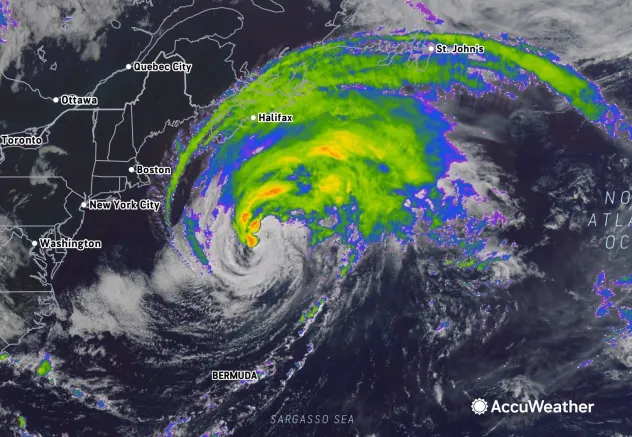
The Atlantic Ocean has shown its raw power this summer. Hurricane Erin, formed near the Cape Verde Islands, delivered an exceptional swell that first lit up the American surf scene (see also this Reddit post) and then sent the European surf world into ecstasy. More on that below.

From monstrous water walls in Nazaré to long, rolling point breaks in France and England.

Erin created a spectacle usually reserved for late autumn and winter.

In this article, we’ll take you through Erin’s origin, its impact on Europe’s most famous surf spots, and the lessons we must draw from this natural force.

How and where did Hurricane Erin form?

Hurricane Erin developed on August 11, 2025, above the Cape Verde Islands as a tropical disturbance. It rapidly intensified into a Category 5 hurricane: exceptionally powerful and of unprecedented scale.

Although Erin never made direct landfall on the U.S. East Coast, the storm sent massive amounts of energy into the Atlantic Ocean. This energy traveled across the ocean and eventually reached Europe.

Impact on European surf

Nazaré: the undisputed big wave hotspot

In Nazaré, Portugal, the ocean exploded. Nic von Rupp, local and big wave legend, stated that in 20 years he had never seen such a swell in summer. Sets of over 60 feet pounded Praia do Norte, delivering imagery usually reserved for the winter months.

Check this short:

Other big wave spots

  • Mullaghmore Head (Ireland) and Belharra (France) saw powerful waves that lived up to their reputations as big wave spots.
  • In Ireland, waves even crashed over coastal walls, causing flooding in harbors.

▶️ Watch footage of massive waves at Roonagh Pier, Ireland

Point breaks brought to life

Beyond the big wave arenas, beach breaks and long point breaks along the Atlantic coast also benefited. In Southwest France (like Guéthary), Spain (Mundaka), and Northern England, lines came alive that are often flat during summer. Even Mullaghmore in Ireland went off like never before — at least for a summer swell.

This created sick sessions with long rides and classic point break energy.

Watch the recap by Surfline:

Dangers of Erin’s swell

The beauty of Erin’s waves came with serious risks:

  • Rip currents: extremely strong and deceptive, even for experienced surfers.
  • Coastal flooding: Ireland and parts of France saw piers and infrastructure overrun by water.
  • Overconfidence: surfers in the U.S. were arrested after paddling out despite bans — a stark reminder that safety always comes first.

▶️ See how surfers got into trouble during Erin sessions (and even ended up arrested!)

Hurricane Erin delivered Europe a historic swell

Hurricane Erin delivered Europe a historic swell: Nazaré roared, point breaks woke up, and surf communities thrived between awe and risk.

Erin shows us how thin the line is between the magic and the danger of the ocean. For surfers, this means: enjoy — but always respect the power of nature.

Camping Naturéo in Seignosse: surf, comfort & nature combined

While creating our surf guide to South West France, I stumbled upon Camping Naturéo in Seignosse.

I was searching for standout campgrounds in each region—places that truly deserve the “surf camp” label. Naturéo immediately stood out. And after spending a week there myself, I can confirm: it’s a top pick if you want to combine surfing with comfort, atmosphere, and a touch of luxury.

First impression: welcoming and well-kept

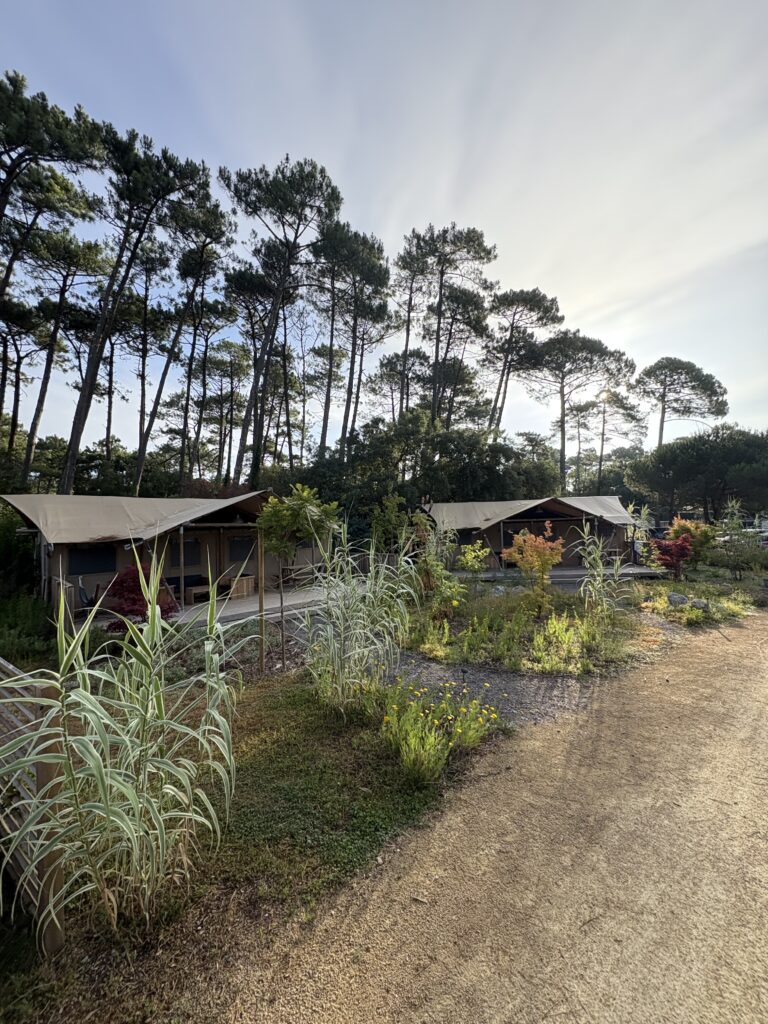
Even before arriving, communication was great—friendly, clear, and helpful. That feeling only grew stronger upon arrival. Everything was spot-on. The lodge tents we stayed in felt brand new: clean, fully equipped, and cozy.

Of course—it’s still a tent, so don’t expect a ballroom-sized bedroom. A three-person setup (bunk and double bed combo) can feel tight with luggage, but for two people it’s fine. For one: just perfect.

Location, location, location

Naturéo is just a 15-minute walk from Les Bourdaines, a surf spot that surprisingly often delivers (check our surf trip report here). Other breaks like Le Penon and Les Estagnots are also nearby (by bike). And yes, you can ride that bike through the woods or even along the beach to hunt for the best waves—or cruise into cozy Hossegor.

Beach biking looks like this:

Seignosse Les Landes

Even day trips to Bidart, Guéthary, or Biarritz are easily doable by car.

To make it even easier: Naturéo offers sporty fatbikes and (electric) bikes for rent. Perfect for exploring the forests of Les Landes or cruising straight to the line-up.

A true surf camp

A major plus: Naturéo has its own Oxbow surf school and surf shop right on site. Book a surf lesson, grab some wax, a hood, or even a wetsuit—it’s all there. Clean, stylish, and exactly what you’d want from a surf-focused campground.

Facilities: everything you need (and more)

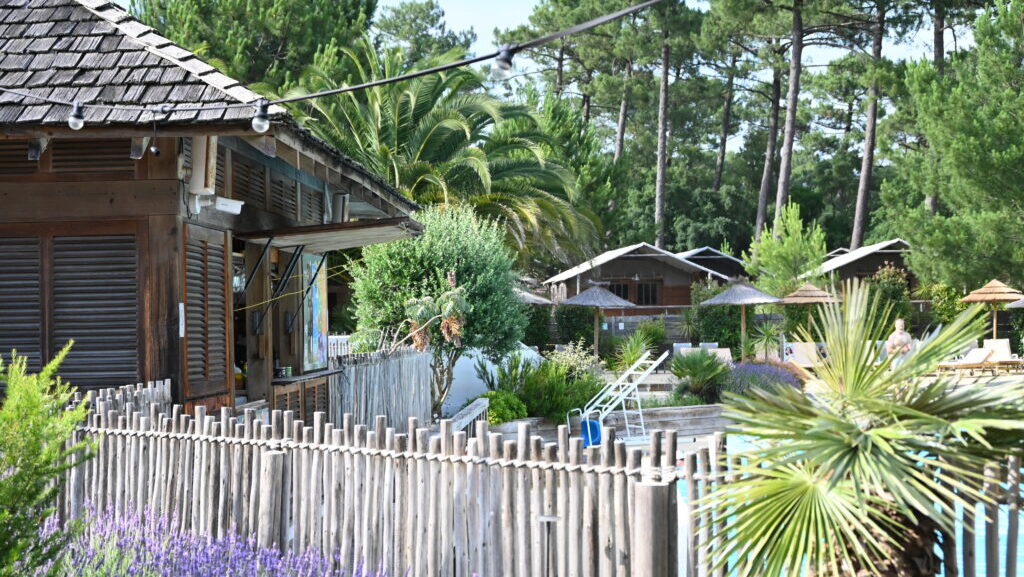
Naturéo is officially a 5-star campground, and you can feel it. You’ll find:

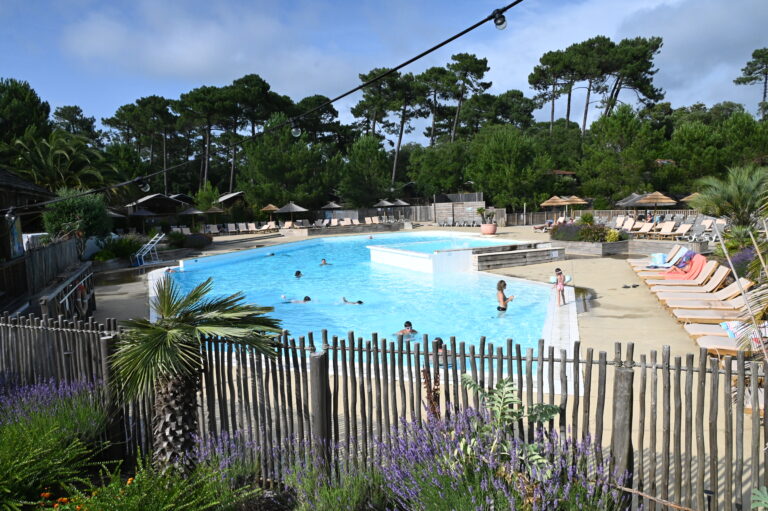
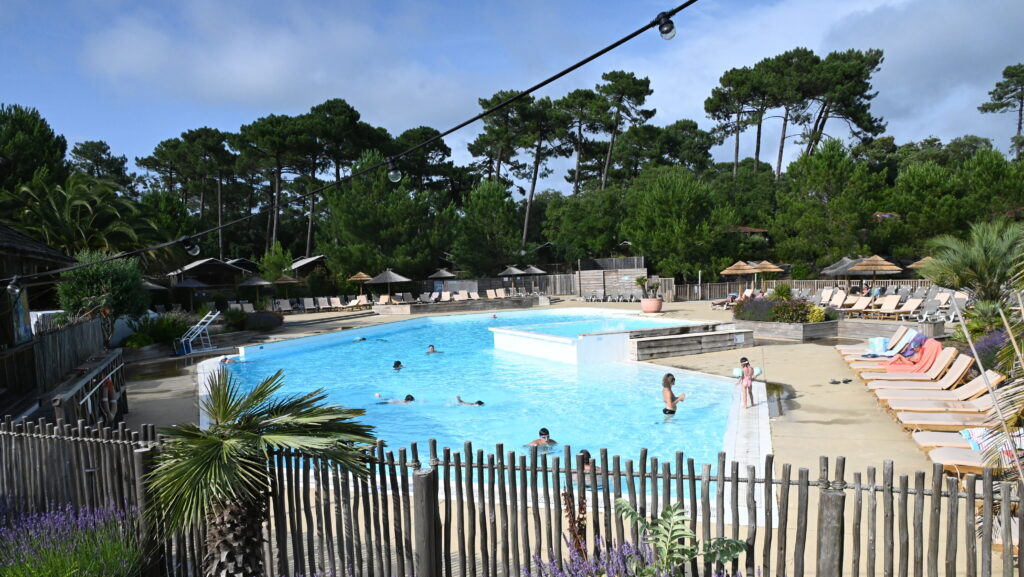
  • A remarkably large swimming pool (much bigger than average campgrounds)

Naturéo pool

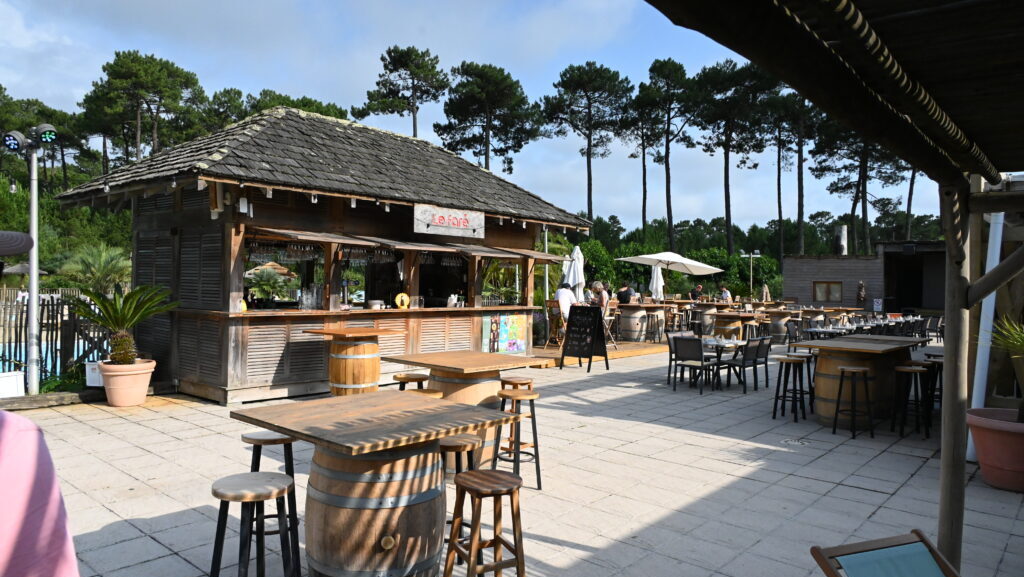
  • Sunny terrace with a bar and restaurant

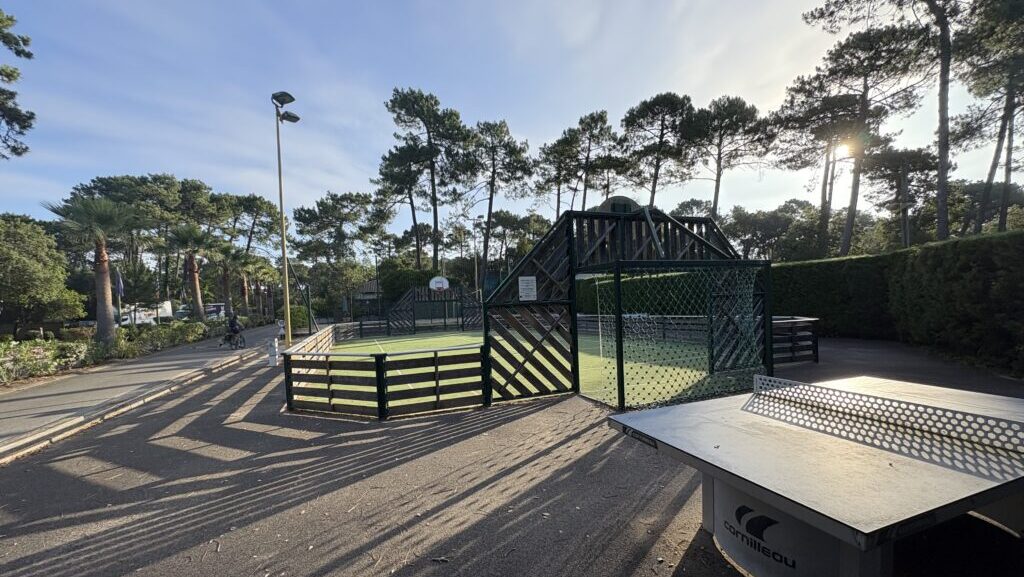
  • Soccer field, basketball hoops, volleyball court, and ping-pong tables

  • Yoga, massage, and wellness options
  • Mini-market and fresh bread delivery
  • A classic ping-pong tournament for those who love a bit of competition

The animation program is available but not in your face—ideal if you prefer to go your own way.

A few things to note

As with any place, there are a few things to keep in mind:

  • Location of your accommodation: Some cabins are placed very close to each other or have less inspiring views. A pity, since the grounds are otherwise beautifully landscaped—so double-check your booking details.
  • Accommodation type matters: The older standard mobile homes (often privately owned) are quite cramped and lack the charm of the newer cabins or lodge tents. So pay close attention to what you’re booking.
  • Pool crowds in high season: It was wonderfully calm in late June, but expect it to be busier in July and August.
  • Parking at the beach entrances can be full—rent a bike and you won’t have to worry.

Best time to go?

We visited in late June: sunny, pleasantly warm, quiet campground, and good waves. September is just as good. The spring break or autumn break are also excellent moments to visit—Naturéo is open nearly year-round (except January).

Want more surf & camping tips for France?
Check the Surf Guide South West France for the best surf spots, campgrounds, wetsuit tips, and what to do when the ocean goes flat.

‍New: The Ultimate Surf Guide to South West France

‍New: The ultimate Surf Guide to South West France

From the mellow beach breaks of the Vendée to the iconic reefs of the Basque Country – the South West France Surf Guide is your essential companion for planning the perfect surf trip.

surf guide header

Packed with 70 pages of surf insights, practical tips and local secrets, this digital guide helps you make the most of every session.
Check it out here

What’s inside the guide?

✔️ 35+ surf spots from the Vendée to Hendaye – including wave types, wind directions, ideal tides & surf level
✔️ Longboard-friendly breaks & mellow waves – great for beginners and families
✔️ Where to stay? Our top picks for surf campings, lodges & glampings
✔️ Flat day ideas – markets, day trips & foodie spots per region
✔️ Wetsuit advice by month – so you always paddle out in comfort
✔️ Bonuses:
– 10% discount on SRFACE wetsuits
– 5% off surf coaching with Pepijn Tigges’ Surf Academy

Surf with purpose

20% of all proceeds go to the International Surf Therapy Organisation (ISTO). ISTO is the leading information hub for the surf therapy sector, facilitating knowledge sharing. Surfing is more than fun. It’s transformative.

Instant delivery, no hassle

After purchase via Gumroad, you’ll land on a friendly confirmation page where you can:

✔️ Download your PDF directly

✔️ Send it to your Kindle if that’s best for you

✔️ Or read it online in your browser

Safe, instant and meaningful.

Get your copy here

⏳ Limited-time offer: now just €8.95 (normally €12.95)

➡️ Order and download now

Have tips or feedback? I’d love to hear from you. This guide started as a tool for my own surf trips and became something to share with fellow wave hunters.

Bon surf!

One of those surf trips that ends with a golden Glow

Sometimes a surf trip doesn’t start big—but ends up being unforgettable. One of those weeks where everything aligns: mellow swell, warm air, barely any wind, and the freedom to dive into the ocean whenever you want.

That’s exactly the kind of week we got in Seignosse at the end of June. With the occasional detour to Bidart.

And it was the best of both worlds: longboard bliss mixed with shortboard sessions on a point-like break.

Planning a surf trip to France?
Check out our Surf Guide to South West France – 70 pages of tips, spots & stays from the Vendée to the Basque Country.

Missed the swell? Still scored.

We had the whole month of June as a possible window—except for one week. And you guessed it: that one week turned out to be the best Europe had seen in a while. Clean, solid lines around a meter high, 11 to 12-second period, and barely any wind.

Still, our week looked promising too. The plan started to take shape: if conditions stay small but clean, we’ll turn it into a longboard trip. Sounds like a win.

After a bit of calendar shuffling, we hit the road on Sunday morning. Twelve hours later, we rolled into our campsite in Seignosse.

First stop: Les Bourdaines. Warm water, a mellow swell, and hazy sunshine. A perfect first session, with both lefts and rights on offer thanks to the sandbanks. We wrapped it up with a great meal at Cabane Couleur Locale, right on the beach.

Bourdaines

Point Bourdaines

Le Penon: Home base with peaks and potential

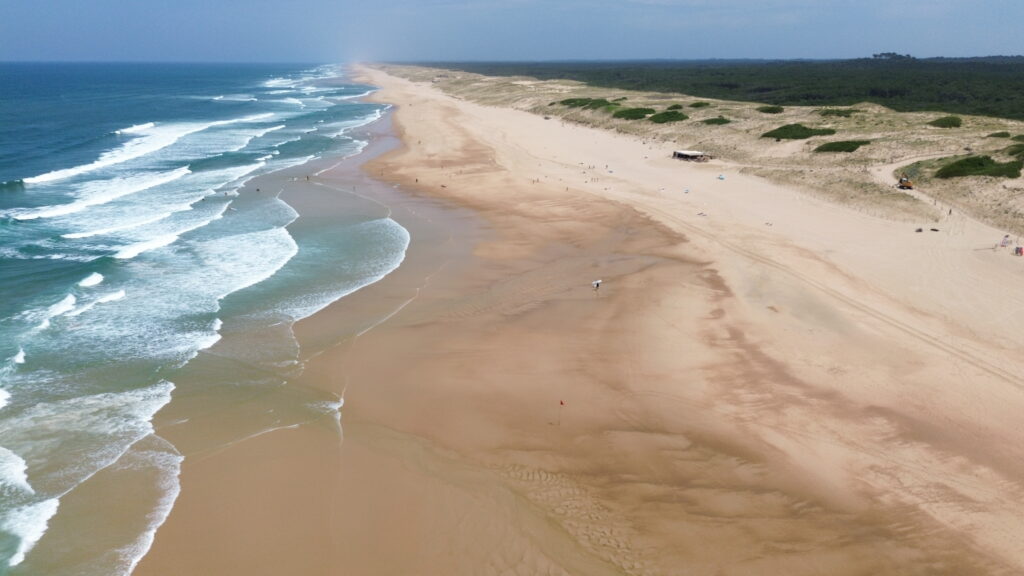
The following days made it clear: Le Penon was our go-to spot. Early mornings, park the car by the dunes, walk over—and boom, you’re standing on a massive beach with views of Hossegor, Capbreton, and on clear days, even the Pyrenees.

On the best day, it hit 35°C. The swell lines were clean (1.2m at 11s), and even better once we were in the water. It was a dream session: perfect peaks, occasional barrels the locals made the most of, a mellow crowd, and a point-like section that worked from low to almost high tide.Le Penon

Penon Seignosse

Spot Info: Le Penon (Seignosse)

  • Type: Beach break with seasonal sandbars / point-like shapes

  • Best Swell Direction: W to NW

  • Best Wind Direction: E to SE

  • Tide: Low to mid and almost high

  • Level: All levels

  • Watch out: Strong rip currents at outgoing tide – solid paddle fitness recommended

Explore more surf spots in France »

Mini road trip to Bidart

One day brought some light onshore winds, and Windy showed calmer conditions near Bidart—just south of Guéthary. So we drove 45 minutes and entered a whole different world.

Rolling hills, tucked-away beaches, and a laid-back vibe. We scored two solid sessions. Waves looked small from the beach, but once in, it was fun and playful (0.9m at 9s).

Guethary

We saw kids surfing with helmets (totally logical with those rocky reefs) and soaked up the village atmosphere near the beach and tiny harbor at Plage Centrale.

We wrapped it up at Uhabia, a small beach with a shortbreak-style wave—perfect for a last mini session.

Spot Info: Bidart (Uhabia & Plage Centrale)

  • Type: Reef & beach combo

  • Best Swell Direction: W to NW

  • Best Wind Direction: E to SE

  • Tide: Incoming to mid and semi high

  • Level: Intermediate (due to rocks and shortbreak)

  • Watch out: Rocks under the surface and rip currents at high tide

Back in Seignosse, we finished the day with a sunset surf. The wind had dropped. That golden light shining through the lip of the wave, crystal-clear water… one for the memory books.

Seignosse longboard

A few things we noticed

  • Fatbikes everywhere: Surfers cruising over the beach with boards in side racks. Looks like the new normal.

fatbikes beach

  • Helmets in the water: More and more surfers—kids and adults alike—are wearing them.

The morning we didn’t paddle out

On our final morning, we stood at Les Bourdaines again. No wind. Swell had picked up. Perfect, long, clean lines.

Bourdaines point

But we were tired. And mostly—just deeply satisfied. So instead of paddling out, we snapped some pics for this post, grabbed a croissant, and started the drive back to the Netherlands.

Yes, including the usual Paris traffic jam.

paris traffic

But also: with a head full of sun, surf, and a few unexpectedly perfect sessions.

Where We Stayed

Camping Naturéo – A luxury surf campground in Seignosse with an on-site surf school, pool, and lodge tents. Perfect if you like your surf trips with a touch of comfort.

Natureo

Read the full review here »

Surf Lessons in Seignosse?

Looking for a more personal surf school than the one on the campground?
Check out Coco Surfschool by Annelies. She keeps her lessons small—max 6 people—and super flexible.
Visit the website here »

Planning a surf trip to France?
Check out our Surf Guide to South West France – 70 pages of surf tips, 35+ surf spots & stays from the Vendée to the Basque Country.

Wetsuits 2025: The Ultimate Guide to Brands, Innovations & Tips

Looking for the perfect wetsuit for your surf sessions in 2025? You’re in the right place. This guide is for surfers who care about quality, comfort, and sustainability. Whether you’re buying your first suit or upgrading to a high-performance model, we’ll help you make an informed decision.

We compared over 20 brands and dive into stretch, warmth, seam technology, and eco-innovations. Explore the world of modern wetsuits.

Quick summary for busy readers that need to get into the water

In 2025, top wetsuits stand out for their combination of ultra-flexible materials (like Yamamoto limestone neoprene or Technobutter 4), thermal linings (such as Graphene or Celliant), and fully sealed seams with liquid or taped finishes. Eco-friendly alternatives like Yulex (natural rubber) are on the rise, matching performance standards without compromising sustainability.

Leading brands include Rip Curl, O’Neill, Billabong, Xcel, and Patagonia, while innovators like SRFACE, Need Essentials, Wildsuits, and Deeply are shaking up the market with affordable high-tech options. Our personal favorite? The SRFACE Remix 4/3mm — a premium-level wetsuit at a fair price.

Top 3 wetsuit picks for men, women & kids

Men:
1. Billabong Furnace Natural – Excellent combination of eco materials and warmth with graphene lining.
2. O’Neill Hyperfreak – High performance with Technobutter 4 neoprene and minimal seams.
3. SRFACE Remix – Outstanding value, great all-rounder for serious cold-water surfers.

Women:
1. Patagonia R2 Yulex – Fully neoprene-free, warm, and built to last — ideal for eco-conscious surfers.
2. Roxy Syncro – Affordable, well-designed women’s wetsuit with solid GBS seams and good warmth.
3. SRFACE Heat  – High-quality suit with thermal lining and excellent fit at a competitive price.

Kids:
1. O’Neill Youth Epic – Durable and warm suit, great for extended water time.
2. Olaian Shorty for summer (2/2)– Perfect entry-level summer suit for casual beach days.
3. Rip Curl Dawn Patrol Youth for winter (5mm)– Reliable winter wetsuit for ambitious young surfers.

Scroll down for the full guide or use the menu above to jump straight to the section that interests you most.


Recent developments in wetsuits (2020–2025)

The past five years have seen major leaps in wetsuit innovation. Sustainability is now a central focus. Brands like Patagonia and Picture Organic are leading the way with natural rubber (Yulex) and recycled materials that aim to replace traditional neoprene. Others, like Billabong, have followed with eco-conscious lines. High-performance materials such as Yamamoto limestone neoprene and graphene-infused linings make wetsuits warmer and more flexible than ever. Seamless construction, improved seals, and zip-free designs are also gaining popularity for enhanced comfort and mobility.

Types of wetsuits

There are several common wetsuit styles: fullsuits (long arms and legs, ideal for cold water), springsuits (shorter arms or legs for warmer conditions), long johns, and wetsuit tops. The right choice depends on water temperature, the season, and your surf style. A 4/3mm or 5/4mm fullsuit is best for autumn to winter, while a 2mm shorty is perfect for summer. Hooded suits are designed for freezing temperatures. Many brands also offer gender-specific cuts and youth sizes.

wetsuit guide

Key quality factors to consider

Flexibility: High-end wetsuits use premium materials like Yamamoto neoprene or Technobutter 4, which stretch easily without losing shape.
Seams: Entry-level wetsuits often use flatlock stitching, which is less water-resistant. Mid to high-end models use glued and blind-stitched (GBS) seams, often with internal taping or liquid sealing for extra warmth.
Thickness: Choose 3/2mm for summer, 4/3mm for spring and autumn, and 5/4mm or thicker for winter conditions.
Fit & Comfort: A wetsuit should fit snugly but not restrict movement. Look for anatomical panels and minimal seam construction for better flexibility.
Lining: Thermal linings like fleece, graphene, or Celliant retain heat and speed up drying time, improving comfort in colder sessions.

Well-Known wetsuit brands in 2025

Patagonia: Known for their outdoor apparel, Patagonia has been a wetsuit player since the early 2000s with a strong focus on sustainability. They shook the market by abandoning neoprene entirely — all their wetsuits are now made from Yulex natural rubber. Models are labeled R1, R2, R3, R4 depending on water temperature needs. The R4 Yulex, for example, is a thick winter wetsuit made for frigid conditions. Their construction is impressive: triple glued, blind-stitched, and fully taped seams. Some older models even had external taping, though newer versions removed it to improve flexibility.

O’Neill: The inventor of the wetsuit and still a global leader. The Hyperfreak series is beloved for its extreme comfort, powered by Technobutter 3 or 4 — some of the stretchiest neoprene around. O’Neill leans into performance more than eco credentials, although their Blueprint series is more eco-conscious. Solid value, wide range for men, women, and kids.

Rip Curl: This Australian brand pushes innovation with suits like the Flashbomb Heatseeker and E-Bomb, known for their fast-drying flash lining and E7 neoprene. Ideal for surfers who want to surf multiple sessions per day. Rip Curl also offers an Eco line with recycled linings and water-based adhesives.

Billabong: Blends progressive technology like Graphene lining with sustainability. The Furnace Natural model is fully neoprene-free, using Yulex, recycled interiors, and solvent-free glue. With stylish cuts and bold designs, it remains popular among younger surfers.

SRFACE: A direct-to-consumer brand from the Netherlands and Belgium, offering premium Japanese limestone neoprene at competitive prices. The SRFACE Remix is a top performer loved by experienced surfers. Their sizing tool and eco-options make them a smart, transparent brand.

Xcel: A Hawaii-based company known for warm, winter-ready suits. Their TDC lining and Drylock tech make them a favorite in colder regions. They focus less on eco-marketing and more on technical thermal performance.

Picture Organic: A French brand that focuses heavily on environmentally responsible production. Their wetsuits use Eicoprene (a limestone + natural oil blend) instead of neoprene, with solvent-free glue and recycled lining. Their aesthetic is bold and modern — you can tell it’s not just another surf brand.

New and emerging wetsuit brands

Wildsuits (France): An eco-driven brand using recycled materials and limestone neoprene. Designed in France and manufactured in Morocco, Wildsuits offers good warmth and flexibility at a fair price. They’re quickly gaining traction in the European market with a strong community feel.

Deeply (Portugal): Known for stylish and affordable wetsuits that integrate modern tech like graphene linings. Deeply’s products combine good stretch, warmth, and smart cuts — ideal for both beginners and seasoned surfers on a budget.

Soöruz (France): Pioneers in Naturalprene (made from rubber tree latex), algae-based foams, and bio-sourced glues. Soöruz continues to push the envelope in sustainable surf gear, including wetsuits designed for cold-water performance with a green conscience.

Manera (France): Focused on ergonomic fit and long-lasting durability, Manera’s suits are designed using 3D modeling to maximize comfort and freedom of movement. Though not always eco-labeled, the brand is known for quality and innovation.

Need Essentials (Australia): Offers minimalist, unbranded wetsuits at a fraction of the usual price by cutting out retail markups. The focus is on performance, warmth, and durability, with fewer aesthetic frills — great value for core surfers.

Vissla (USA): Surfing with soul — Vissla’s eco-conscious wetsuits use limestone neoprene, Dope Dyed yarns, and recycled linings. They offer progressive styling and solid tech for surfers who care about performance and the planet.

SRFACE (NL/BE): Though already mentioned among big brands, their fresh take on direct-to-consumer innovation and eco-packaging still places them among standout new brands shaping the wetsuit landscape.

Sustainable materials vs. traditional neoprene

Yulex: A plant-based natural rubber that has become the benchmark for eco-friendly wetsuits. Brands like Patagonia have adopted Yulex across their entire wetsuit line. It performs almost identically to traditional neoprene in terms of flexibility and warmth, but with a significantly reduced environmental footprint.

Limestone Neoprene: Mined from limestone rock, this version is more durable and water-resistant than petroleum-based neoprene. Though not renewable, it’s considered a less harmful option and widely used in high-end wetsuits from brands like SRFACE, Xcel, and O’Neill.

Recycled Linings & Solvent-Free Glues: Many brands now use recycled polyester (from plastic bottles) in inner linings and switch to water-based or solvent-free glues, further reducing chemical impact.

Naturalprene, Ecoprene & Others: Smaller brands such as Soöruz and Picture Organic explore even newer materials like algae-based foams or Naturalprene (a renewable rubber compound) in their most eco-advanced suits.

Overall, sustainable wetsuits are no longer a compromise. In 2025, they offer top-tier performance while helping reduce the environmental cost of surfing.

Entry-level, mid-range & premium Wetsuits

Entry-Level: These are the most budget-friendly wetsuits, ideal for beginners, casual surfers, or as a backup summer suit. Entry-level suits (typically €50–€150) use standard neoprene that has less stretch. Seams are often flatlock or basic glued-blind-stitched without tape. You won’t get plush linings—just basic nylon jersey interiors. Examples: O’Neill Reactor II, Rip Curl Omega, Quiksilver Prologue, Billabong Absolute 3/2. Perfect for warm conditions or short sessions. Pros: Low price, gets the job done. Cons: Less flexible and warm, shorter lifespan (2 seasons with heavy use), and less water resistance.

Mid-Range: In this tier (€150–€300), you get a major upgrade in performance. These suits typically feature GBS seams and some taping or liquid sealing in stress areas. Neoprene is higher quality (like Superstretch or Limestone), offering significantly better flexibility. You’ll often see thermal panels on the chest and back. Suited for most conditions faced by average surfers. Examples: Rip Curl Dawn Patrol, Xcel Comp, O’Neill Hyperfreak (non-Firewall), Billabong Furnace Absolute. Pros: Excellent value — noticeable improvement in warmth and comfort. Cons: Not top-tier materials, pros will notice differences. Some luxury features may be missing (like full taping or ultra-lightweight foam).

Premium: This is the high-performance tier (€300–€600+). These are flagship suits loaded with cutting-edge tech: ultra-stretch Japanese neoprene, fully taped or welded seams, unique linings throughout, 3D anatomical paneling, and zipperless designs. Examples: Patagonia R4 Yulex, Rip Curl Flashbomb Heatseeker, O’Neill Psychotech / Hyperfreak Fire, Xcel Drylock, Billabong Furnace Natural, SRFACE Remix. Even thick 5/4 hooded suits in this category feel surprisingly light and stretchy. Pros: Maximum comfort (feels like a second skin) and ideal for long sessions in cold water. Cons: Expensive. Requires proper care (rinsing, drying flat). High-tech materials can be more fragile, but when treated well, premium suits last multiple heavy-use seasons.

Comparison table by brand

Brand Flexibility Warmth Seams & Finish Sustainability Top Models
O’Neill Very high (Technobutter 4) High (Firewall lining) GBS + taping, zipless options Good (Blueprint series) Hyperfreak, Psycho Tech
Rip Curl Very high (E7 neoprene) Very high (Flash lining) GBS + liquid seal Moderate (recycled lining) Flashbomb, E-Bomb
Patagonia High (Yulex, improved) Very high (merino/thermal lining) Triple GBS + full tape Excellent (100% neoprene-free) R2, R3, R4
SRFACE Very high (Yamamoto) High (Thermal lining) GBS + taped critical seams Good (eco option) Remix, Heat
Billabong High (Airlite foam) Very high (Graphene lining) GBS + internal tape Excellent (Furnace Natural) Furnace, Absolute
Xcel High (Nanoprene Lite) Very high (TDC lining) Full tape + Drylock seals Good (limestone neoprene) Drylock, Comp
Decathlon Basic (entry neoprene) Basic (no lining) Flatlock / basic GBS Improving (recycled elements) Olaian 100, 500, 900

Top 3 wetsuit picks for men, women & kids

Men:
1. Billabong Furnace Natural – Excellent combination of eco materials and warmth with graphene lining.
2. O’Neill Hyperfreak – High performance with Technobutter 4 neoprene and minimal seams.
3. SRFACE Remix – Outstanding value, great all-rounder for serious cold-water surfers.

Women:
1. Patagonia R2 Yulex – Fully neoprene-free, warm, and built to last — ideal for eco-conscious surfers.
2. Roxy Syncro – Affordable, well-designed women’s wetsuit with solid GBS seams and good warmth.
3. SRFACE Heat  – High-quality suit with thermal lining and excellent fit at a competitive price.

Kids:
1. O’Neill Youth Epic – Durable and warm suit, great for extended water time.
2. Olaian Shorty for summer (2/2)– Perfect entry-level summer suit for casual beach days.
3. Rip Curl Dawn Patrol Youth for winter (5mm)– Reliable winter wetsuit for ambitious young surfers.

Sources for this wetsuit research:

  • Product information and specifications from Rip Curl, O’Neill, Billabong, Patagonia, Xcel, SRFACE, C-Skins, Need Essentials, Picture Organic

  • Updates on wetsuit innovations from 2020–2025 via Surfline, Stab Magazine, and The Inertia

  • Brand pages and technical manuals from Yulex, Yamamoto, NaturalPrene, Limestone Rubber

  • User reviews from the Boardshortz community, Reddit r/surfing, YouTube gear reviewers, and surf shops such as SurfDome, Euroglass, Decathlon, and Surfd.nl

  • Personal usage experience.

The 12 best longboard surf spots in France

France is a paradise for longboarders, if you know where to go and when.

With mellow beach breaks, wide sandy beaches and laid-back vibes, there are plenty of spots where you can stylishly carve your lines.

Here you’ll find the 12 best longboard surf spots in France, including: ideal conditions per spot, recommended campsites and guesthouses, and seasonal wetsuit advice.

Check out all French surf spots here.

What makes a spot good for longboarders?

You can recognize a good longboard spot by the following:

  • Long, gradual waves: No abrupt close-outs

  • Less strong currents: So you can paddle back easily

  • Space in the water: No crowded line-ups full of shortboarders claiming every wave

  • Gentle take-off: Waves that build slowly are easier to time with a longboard

Why go longboarding in France?

Whether you’re trying your first hang-five or you love those classic stylish rides across mellow walls—France has it all.

From sheltered bays in Brittany to wide sandbanks in Les Landes, there’s always a spot with soft, long waves that are perfect for your log.

Bonus: Many of these spots are family-friendly and ideal for surf trips with kids.

Overview: Best French longboard spots + conditions & tips

For each spot, you’ll find:

  • Best conditions (swell direction, wind, and tide)

  • Required swell height and power

  • Seasonal wetsuit advice

  • Accommodation tips (campsite and guesthouse)

We’ve gathered all the info you need to plan your next surf trip with ease.

Looking for the best waves in France?
Our digital surf guide maps out 35+ spots, longboard-friendly breaks and hidden gems – all in one easy download.

Here they are; the 12 longboard surf spots in France

1. Mimizan Plage (Les Landes)

Swell: W / NW | Wind: E | Tide: Mid
Ideal swell: 0.8 – 1.5m, 8–12s

Wetsuit advice:

  • Summer: 3/2mm in the morning, otherwise 2/2mm or even boardshorts on hot days

  • Fall/Spring: 4/3mm

  • Winter: 5/4mm + boots and hood

Accommodation:

2. La Torche (Brittany)

Swell: W / SW | Wind: E | Tide: Best at mid
Ideal swell: 1 – 1.8m, 10–14s

Wetsuit advice:

  • Summer: 3/2mm shorty

  • Fall/Spring: 4/3mm

  • Winter: 5/4mm + boots and hood

Accommodation:

3. Hendaye (Basque Country)

Swell: W / NW | Wind: NE | Tide: Low to mid
Ideal swell: 1 – 2m outside, 0.5 – 1.2m inside the bay

Wetsuit advice:

  • Summer: 3/2mm in the morning, otherwise 2/2mm or boardshorts

  • Fall/Spring: 4/3mm

  • Winter: 5/4mm (+ boots and hood on cold days)

Accommodation:

  • Camping: Camping Ametza

  • Guesthouse: Hotel La Marisa (Rated 9.1 on Booking!)

4. Les Dunes – Brétignolles (Vendée)

Swell: W / WNW | Wind: E / SE | Tide: Mid
Ideal swell: 0.7 – 1.5m, 9–12s

Wetsuit advice:

  • Summer: 3/2mm

  • Fall/Spring: 4/3mm

  • Winter: 5/4mm + boots and hood

Accommodation:

5. Le Phare – La Tranche-sur-Mer (Vendée)

Swell: W / SW | Wind: NE / W | Tide: Mid to high
Ideal swell: 0.8 – 1.6m, 10–13s or 1.8–2.5m, 12–15s from W/NW

Wetsuit advice:

  • Summer: 3/2mm

  • Fall/Spring: 4/3mm

  • Winter: 5/4mm + boots and hood

Accommodation:

6. Saint-Girons Plage (Les Landes)

Swell: WNW / NW | Wind: E / NE | Tide: Mid
Ideal swell: 0.8 – 1.4m, 9–12s

Wetsuit advice:

  • Summer: 3/2mm in the morning, otherwise 2/2mm, or even boardshorts on hot days

  • Fall/Spring: 4/3mm

  • Winter: 5/4mm + boots and hood

Accommodation:

7. Soulac-sur-Mer (Gironde)

Swell: W | Wind: E / SE | Tide: Mid to high
Ideal swell: 0.6 – 1.3m, 8–10s

Wetsuit advice:

  • Summer: 3/2mm in the morning, otherwise 2/2mm, or even boardshorts on hot days

  • Fall/Spring: 4/3mm

  • Winter: 5/4mm + boots and hood

Accommodation:

8. Les Blancs Sablons (Northern Brittany)

Swell: WNW | Wind: E / NE | Tide: Mid
Ideal swell: 0.8 – 1.5m, 10–13s

Wetsuit advice:

  • Summer: 3/2mm

  • Fall/Spring: 4/3mm

  • Winter: 5/4mm + boots and hood

Accommodation:

9. Moliets-et-Maa (Les Landes)

Swell: W / NW | Wind: E / SE | Tide: Mid
Ideal swell: 0.8 – 1.5m, 9–11s

Wetsuit advice:

  • Summer: 3/2mm in the morning, otherwise 2/2mm, or boardshorts

  • Fall/Spring: 4/3mm

  • Winter: 5/4mm + boots and hood

Accommodation:

10. Saint-Pierre-Quiberon – Penthièvre (Brittany)

Swell: SW / W | Wind: E / NE | Tide: Mid
Ideal swell: 0.7 – 1.4m, 10–12s

Wetsuit advice:

  • Summer: 3/2mm

  • Fall/Spring: 4/3mm

  • Winter: 5/4mm + boots and hood

Accommodation:

11. Cenitz (Basque Country)

Swell: W / NW | Wind: NE | Tide: Mid to high
Ideal swell: 0.8 – 1.6m, 10–13s

Wetsuit advice:

  • Summer: 3/2mm in the morning, otherwise 2/2mm, or even boardshorts

  • Fall/Spring: 4/3mm

  • Winter: 5/4mm + boots and hood

Accommodation:

12. Guéthary (Basque Country)

Swell: NW / W | Wind: E / NE | Tide: High
Ideal swell: 1 – 2m, 12–15s
Wetsuit advice:

  • Summer: 3/2mm in the morning, otherwise 2/2mm, or boardshorts

  • Fall/Spring: 4/3mm

  • Winter: 5/4mm + boots and hood

Accommodation:

More about surfing in Guéthary


Want to know more about surfing in France?

Curious which wetsuit you need or how to read a surf forecast?


Exclusive SRFACE Wetsuits Discount

Always 10% off all SRFACE wetsuits when you order
via this link
The discount is automatically applied at checkout!

SRFACE Wetsuits