
There are destinations you recognize from photos. And then there are destinations you only truly understand once you’re there. The Lofoten Islands belong to the latter.
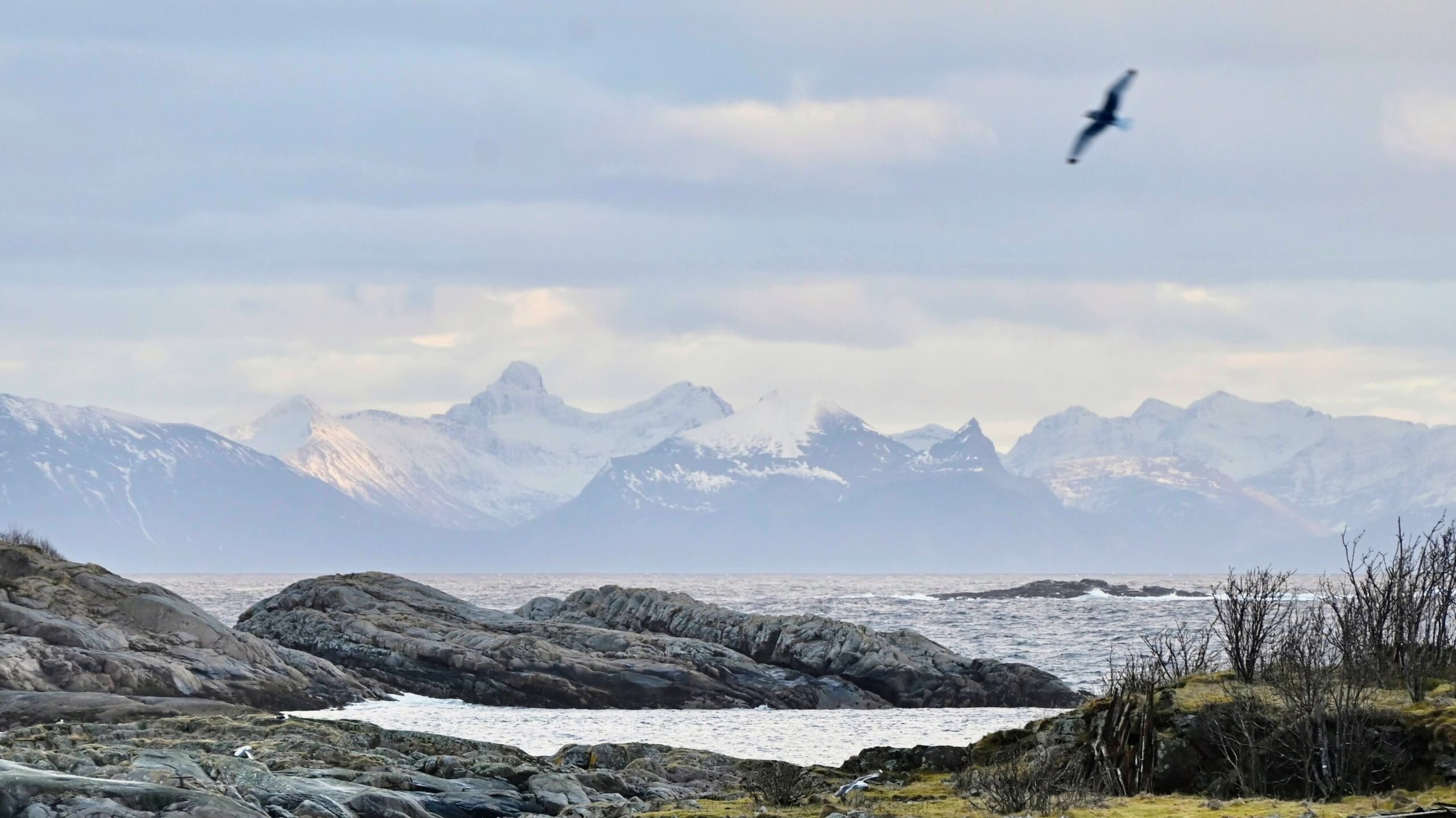
An archipelago above the Arctic Circle, in the far north of Norway. Mountains rising straight out of the ocean. Water clearer and bluer than you’d expect.
And waves.
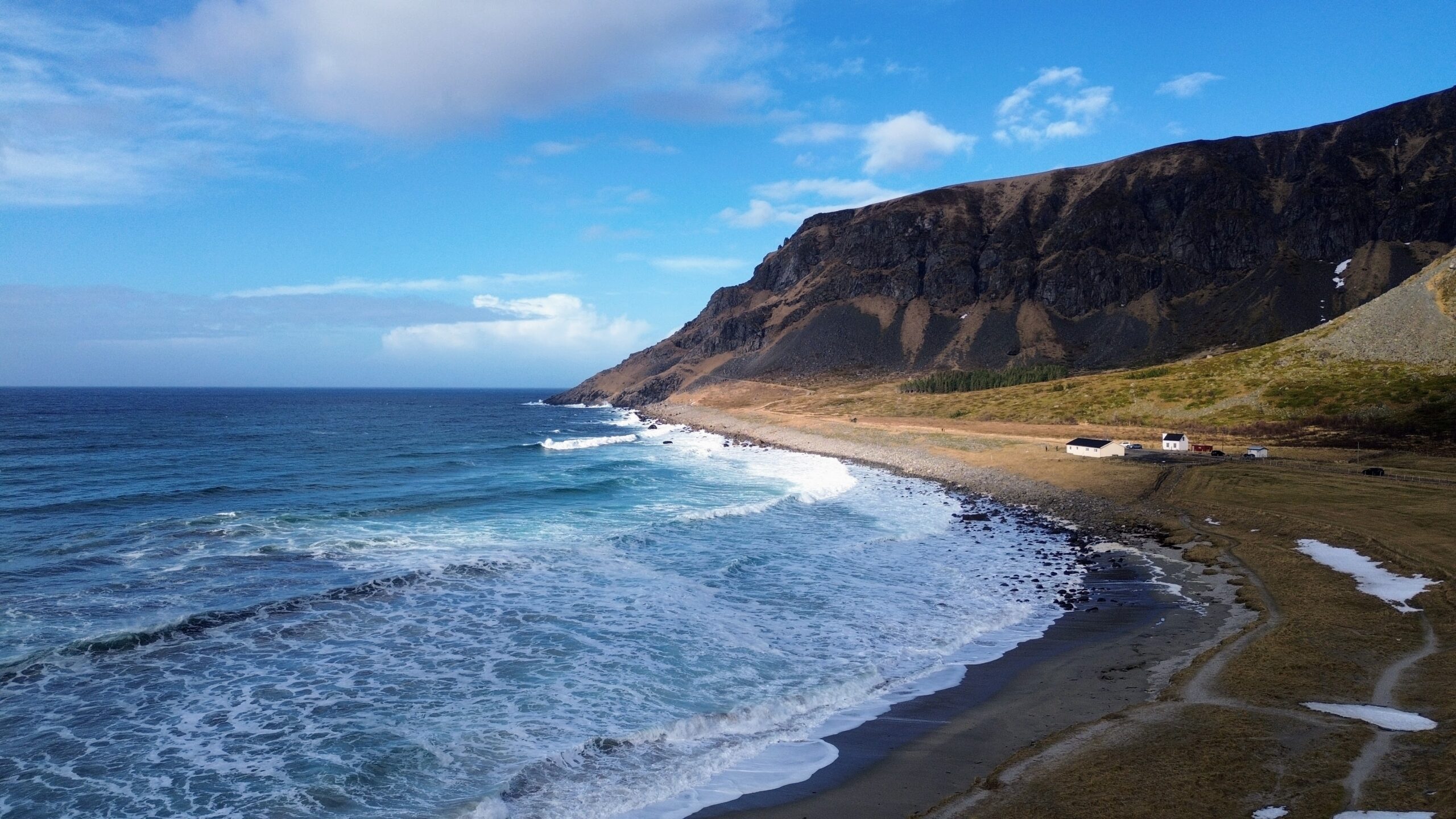
Because what many people don’t realize: the Lofoten have a surf scene. A small, proud, and above all pure surf scene that has been attracting adventurous surfers from around the world for years.
We went there in mid-March. Mainly for splitboarding. But we had to see the ocean too.
Unstad: an iconic Arctic surf spot
If there’s one name to remember when it comes to surfing in the Lofoten, it’s Unstad.
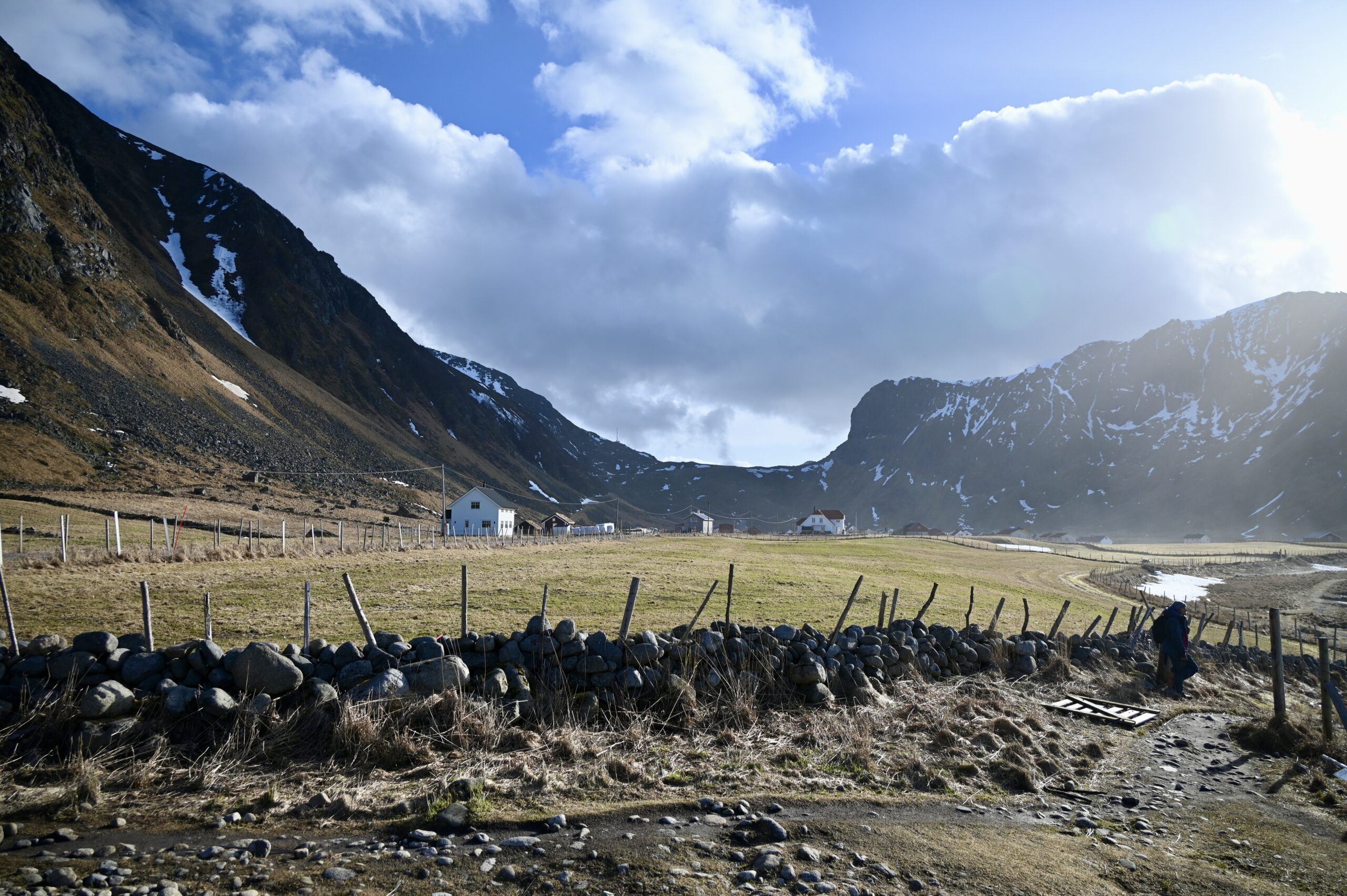
The bay is tucked between steep mountain walls on the island of Vestvågøy. You drive there via narrow roads, past fjords and bridges, through a landscape that keeps changing. And then suddenly, as you exit a tunnel, you see it.
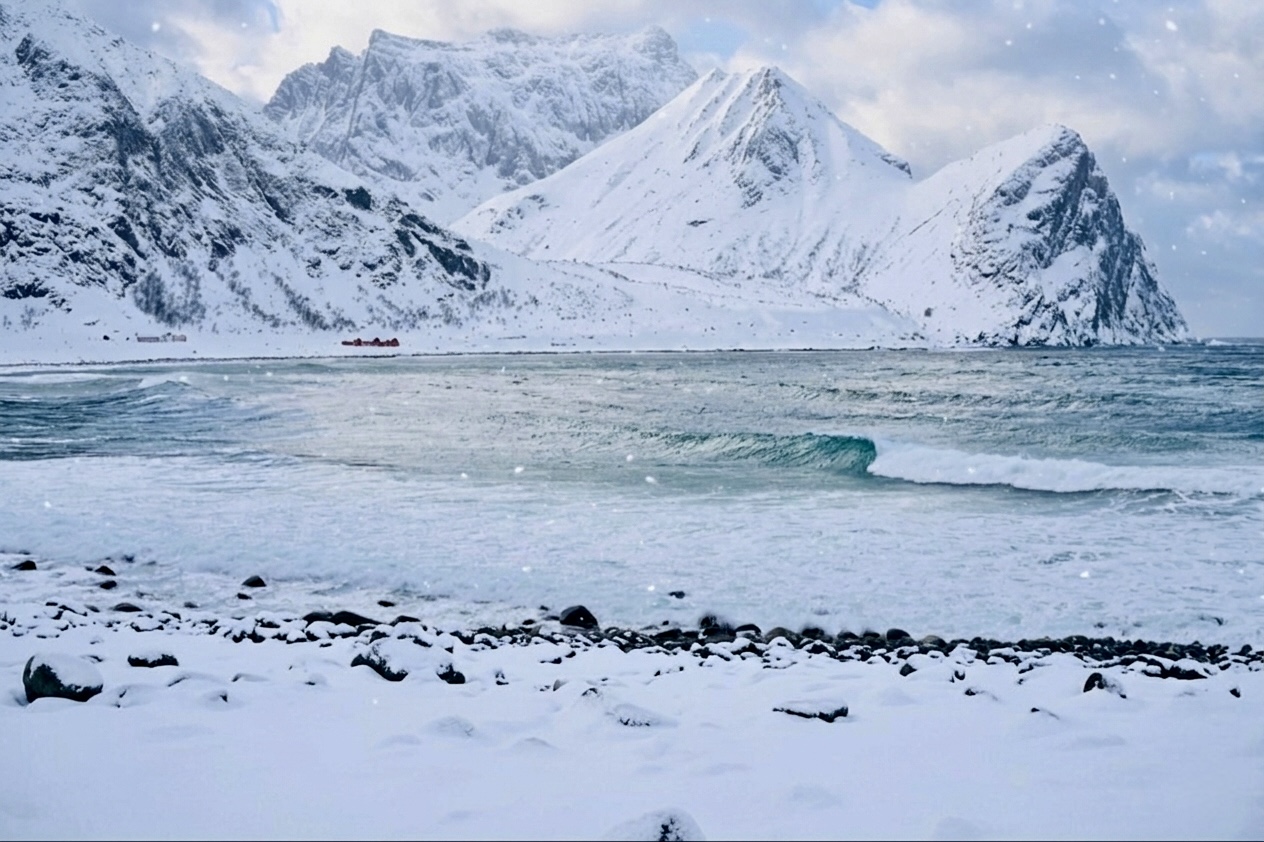
A small village of maybe forty houses. Mountain peaks on both sides. And in front of you, the ocean, with waves rolling in.
Unstad works best on northwest or west swells, traveling uninterrupted across the Atlantic. The bay captures that swell perfectly: long lines, a dramatic backdrop, and a sense of space you rarely find on European surf beaches.
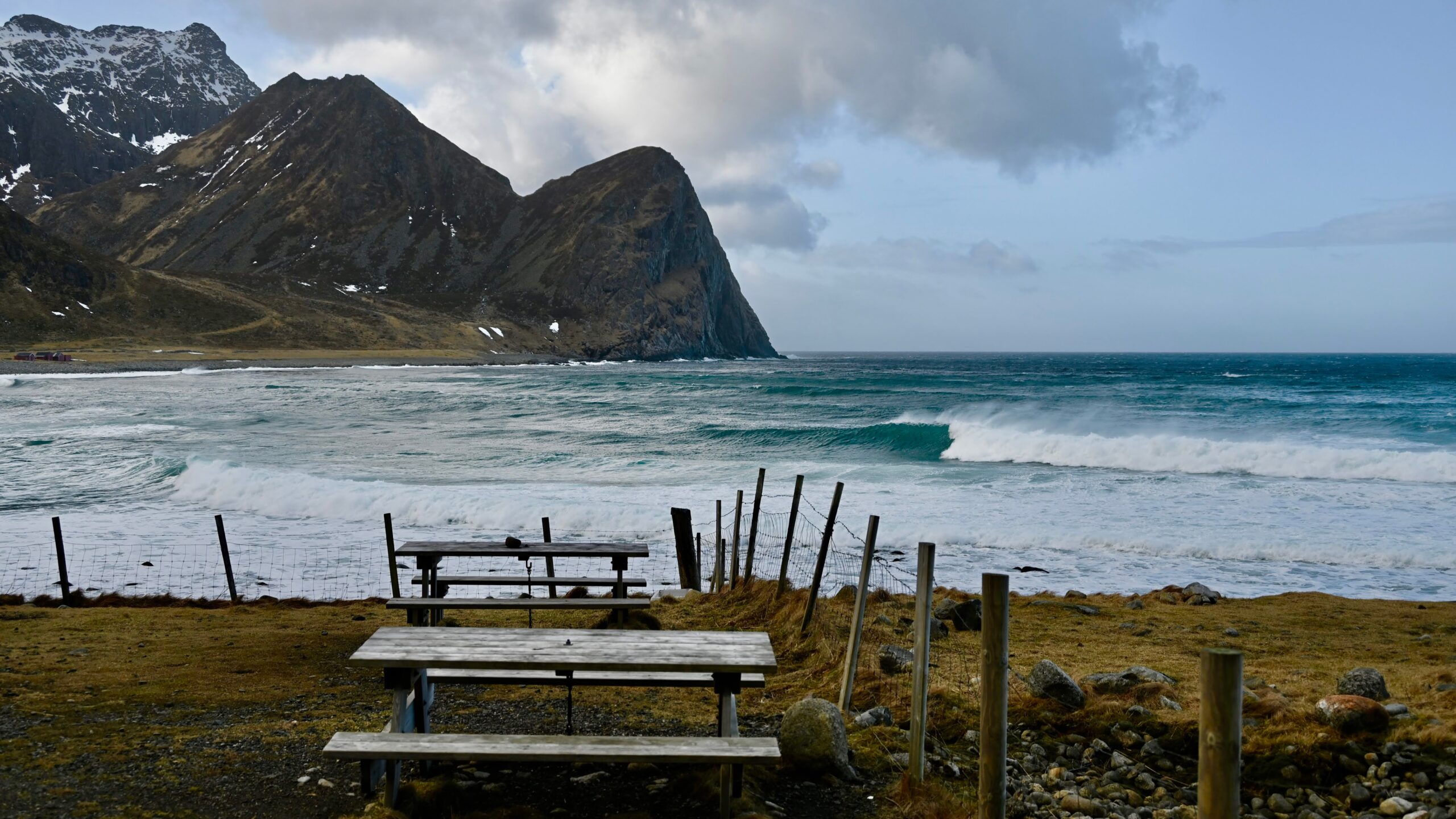
On good days, the waves here are world class. Fun for beginners to intermediates when it’s smaller. But when the swell picks up, it’s a different story, that’s when the pros show up.
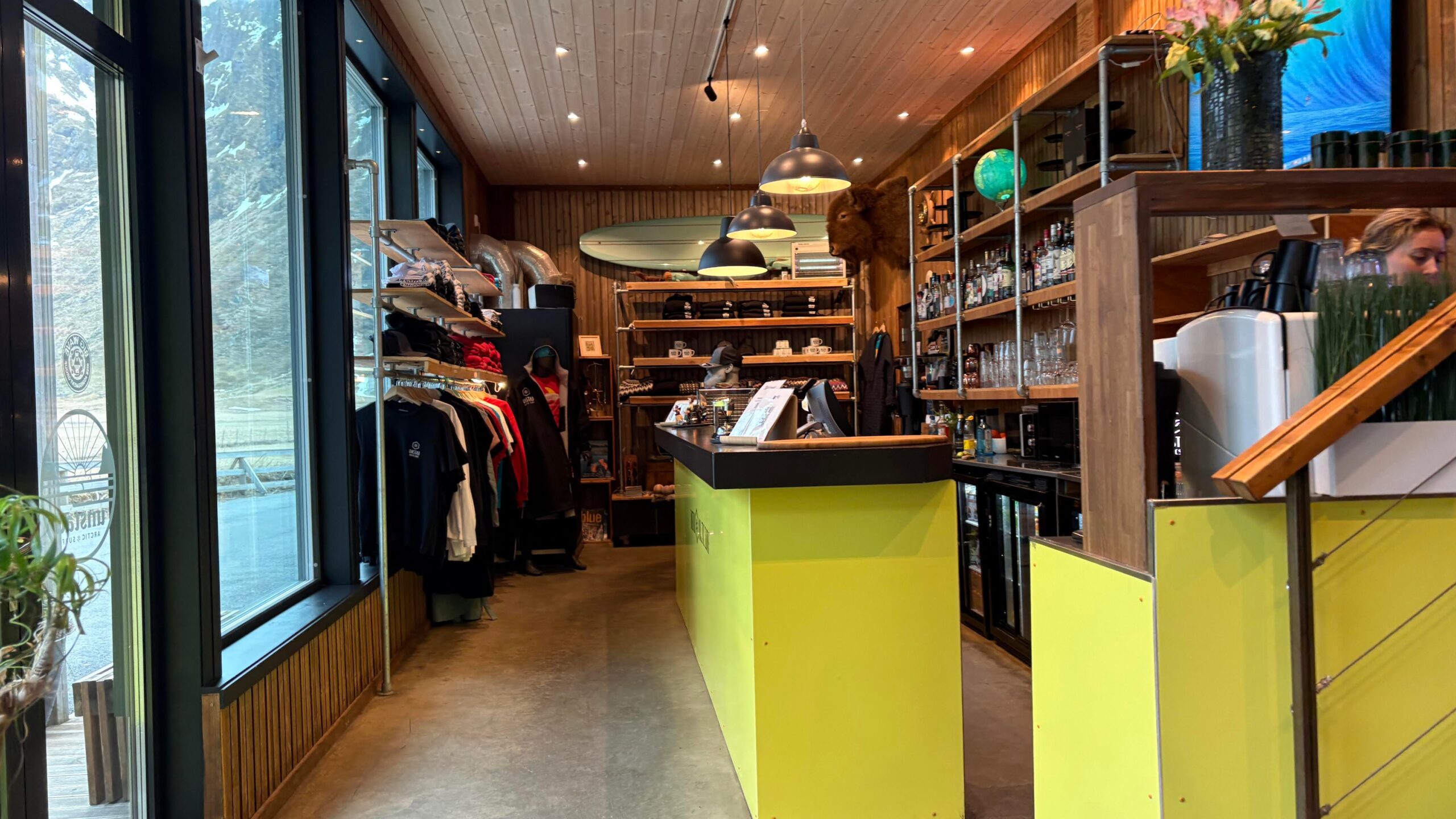
Tip: Arctic Surf Café, about 300 meters from the beach. It’s the social hub of the spot. Warm, cozy, filled with surfers and travelers. And the cinnamon bun is famous for a reason.
What we saw: almost… but not quite
We found Unstad on a day where it just didn’t fully come together.
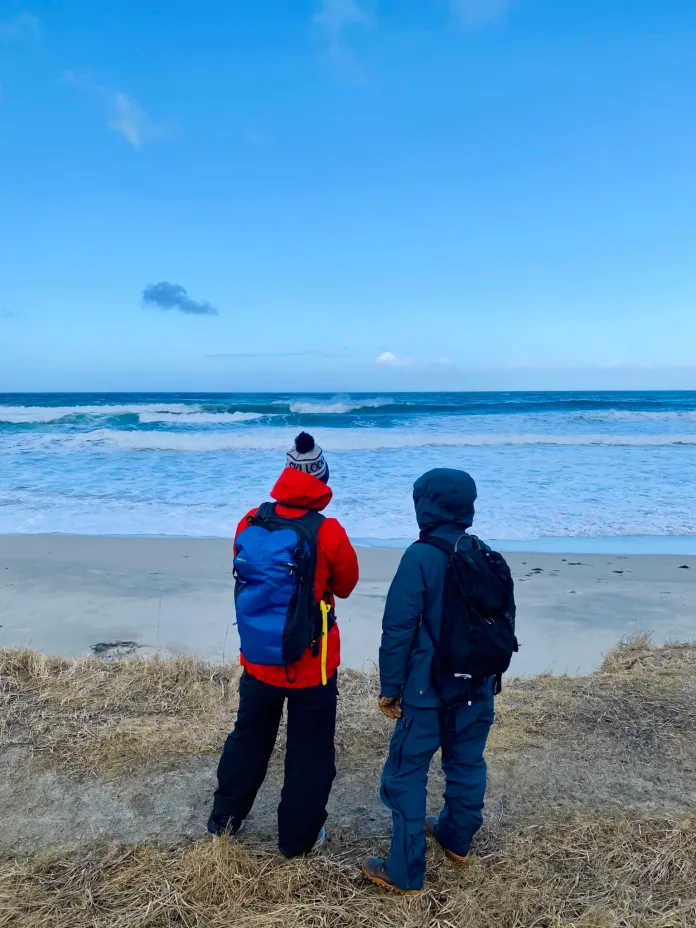
The swell was there; powerful even. Clean lines rolling in from the ocean. But as they entered the bay, they turned slightly messy. Too much energy, too much wind. Not enough structure.
Or were we just being critical? Maybe it was simply a touch too big for us to feel comfortable.
Pretty offshore too.
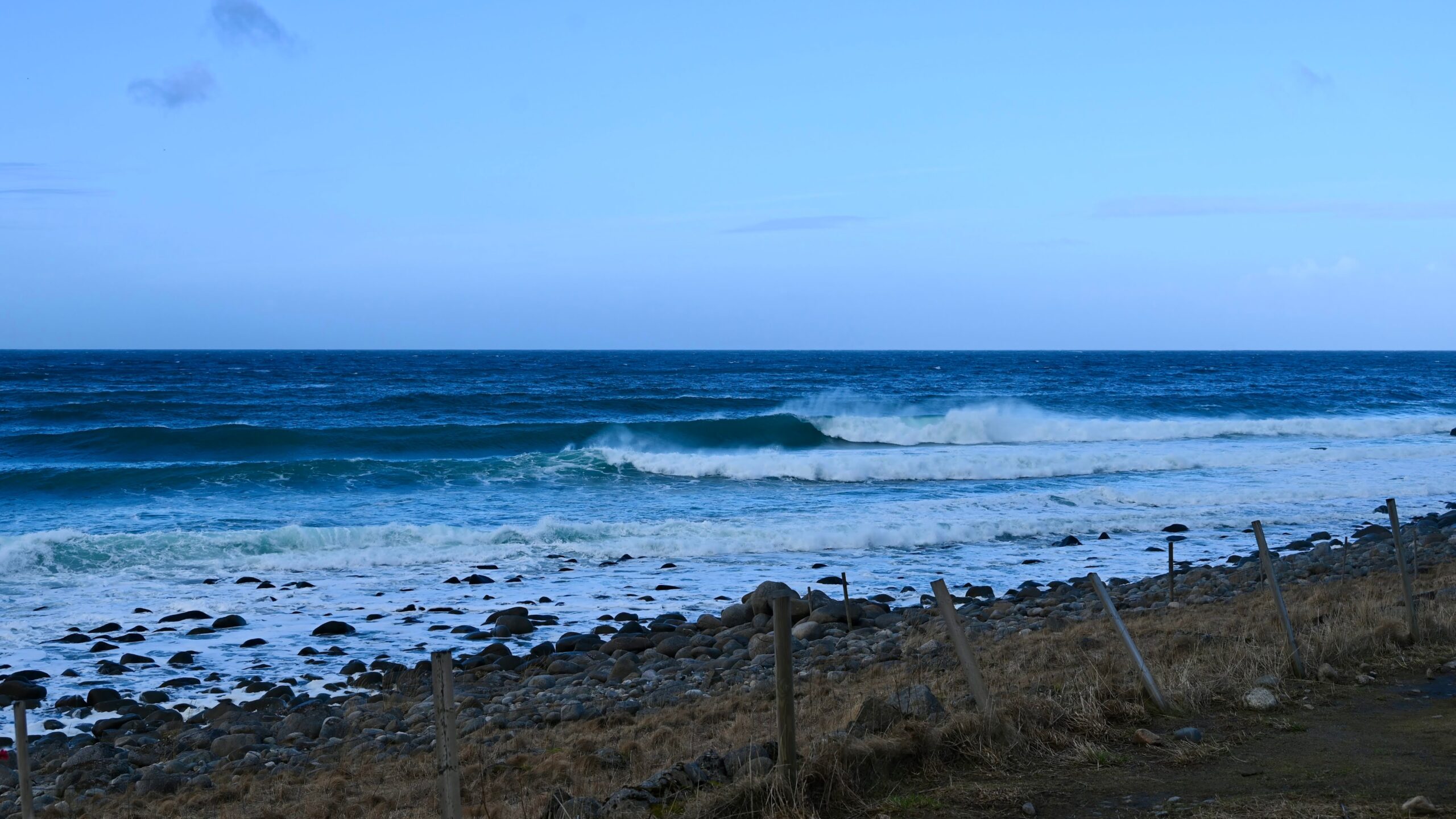
We stood there watching for a while and said: if this had been our home spot, with these waves, people would definitely be out there. But here, it feels different. More serious.
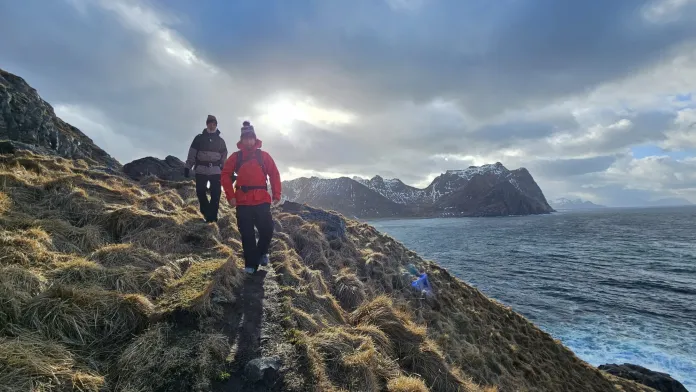
For us, it was a reason to explore the bay on foot instead.
The left showed some potential now and then as well.
Who was surfing
Dylan Graves, known from the Weird Waves series, was here recently filming — and not without reason.
With the right mix of swell, wind, and tide, this place produces a wave unlike anywhere else. Long lines, with dark mountain walls and white foam as a backdrop.
It’s one of those places you see in photos and think: this can’t be real.
But it is.
Arctic surf: what makes it different?
Surfing in the Lofoten isn’t a tropical experience, and that’s exactly the appeal.
Water temperature
Cold. Around 4°C in winter, rising to maybe 10–12°C in summer.
What to wear
A 5/6mm wetsuit is not overkill. Add booties, gloves, and a hood, you’ll need it all. For North Sea surfers, that’s manageable. What makes it intense is the combination with the outside temperature. We were there mid-March: around +5°C.
The light
The Lofoten live in extremes. In summer, there’s the midnight sun. Surfing while the sun is still up at midnight feels unreal. In winter, the light is low and scarce. Golden hour lasts all day. Everything looks more dramatic: the mountains, the water, the waves.
It’s surfing with an extra dimension.
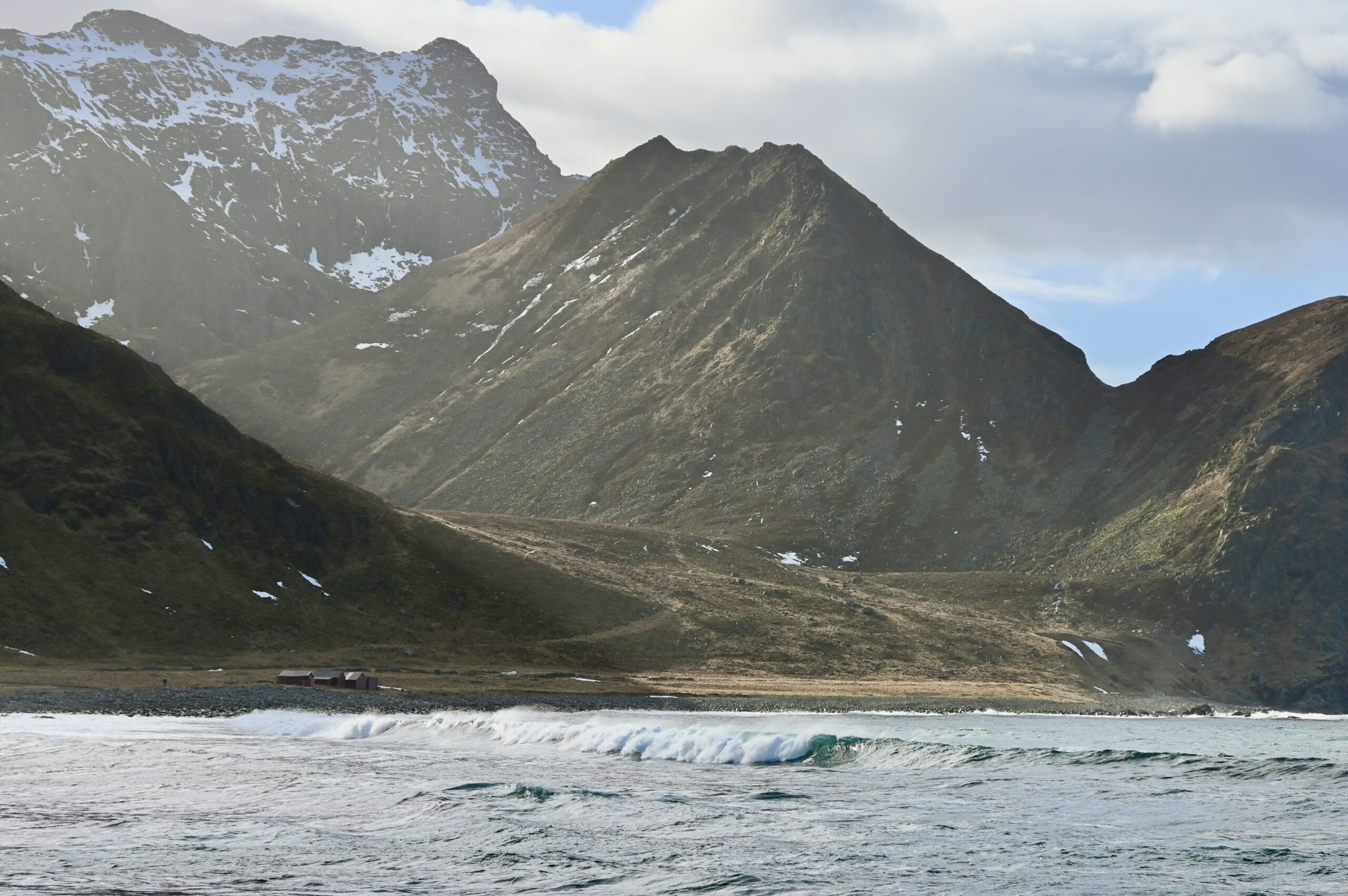
Exploring beyond Unstad
Unstad is the best known spot. But if you’re willing to explore, the Lofoten offer much more.
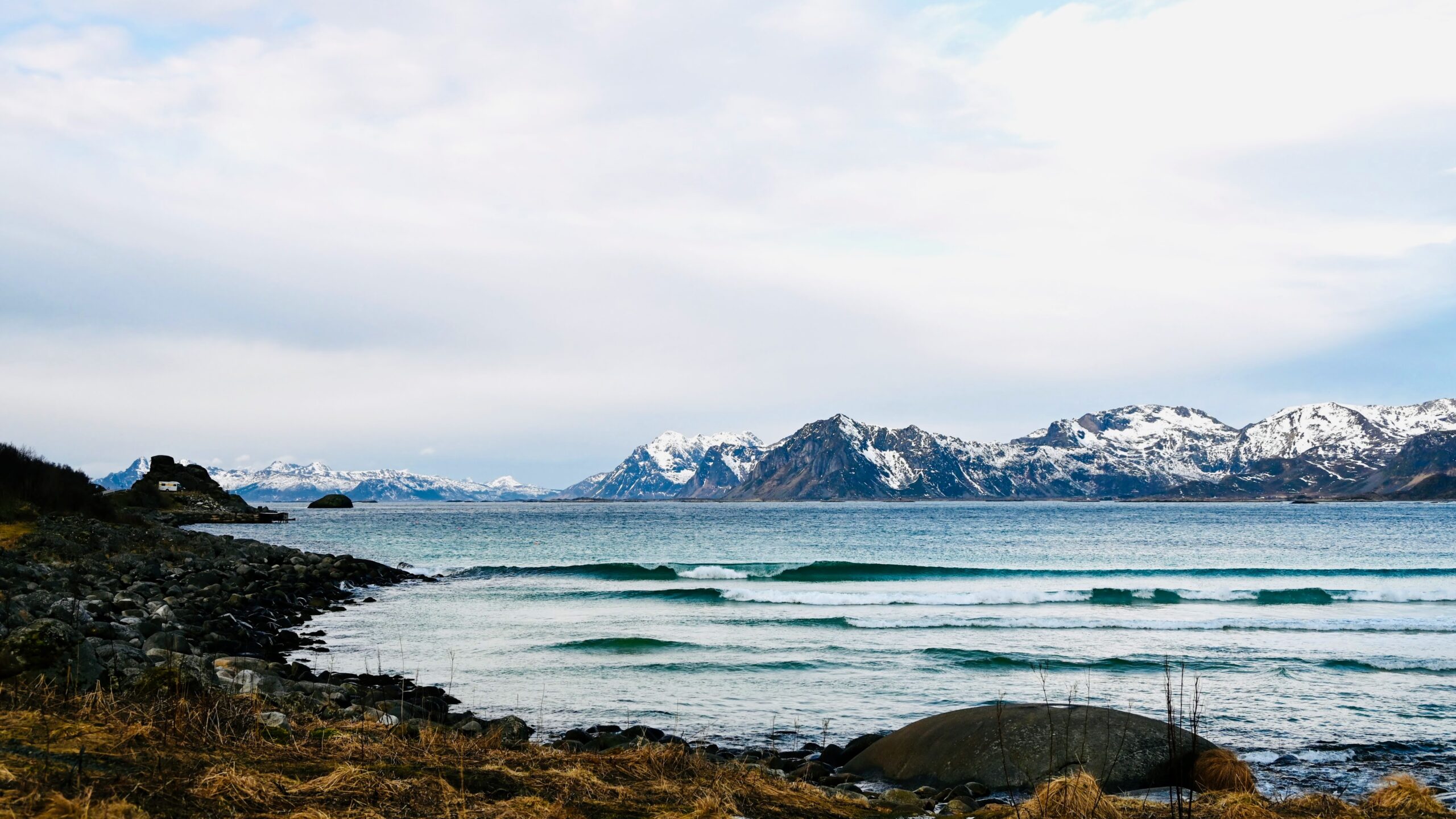
Open the Windy app and you’ll quickly spot surf icons along other bays.
The islands are large and diverse. Almost every side has coastline that can pick up swell. It’s all about reading the conditions and being willing to drive.
Some spots worth checking:
- Rorvikstranda — a wide, quiet beach that can produce great waves. Less crowded than Unstad, though popular with visitors in summer.
- Uttakleiv — often considered one of the most beautiful beaches in the Lofoten.
- Skagsanden Beach — sensitive to west swell.
That’s what makes the Lofoten so special as a surf destination: it’s still raw. Still exploratory. No crowds, no surf schools on every corner.
Just you, a map, a car, and the ocean.
Practical: bring your gear or rent?
Bringing your own gear is ideal, especially if you’re used to cold water.
But if not: at Lofoten Surf Senter you can rent everything: boards, wetsuits, boots, hoods.
They also know the conditions and can point you to the best spot for the day.
And then… there are the mountains
The Lofoten are for surfers. But also for those who want to go up.
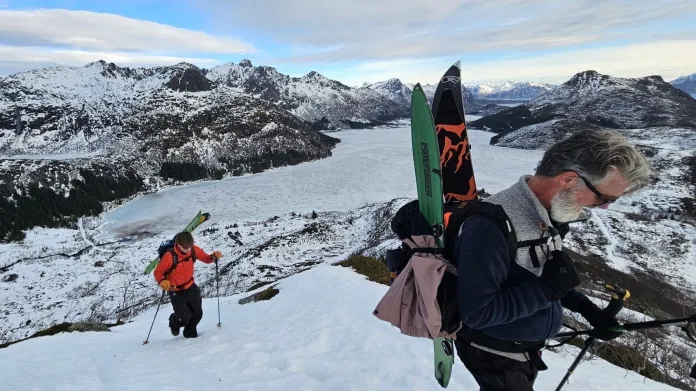
The same mountains rising from the ocean can be climbed in winter with a splitboard or skis. And this isn’t a side activity; it’s a full freeride experience in one of Europe’s most spectacular landscapes.
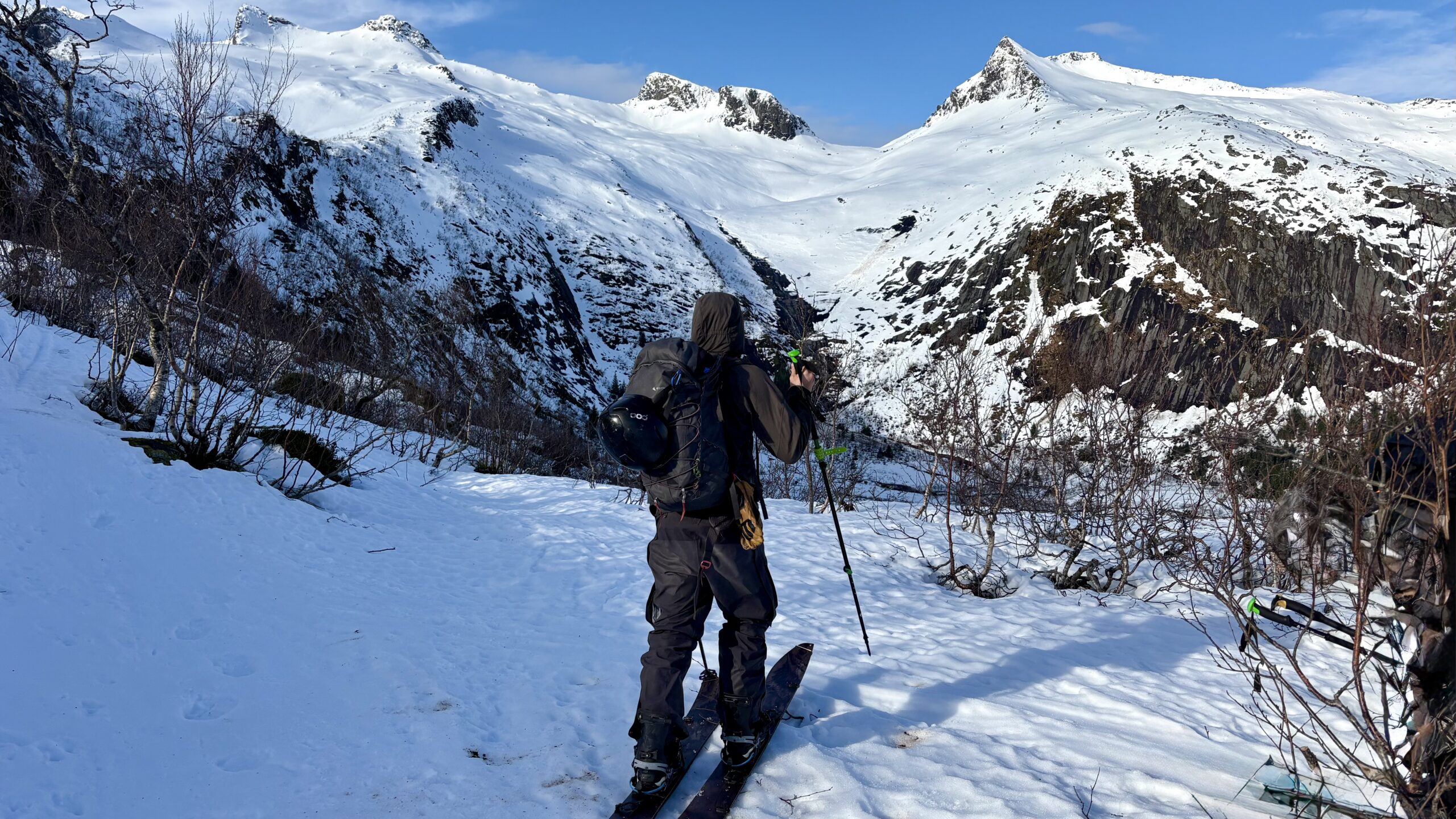
We spent two days splitboarding with André Larsson, a Swedish guide who knows the terrain inside out.
How it feels
Splitboarding in the Lofoten is very different from the Alps.
No lifts. No resorts.
You park your car, attach your skins, and start walking. Through moss, rocks, frozen lakes. Over hard snow where you’re grateful for crampons.
All the while, you’re looking out over the ocean. Islands rising from the water. Fjords cutting deep into the land.
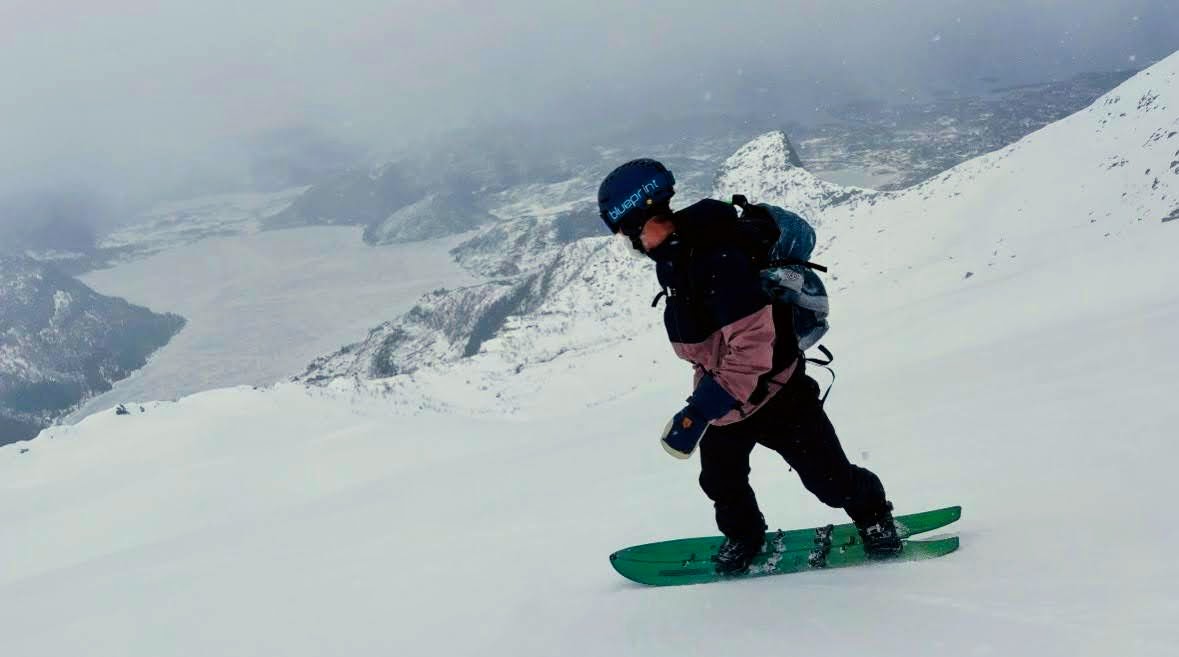
It’s the kind of landscape you don’t forget.
The conditions
Mid-March brought mixed conditions. Warmer air from the sea had caused rain earlier that week. Snow had hardened in places.
“Dust on crust” — a thin layer of fresh snow over a hard base.
Not the deep powder from the magazines. But still very rideable — and even fun if you pick the right line.
Tip we learned the hard way: always bring crampons. On steep, icy sections, they make all the difference.
The peaks
At the top of Varden, we stood in a full snowstorm. Visibility close to zero. Wind trying to knock you over.
And still, that feeling of being somewhere. Truly somewhere.
The descent that followed was technical, playful, and constantly changing. Open faces, narrow lines between rocks, small bushes, streams to cross.
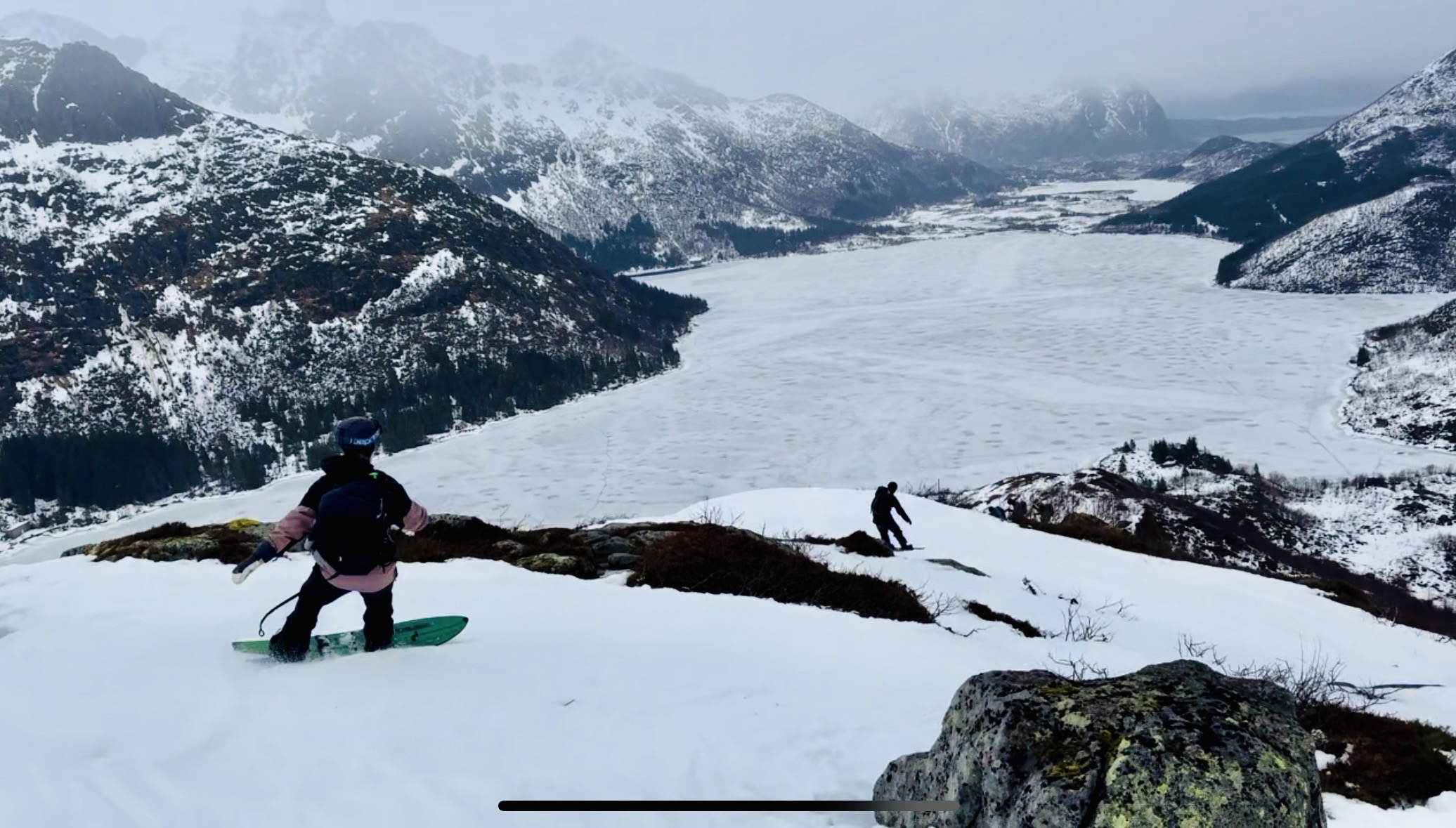
Not perfect.
But pure.
Well organized
If you’re looking to splitboard or need extra gear, head to Retur — an outdoor store run by people who actually spend time in the mountains. They know the area and can help you out with the right gear.
Thanks
This trip was made possible by these valued partners: