You can surf Fuerteventura all year, but the best months for waves are October to March, when North Atlantic swells hit the reefs of the North Shore near Corralejo: Lobos, El Bristol and Majanicho are for intermediate and advanced surfers. Beginners surf year-round on sandy beaches such as El Cotillo, Esquinzo and La Pared. The water is 18-19°C in February and March and 22-23°C in September and October, so a 3/2 mm wetsuit covers the winter. Flights take roughly 4 hours from London and around 4.5 hours from Germany and the Benelux.
Add Surf Escape as a preferred source on Google and see more of our surf guides in your search results.
On this page
- When is the best time to surf in Fuerteventura?
- Where to surf in Fuerteventura?
- What are the best surf spots in Fuerteventura for beginners?
- Which Fuerteventura surf spots are for experienced surfers?
- What wetsuit do you need in Fuerteventura?
- Fuerteventura, Lanzarote, Gran Canaria or Tenerife?
- How do you get to Fuerteventura and where should you stay?
- Is Fuerteventura good for a family surf holiday?
- Frequently asked questions about surfing in Fuerteventura
| Best months for waves | October to March (North Shore and west coast) |
|---|---|
| Best months for beginners | April to September, plus sheltered beaches in winter |
| Water temperature | 18°C (Feb-Mar) to 23°C (Sep) |
| Wetsuit | 3/2 mm from November to May, 2 mm shorty or rash vest in late summer |
| Wind | north-east trade winds, strongest in summer |
| Wave type | mostly reef and lava, plus sandy beaches in the north, west and south |
| Level | all levels, but the famous reefs are for experienced surfers |
| Flight time | about 4 h from London, about 4.5 h from Düsseldorf, Frankfurt, Amsterdam or Brussels (estimates) |
| Where to base yourself | Corralejo (North Shore), El Cotillo (west coast), La Pared (south-west) |
When is the best time to surf in Fuerteventura?
It depends on your level. Fuerteventura is exposed to swell from the north and north-west, and that swell is strongest from October to March, when the North Atlantic storm track is most active. That is when the North Shore reefs come alive, and the water is still comfortable. From April to September the waves get smaller and softer, but the north-east trade winds blow harder, so you surf mainly in the morning before the wind picks up.
In winter you can also get calima: hot, dry, dusty air from the Sahara, blowing from the south-east. It messes up the east coast but can leave some north-facing spots clean.
| Month | Waves | Water | Wetsuit | Best for |
|---|---|---|---|---|
| January | big, often overhead on the reefs | 19°C | 3/2 mm | advanced; beginners on sheltered beaches |
| February | big | 18°C | 3/2 mm, 4/3 if you feel the cold | advanced |
| March | big to medium | 18°C | 3/2 mm | advanced and intermediate |
| April | medium, wind picking up | 19°C | 3/2 mm | intermediate |
| May | smaller | 19°C | 3/2 mm | beginner and intermediate |
| June | small, windy | 21°C | 2 mm shorty | beginner |
| July | small, windy | 21°C | 2 mm shorty | beginner |
| August | small, windy | 22°C | shorty or rash vest | beginner |
| September | first swells, some calm days | 23°C | shorty or rash vest | all levels |
| October | swell building | 22°C | 2 mm or 3/2 mm | all levels, the best all-round month |
| November | big | 21°C | 3/2 mm | intermediate and advanced |
| December | big | 20°C | 3/2 mm | advanced; beginners on sheltered beaches |
Water temperatures: monthly averages from wassertemperatur.org. Waves and wind: general seasonal patterns; always check the live forecast, for example with our surf forecast for Europe.
Our pick: October and November suit most surfers best. The swell is back, the water is still warm from summer and the wind is calmer than in July and August.
Where to surf in Fuerteventura?
Almost all the well-known breaks are in the north. Roughly, you choose between four areas:
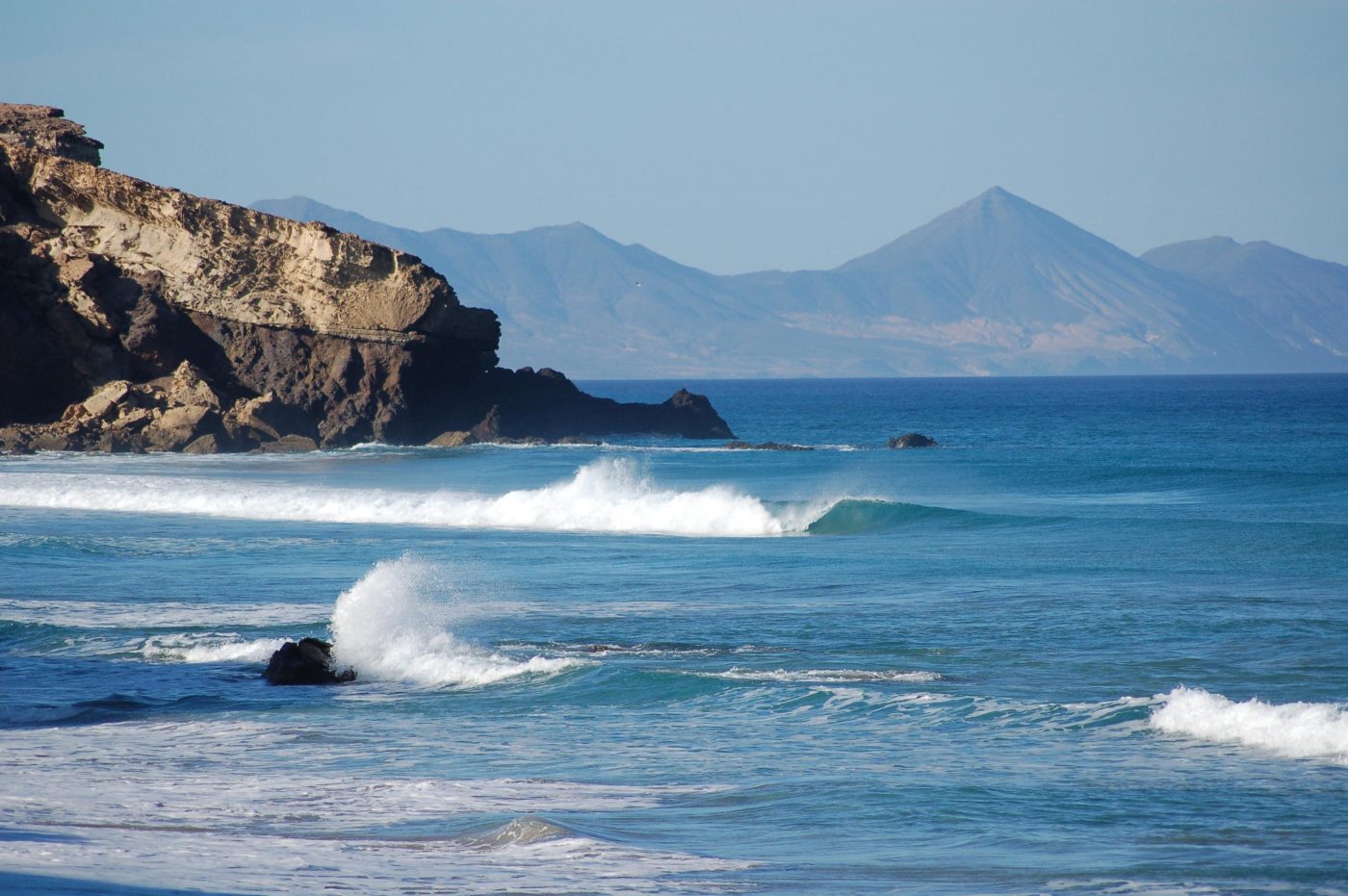
- North Shore (between Corralejo and Majanicho): a coast of lava reefs along a dirt track. El Bristol, Majanicho, El Hierro, Generosa and The Bubble are all here. This is winter territory for intermediate and advanced surfers.
- Corralejo and Isla de Lobos: Corralejo is the island’s surf town, with surf schools, board rental and plenty going on. Opposite the harbour lies Isla de Lobos, home to one of the longest right-handers in the Canary Islands.
- El Cotillo (west coast): a quiet fishing village with long sandy beaches. Ideal for beginners in summer; in big winter swell the waves often close out.
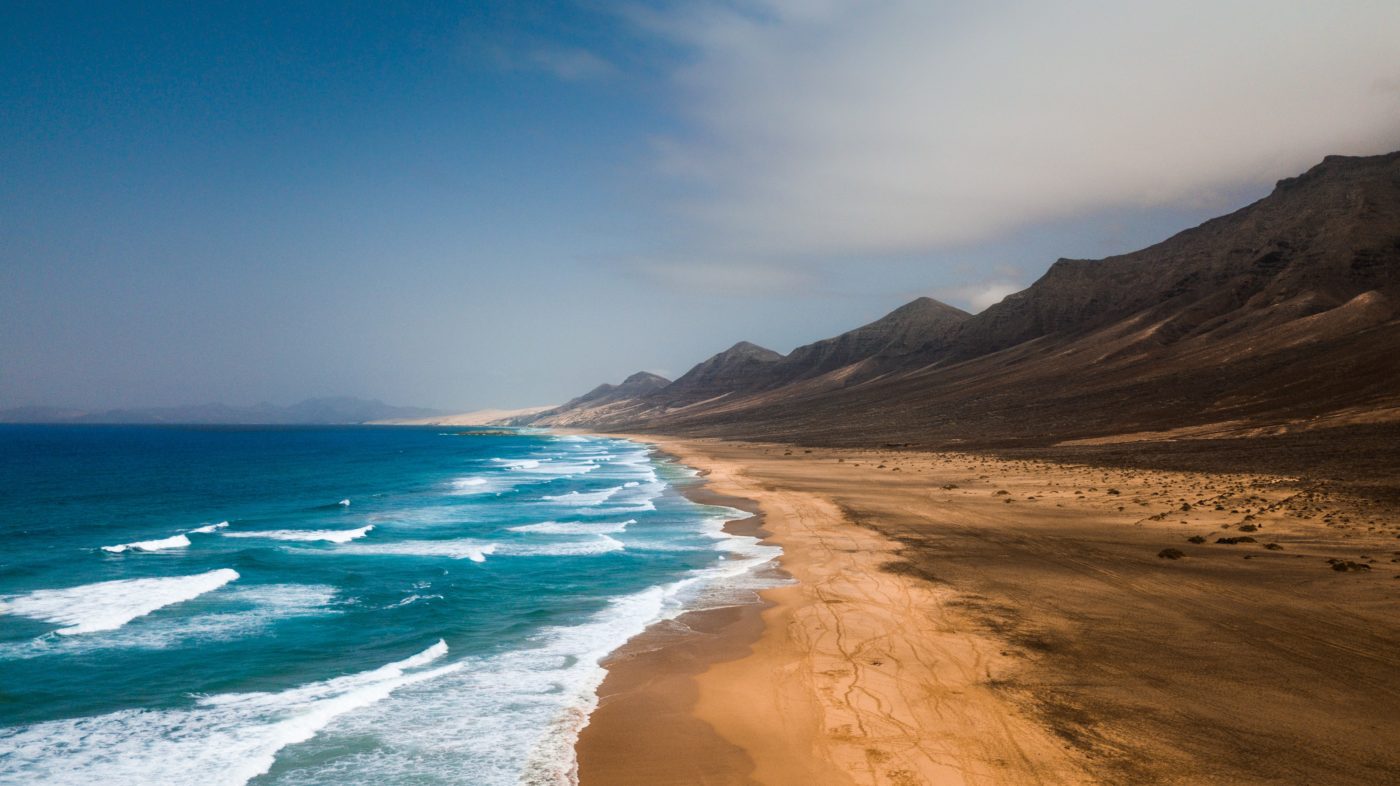
- The south (La Pared, Esquinzo, Garcey, Cofete): sand and pebble beach breaks, quieter than the north. La Pared works best around low tide. Cofete is spectacular but sits at the end of a long dirt road and is often too big and too current-ridden to surf.
Rent a car: the spots are spread out and the North Shore track is unpaved.
What are the best surf spots in Fuerteventura for beginners?
- El Cotillo: wide sandy beaches with lefts and rights, the place for your first green waves in summer. Too heavy in big winter swell.
- Flag Beach (Corralejo): sandy bottom with some rocks; lots of surf schools, plus kite- and windsurfers. Booties recommended.
- Playa de Esquinzo and Playa de Garcey: west-coast beach breaks, quieter than the north.
- La Pared: beach break in the south-west, best around low tide.
- Rocky Point (Punta Elena): the inside wave near Corralejo is a well-known training spot, but it breaks over reef. Wait until you catch waves on your own.
Beginner travelling in winter? Book lessons with a surf school: they know which beach is sheltered enough that day.
Which Fuerteventura surf spots are for experienced surfers?
| Spot | Tide | Swell | Wind (offshore) | Bottom | Level |
|---|---|---|---|---|---|
| Lobos | mid | W, NW, N | E, NE, N | reef | advanced |
| El Bristol | mid | W, NW, N | S, SW | reef | intermediate to advanced |
| Punta Elena (Rocky Point) | all | NW, N | SW, S, SE | reef | inside all levels, outside advanced |
| El Cotillo | all | W, NW | N, NE, SE | sand, rocks | all levels |
| Majanicho | all | NW, N | E, SE, S, SW | reef | intermediate to advanced |
- Lobos: a fast, long right-hander that can run for hundreds of metres on a solid north-west swell. Expect currents, and crowds when it is on. Bring reef boots.
- El Bristol: powerful waves near Corralejo, best in winter. There is localism: be extra polite, don’t paddle into the middle of the pack and don’t take every wave.
- Majanicho: a long right that works in a north wind, when the rest of the North Shore is messy. Watch the strong current.
- El Hierro, Generosa, Derecha de los Alemanes: North Shore reefs for confident intermediates and advanced surfers, at their best in autumn and winter.
- The Bubble: a short, hollow, shallow reef right in front of the cliffs. Experts only.
Isla de Lobos: register before you go. Lobos is a protected nature reserve. You must register your visit in advance (up to 5 days ahead, often together with your ferry ticket), and only 400 people a day are allowed on the island: 200 in the morning slot (10:00-14:00) and 200 in the afternoon (14:00-18:00). The ferry from Corralejo takes about 15 minutes. Check the current rules before you travel.
For all 30-plus breaks with swell direction, wave type and level, use our Fuerteventura surf spot finder.
All 36 surf spots in Fuerteventura (click to open)
| Spot | Direction | Wave type | Level |
|---|---|---|---|
| Acid Drop | right and left | Reef-rocky | experienced surfers |
| Caletta | right and left | Reef-rocky | experienced surfers |
| Campo de Futbol | right and left | Reef-rocky | experienced surfers |
| Cofete beach | right and left | Beach-break | experienced surfers |
| Cotillo beach | right and left | Beach-break | all levels |
| Cruz Roja | right | Beach-break | all levels |
| Derecha de los Alemanes | right | Reef-rocky | all levels |
| El Burro | right | Point-break | all levels |
| El Muelle | left | Point-break | experienced surfers |
| Escalera | right and left | Beach-break | all levels |
| Generoso | left | Reef-rocky | all levels |
| Gravejard | right and left | Reef-coral | all levels |
| Hierro (left) | left | Reef-rocky | all levels |
| La Pared | right and left | Sand-bar | all levels |
| Las Playas Muelle | left | Breakwater/jetty | all levels |
| Los Hoteles | right and left | Beach-break | all levels |
| Los Lobos | right | Point-break | experienced surfers |
| Majanicho | right | Reef-rocky | all levels |
| Mejillones | right and left | Reef-rocky | pros only |
| Moro | – | Beach-break | all levels |
| Playa de Garcey | right and left | Reef-artificial | experienced surfers |
| Playa Blanca | right and left | Beach-break | all levels |
| Playa de Esquinzo | right and left | Beach-break | experienced surfers |
| Playa de Mujer | right and left | Beach-break | all levels |
| Playa de Salinas | right | Reef-rocky | experienced surfers |
| Puerto del Rosario | right and left | Beach-break | beginners |
| Punta Blanca | right and left | Reef-rocky | experienced surfers |
| Punta Gorda | left | Point-break | all levels |
| Racetracks | right and left | Reef-rocky | experienced surfers |
| Rocky Point | right and left | Reef-rocky | all levels |
| Rocky Point Outside | right | Reef-rocky | experienced surfers |
| Salinas | right | Reef-rocky | experienced surfers |
| Spew Pits | right and left | Reef-rocky | pros only |
| Suicidios | right and left | Reef-rocky | pros only |
| The Bubble | right and left | Reef-rocky | experienced surfers |
| Tindaya | right and left | Beach-break | all levels |
What wetsuit do you need in Fuerteventura?
From November to May you surf in a 3/2 mm wetsuit. If you feel the cold or surf long sessions in February, when the water is around 18°C, a 4/3 mm is worth packing, especially with the wind. From June to October a 2 mm shorty is enough, and in September and October many people surf in a rash vest. Booties help on the reefs and at Flag Beach because of lava and sea urchins. Not sure about thickness? See our wetsuit selection guide or our SRFACE wetsuits comparison.
Fuerteventura, Lanzarote, Gran Canaria or Tenerife?
All the Canary Islands get good winter waves, but they differ:
- Fuerteventura: the most sandy beaches, so the best pick for a mixed group of beginners and experienced surfers. Plenty of wind, though.
- Gran Canaria: more urban, with Las Palmas and its city wave at Las Canteras.
- Tenerife: mostly reef and lava beaches, less suited to learning. See surfing in Tenerife.
- Lanzarote: heavy reefs around La Santa for experienced surfers, and the long beach at Famara for beginners.
Want even more point breaks this winter? Look at surfing in Morocco. Prefer mainland Europe? The Algarve works in winter too: see surfing in Portugal.
How do you get to Fuerteventura and where should you stay?
You fly into Fuerteventura airport near Puerto del Rosario. In winter there are direct flights from many UK airports (about 4 hours from London), from German airports such as Düsseldorf and Frankfurt (about 4.5 hours) and from Amsterdam, Eindhoven and Brussels (about 4.5 hours). These are estimates; check your airline. If you bring your own board, check the sports-luggage fee before you book.
- Corralejo: most convenient for the North Shore and Lobos. Lots of surf schools, restaurants and nightlife, so also the busiest.
- El Cotillo: quieter, beautiful beaches, about 20 minutes’ drive from the North Shore (estimate). Good for couples and families.
- La Pared: remote, in the south-west. For people who want peace and have a car.
Is Fuerteventura good for a family surf holiday?
Yes, especially around El Cotillo and Corralejo. The sandy beaches are wide, the water stays above 18°C all year and surf schools teach children. Be aware that in winter the same beaches can get big waves and currents, so book lessons and pick a beach that is sheltered that day. More ideas in our guide to surfing with kids.
Frequently asked questions about surfing in Fuerteventura
What is the best month to surf in Fuerteventura?
For experienced surfers, October to March, with the biggest swells on the North Shore. For beginners, April to September is calmest. October and November are the best compromise for most surfers: swell, warm water and less wind.
Is Fuerteventura good for beginner surfers?
Yes. El Cotillo, Flag Beach, Esquinzo, Garcey and La Pared are sandy beaches where surf schools teach. Leave the North Shore reefs and Lobos to experienced surfers.
How warm is the sea in Fuerteventura?
About 18°C in February and March and 22-23°C in September and October. In November and December it is around 20-21°C.
What wetsuit do I need for Fuerteventura in winter?
A 3/2 mm wetsuit. If you feel the cold, bring a 4/3 mm for February and March. Booties are useful on the reefs.
Do you need a permit to surf Isla de Lobos?
Yes. Lobos is protected and you must register your visit in advance, up to 5 days ahead. A maximum of 400 people a day are allowed on the island, split between a morning and an afternoon slot.
Where is the best place to stay for surfing in Fuerteventura?
Corralejo if you want to surf the North Shore and Lobos and like a lively town. El Cotillo if you want quiet and sandy beaches. Either way, you will need a rental car.
Sources
- Wassertemperatur.org, Fuerteventura water temperature, monthly averages (page updated 1 Feb 2025).
- Megan Starr, How to visit Lobos Island from Corralejo (updated 18 Sep 2026): permit, daily quota and ferry.
- Pure Surfcamps, Fuerteventura Surf Guide (15 Aug 2025): seasons, trade winds, calima and spots by level.
- SurferToday, The best surf spots in Fuerteventura (accessed 8 Nov 2026): spots, localism and currents.
- Surf-Escape, Fuerteventura surf spot finder (existing page).