


Patagonia Regulator 3/2 review: how good is the new Yulex wetsuit?
A natural-rubber wetsuit that can genuinely compete with my favourite Yamamoto suit for flexibility? I did not necessarily expect that. I tested the new Patagonia Regulator 3/2 during five to six surf sessions on Ireland's west coast, from mellow conditions to rain, onshore wind and 16°C Atlantic water.

Patagonia supplied the wetsuit for testing. Patagonia had no influence over this review or its conclusions.
Five days chasing waves in Ireland
I tested both the new Patagonia Regulator 3/2 and 4/3, but this review focuses mainly on the 3/2. It was the suit I wore for most of our surf trip around Sligo.
Over five days we explored different stretches of Ireland's west coast and surfed spots including Tullan, Strandhill, Easkey and Streedagh. It was exactly the sort of trip you want for testing a wetsuit: not one perfect sunny session, but changing conditions, rain, wind and repeated sessions over several days.
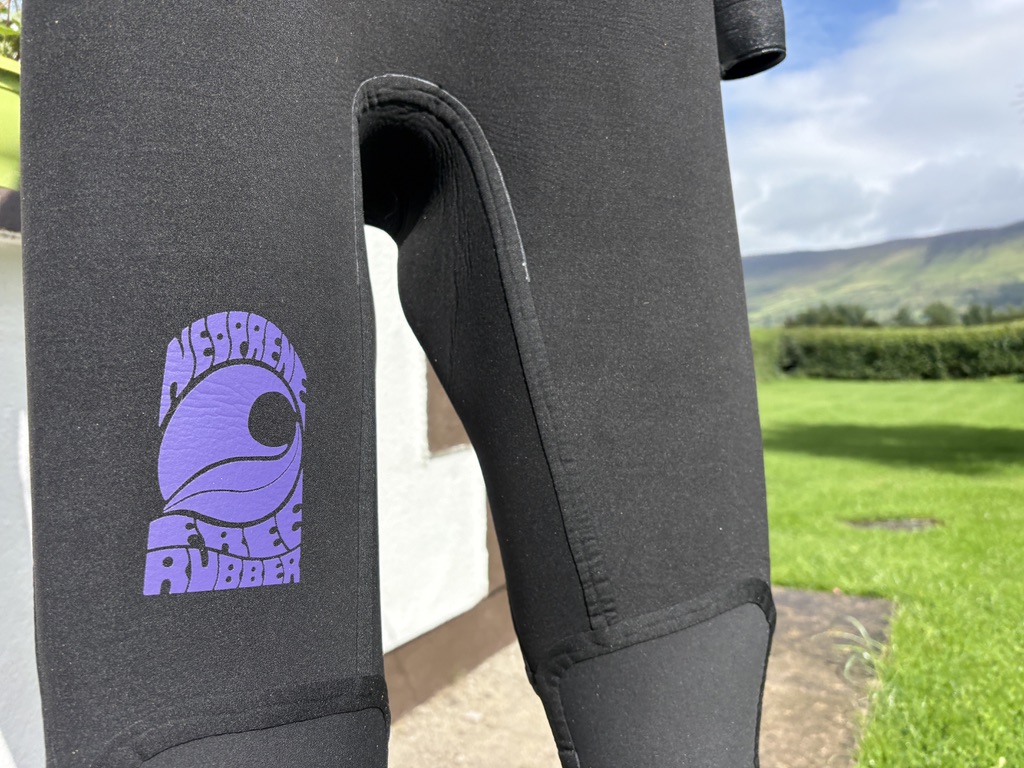

Several sessions and very different conditions over five days around Sligo: exactly what you want for a genuine wetsuit test.
Air temperatures during the trip generally ranged from about 14 to 20°C. The sea was around 16°C. Some sessions were relatively calm and mild; others brought rain and increasingly strong wind.
The roughest session was at Tullan Beach. The wind increasingly turned onshore, rain moved in and it eventually reached roughly Force 4. Both water and air temperatures were around 16°C.
I never felt cold.
After five or six sessions in Ireland, what stays with me most is just how flexible and effortless the Regulator 3/2 feels.
What exactly is the Patagonia Regulator 3/2?
The new Regulator is Patagonia's latest generation of neoprene-free wetsuits. One point is worth clarifying straight away: the suit is not made from 100% natural rubber.
According to Patagonia, the foam core consists of 85% Yulex natural rubber and 15% chlorine-free synthetic rubber. The natural rubber comes from FSC-certified sources.
Patagonia uses NetPlus recycled nylon for the fabrics on both the inside and outside of this generation of Regulator suits. NetPlus nylon is made using discarded fishing nets. The fabrics are also solution dyed.
The seams are triple-glued and blindstitched with stretch seam tape on the inside. Patagonia has also added rubber seals around the wrists and ankles to help keep water out.
Tight around the neck at first. Then almost perfect.
My first impression when pulling the wetsuit on was interesting. The material immediately felt remarkably soft.
That stood out because I have worn other natural-rubber wetsuits that still felt noticeably stiffer. The Regulator did not give me that feeling.
At the same time, the neck initially felt very tight. My first thought was: how is this going to feel after two hours?
The interesting thing is that I completely forgot about it during the first session. The suit seemed to settle around my neck and body.
No irritation. No chafing. No pressure that I remained conscious of while surfing.
Especially good around wrists and ankles
The length through the arms and legs is right for me, while the fit around my knees, wrists and ankles is very good. The wrist and ankle seals in particular stood out.
Around the seat and crotch I initially felt there was slightly more room than absolutely necessary. If I really have to identify a criticism of the fit, that would be it.
I would not size down, though. The MT fits too well through the arms, legs and torso to justify moving to a smaller size.
You barely notice the suit while paddling
This is where the Patagonia scores most highly for me.
With some older natural-rubber wetsuits, I remained aware of the material. They could be warm and environmentally more interesting, but there was still some extra resistance around my shoulders and arms.
I do not get that with the Regulator.
When paddling, the suit almost disappears. There is no noticeable tension across my shoulders and no feeling that every paddle stroke is working against the material.
Barely noticing your wetsuit while paddling may be one of the best compliments you can give it.
I rarely give tens, so I would rate flexibility at 8.5 out of 10.
More importantly, I find it very comparable in freedom of movement to my current benchmark suit: the SRFACE Remix with Yamamoto #40.
A few years ago I probably would not have expected to say that about a natural-rubber wetsuit.
A different zip system that actually adds something
Instead of a conventional straight chest zip, the Regulator's zip runs in a curved shape from one shoulder towards the other.
The U-Zip system originated with Japanese wetsuit company AXXE and was further refined by Patagonia. In practice, it feels surprisingly intuitive.
Getting in and out of the wetsuit is at least as easy as with a good chest zip. There is no real learning curve. The only thing I needed to get used to was reaching slightly further back towards my shoulder to find the zipper.
Flushing? None at all
Flushing is that lovely moment after a wipeout or duck dive when a sudden load of cold water enters through the neck of your wetsuit.
Over my five to six sessions in Ireland: zero.
16°C water, rain and onshore wind: no problem
Patagonia recommends the Regulator 3/2 for water temperatures of roughly 13 to 18°C.
At the 16°C we experienced in Ireland, I found it excellent.
At Tullan the onshore wind increased, rain came in and both air and water temperatures were roughly similar. Even after 90 minutes to two hours, I never felt that cold was forcing me out of the water.
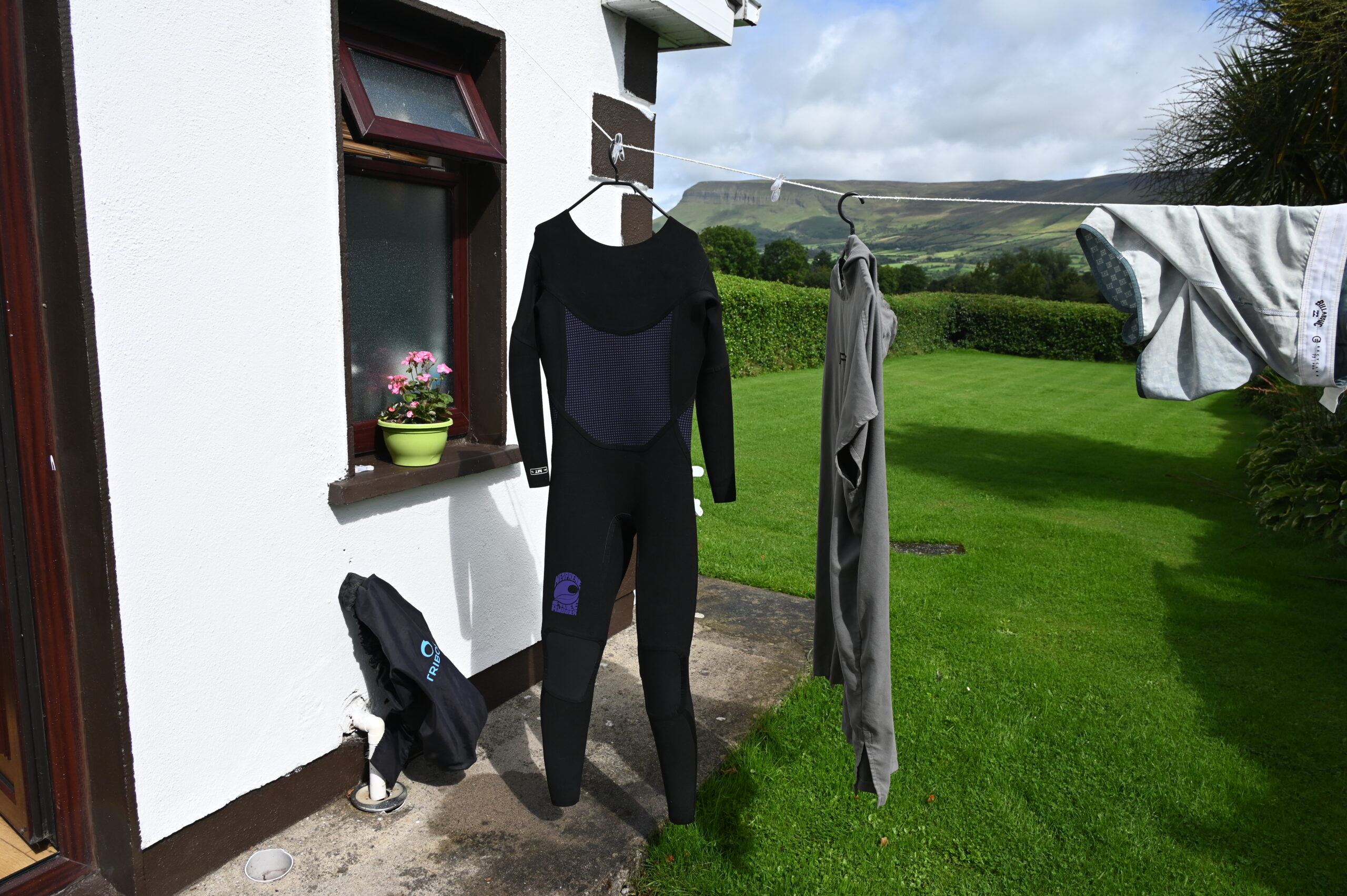
Would I use it at 14–15°C?
Probably, depending on the conditions.
In 15°C water with little wind and relatively mild air temperatures, I expect the Regulator 3/2 would still work very well for me.
If the water is 14–15°C, the air is also cold and there is a strong wind, I would personally choose a 4/3.
Ultimately, a very good 3/2 is still a 3/2. If you tend to feel the cold, choosing more millimetres makes more sense than expecting a premium suit to magically replace extra thickness.
What about warmer water?
Around 18°C, a 3/2 is still perfectly usable. Once both the sea and air become properly warm, I personally start moving towards a 2/2.
Soft inside and no chafing
The inside remained soft even after several sessions.
I experienced no chafing around my neck, armpits or other areas where wetsuits can become irritating during longer sessions.
That initial tightness around my neck therefore proved to be exactly that: an initial impression rather than a problem in the water.
Drying time
I did not discover a miracle here.
During the Ireland trip, the suit often spent the night hanging in a damp shower cubicle. By the following morning it was reasonably dry, although occasionally still slightly damp.
That is fine, but not exceptional.
Naturally, I would prefer a wetsuit that becomes completely dry within an hour while it is still raining outside in Ireland. I have yet to find that one.
Why Yulex and NetPlus matter
The sustainability story matters to me, but I also do not want to oversell it. A wetsuit made with natural rubber is not automatically a perfectly sustainable product.
Natural rubber still requires land, processing, energy and transport. What I do like is the direction Patagonia has taken with the materials.
The foam core consists of 85% natural rubber sourced from hevea trees.
Natural rubber can also contribute to deforestation, which makes certified sourcing an important part of the story.
Recycled nylon made from discarded fishing nets is used in the fabrics around the rubber core.
For me, the key point is that the choice no longer has to be between a highly flexible wetsuit and a natural-rubber wetsuit.
The Regulator gives you both.
Patagonia Regulator 3/2 vs SRFACE Remix 3/2
My current benchmark for a good 3/2 is the SRFACE Remix with Yamamoto #40. That makes it a more useful comparison than putting Patagonia next to a random budget wetsuit.
| Category | Patagonia Regulator | SRFACE Remix |
|---|---|---|
| Flexibility | 8.5/10 | Very similar |
| Warmth | Very good | Very similar |
| Material | Yulex / NetPlus | Yamamoto #40 |
| Price | €480 | Approx. €359 regular price |
| My choice | Materials + performance | Price / performance |
In terms of pure performance, I find the two surprisingly close.
And that is exactly why Patagonia's material choices become interesting.
You no longer need to excuse the Regulator because it happens to use natural rubber. It simply performs at the level I expect from a premium wetsuit.
€480 is still a lot of money
This is the difficult part.
If I had to buy a new 3/2 tomorrow with my own money and I needed to watch the budget carefully, I would probably choose the SRFACE Remix on purely economic grounds.
Not because it is better, but because it gives you a huge amount of performance for less money.
If I have some extra room in the budget, the calculation changes.
Personally, I am willing to pay around €100 more for a wetsuit with a material choice I feel better about, provided warmth, flexibility and overall performance are at least as good.
I surf regularly throughout the year – perhaps once every three weeks on average – and I would expect a suit like this to last several years. Spread over multiple seasons and dozens of sessions, that extra cost becomes easier to justify.
What is genuinely good – and what is less convincing?
Pros
- Very flexible
- Remarkably soft material
- Barely noticeable while paddling
- Excellent seal around neck, wrists and ankles
- No flushing during the test
- Easy-to-use U-Zip
- Warm in 16°C water, even with wind and rain
- Yulex natural rubber
- NetPlus recycled nylon
- Clean, understated black design
Cons & caveats
- €480 is a serious investment
- Slightly more room around the seat and crotch on my body shape
- Drying time is fine rather than exceptional
- Long-term durability still needs to be proven
Who would I recommend the Regulator 3/2 to?
I think the Patagonia Regulator 3/2 makes most sense for surfers who value both flexibility and material choice.
If you simply want the cheapest good 3/2 available, this probably is not your wetsuit.
If you want a premium suit with very good freedom of movement, excellent sealing and less dependence on conventional neoprene, the equation changes.
If you get cold easily, however, choose the right thickness for the conditions. A premium 3/2 is still a 3/2.
And the looks? Black. Clean. No unnecessary graphics. Exactly how I like it.
Not good for a sustainable wetsuit. Just a very good wetsuit.
Going into this test, I mainly wanted to know how much difference still exists between a premium neoprene wetsuit and a modern suit based on natural rubber.
After five to six sessions in Ireland, my answer is clear: much less than I expected.
The Patagonia Regulator 3/2 is flexible, warm and extremely comfortable. It seals very well and feels so effortless that I largely stop thinking about my wetsuit once I am paddling.
The U-Zip works. I experienced no flushing. And in terms of performance, it can sit alongside my SRFACE Yamamoto Remix.
The biggest differences therefore come down to two things: materials and price.
€480 remains expensive. If budget is your main concern, there are more economical options. But if you have the budget and value flexibility, performance and a more considered choice of materials, the Regulator 3/2 is one of the most interesting premium wetsuits I have worn.
Tested over five to six surf sessions around Sligo, Ireland, in August 2026. Long-term durability has not yet been assessed. Prices may change after publication.