

 and how point, reef and beach breaks differ. With video.)
How Are Waves Made? From Ocean Storm to Breaking Wave
Every wave you ride started life hundreds or even thousands of kilometres away, as wind blowing over open water. Understanding that journey makes you a better surfer: you read forecasts with more confidence, you know why one spot works and the next doesn’t, and you stop being surprised when your favourite beach is flat at high tide.
In this article:
- How waves are born: wind and gravity
- From ripples to swell and sets
- Three kinds of swell
- When does a wave break?
- Point, reef and beach breaks
- Why the tide changes everything
- How big can waves get in the North Sea?
Watch: how waves are made in 90 seconds
Prefer to see it? This short animation walks through the whole story, from storm to surf spot.
How waves are born: wind and gravity
Waves are created by two forces working together: wind and gravity. Most surfable waves start in the middle of the ocean, where a storm is blowing, usually around a low-pressure system.
The surface of the water has tension. When wind blows across it, that tension is disturbed and tiny ripples form, much like when you throw a stone into a pond. Those ripples give the wind something to push against. The more grip the wind gets, the bigger the ripples grow, until they become real waves. Gravity then pulls the raised water back down, which keeps the wave moving.
From ripples to swell and sets
Once the wind has done its work, the waves keep rolling across the ocean on their own. This is what surfers call swell.
On the way, waves sort themselves into groups: sets. The further a swell travels, the more space appears between the sets. The waves lose a little height on their long journey, but they arrive better organised and cleaner. That is why a swell from a distant storm usually produces better surf than a storm right off the coast.
The time between two wave crests is the wave period, and it tells you a lot about how much energy a swell carries. Read more in our guide What Is Wave Period and Why It Really Matters for Surfers.
Three kinds of swell
- Groundswell is the most powerful swell. It is generated far away and can travel enormous distances. This is the swell that lights up the Atlantic coasts of France, Spain and Portugal.
- Windswell is created by wind relatively close to the coast. It is short, messy and less powerful. It is the typical swell of the North Sea, because Great Britain blocks most of the Atlantic groundswell before it can reach the Netherlands.
- Hurricane swell comes from tropical storms and only appears in certain seasons, when the difference between air and sea temperature is greatest. It can produce beautiful, powerful waves that keep coming for days. A good example was Hurricane Erin’s historic summer swell across Europe.
Every now and then the Netherlands does get a taste of groundswell. After a severe storm far north of Scotland, for example near Svalbard, swell starts rolling down into the North Sea. If the wind blows steadily from the north and then dies at the coast, Dutch surfers get a classic day. It doesn’t happen often, but it does happen.
When does a wave break?
In deep water a wave travels fast and stays relatively low. As soon as it starts to feel the bottom, it slows down. The waves bunch up closer together and grow taller.
A useful rule of thumb: a wave breaks when the water depth is about 1.3 times the wave height. At that point the wave can no longer support itself and the crest pitches forward.
The shape of the bottom decides what kind of wave you get:
- Gentle slope: the wave starts slowing down far out at sea. The result is slow, soft waves, perfect for longboarding and learning.
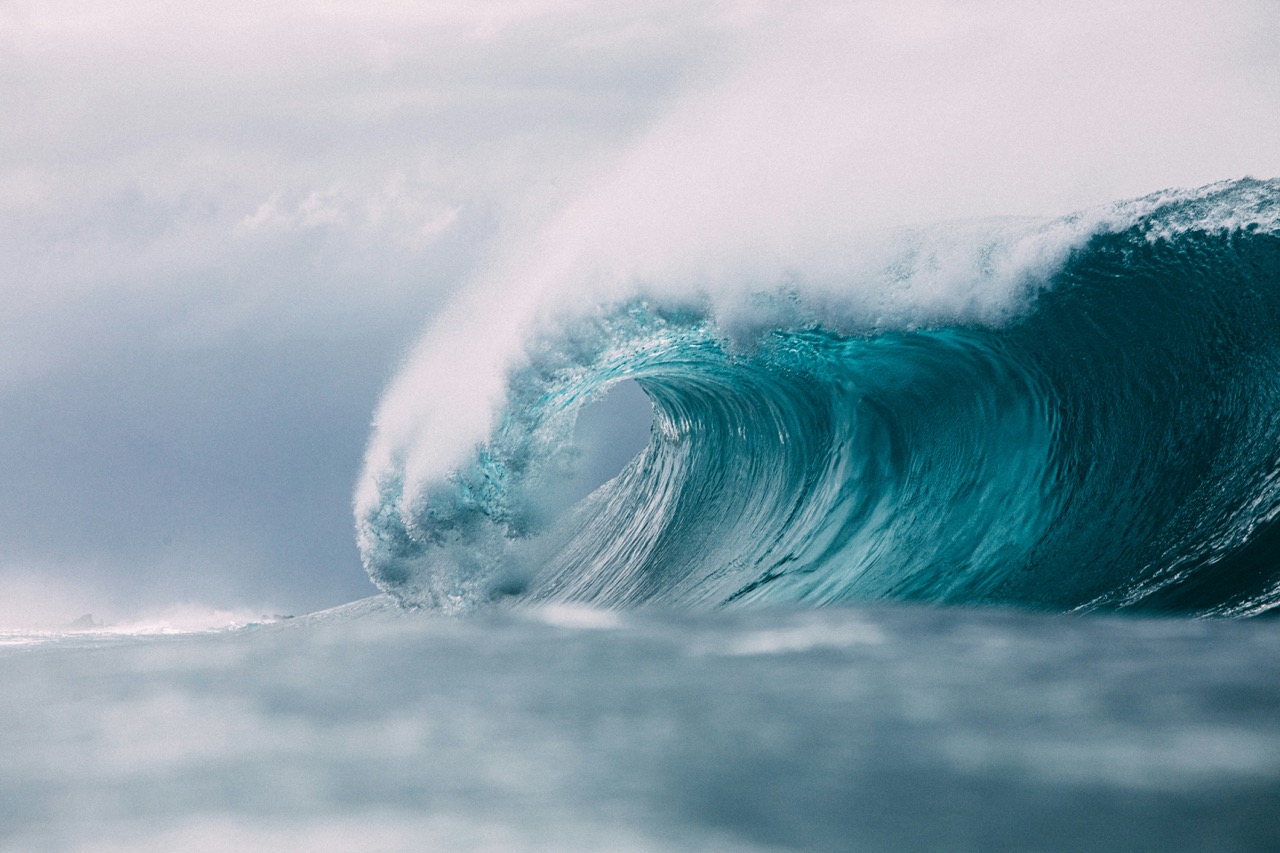
- Steep bottom: the wave keeps its speed until it suddenly hits shallow water. That gives fast, powerful and hollow waves. Hawaii is the classic example: the islands are surrounded by very deep water, so swell arrives at full speed.
Point, reef and beach breaks
Pointbreak: the wave wraps around a headland or point. The outer part slows down and lags behind, so the wave peels along the point. Expect long, slower and less hollow rides.
Reefbreak: one side of the wave hits the reef first and starts breaking, while the rest keeps moving fast. The result is shorter, powerful and hollow waves. Swell direction matters a lot here.
Beachbreak: the waves are shaped by the sandbanks. Deeper sandbanks give flatter, softer waves; a sandbank that suddenly rises from deep water gives fast, hollow and powerful waves. Hossegor in southwest France is the famous example.
Want to see how different coastlines use swell in different ways? Check our guides to Brittany, the Algarve and Ireland.
Why the tide changes everything
The same spot can be terrible now and perfect three hours later. As the tide rises and falls, the depth over a sandbank or reef changes, and with it the way the waves break. At low tide waves can dump hard on a shallow sandbank; around mid tide they peel nicely; at high tide they may hardly break at all.
Get to know how your local spots behave on different tides, and always grab a tide table for the area you are surfing. You can find them in most surf shops and harbours, or in apps.
How big can waves get in the North Sea?
During a strong northwesterly storm the North Sea can get wild. According to the Dutch weather institute KNMI, waves of around 12 metres have been measured along the Wadden coast. In the central and northern North Sea, waves of more than 20 metres are possible. On 1 January 1995 the Norwegian Draupner platform even recorded a single wave of 25.6 metres. Not a place you want to be with your surfboard. For the kind of giants people do ride, see why Nazaré is the epicenter of big-wave surfing.
Don’t just look at wave height in the forecast. Check where the swell comes from, its period, the wind at your spot and the tide. A long-period groundswell, offshore wind and the right tide on a sandbank: that’s the recipe for a great session.
TL;DR
- Waves are made by wind and gravity, usually in storms far out at sea
- Ripples give the wind grip and grow into waves, then travel on as swell
- The further swell travels, the cleaner it gets and the more space between sets
- Groundswell is the most powerful, windswell is short and messy, hurricane swell is seasonal
- A wave breaks when the depth is about 1.3× the wave height
- Gentle bottoms give slow waves, steep bottoms give fast, hollow waves
- Tide can turn a spot from bad to perfect within a few hours